
When employment is more than just a number
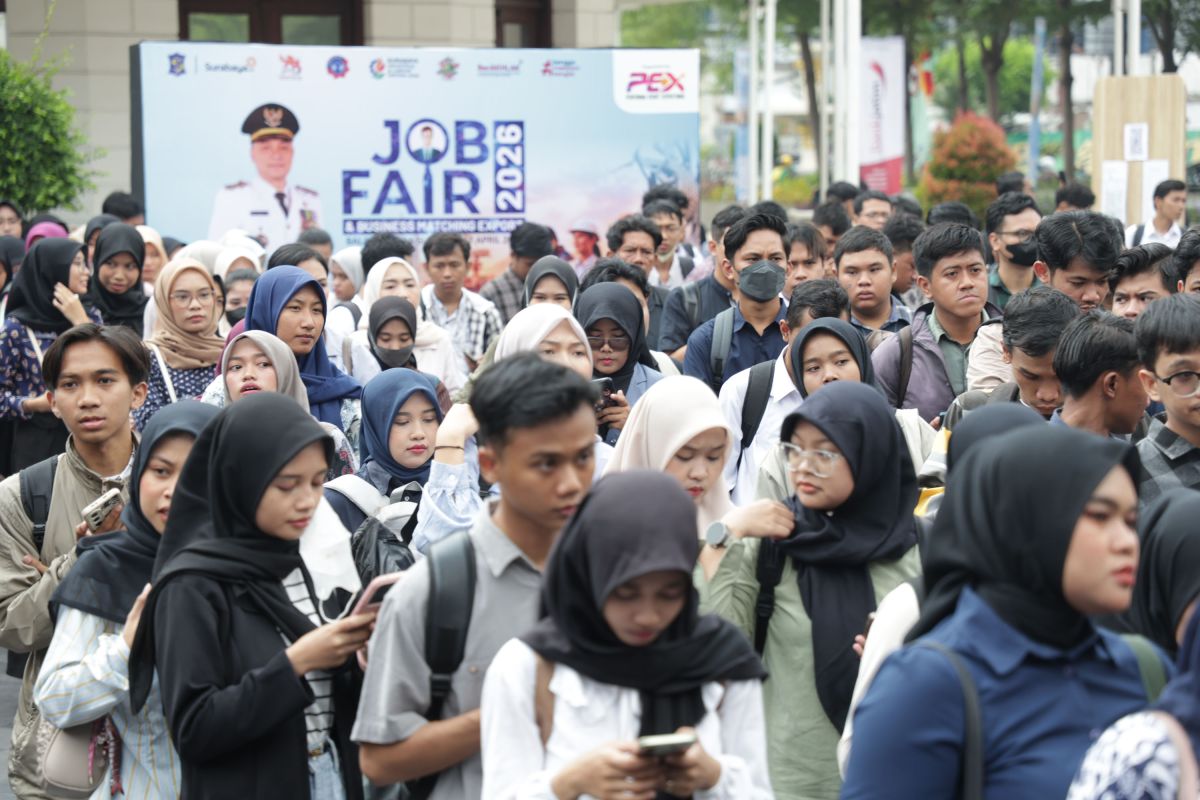
A single figure often feels reassuring when discussing unemployment. Behind that number there are always people looking for work, families waiting for income, and hopes for a better life.
In the city of Surabaya, East Java, those hopes are being connected with various job opportunities. As of July 2026, a total of 5,120 workers have been placed through a number of channels.
That achievement is important, but it also raises more fundamental questions about the quality, suitability, and sustainability of the jobs available.
Are they obtaining jobs that match their skills? How many are working formally? How long do those jobs last? And to what extent are those opportunities truly enjoyed by Surabaya residents?
The Surabaya city government is targeting the absorption of 8,838 new workers throughout 2026 to help reduce the open unemployment rate from 4.84 percent in 2025 to 4.47 percent. As of July, placement realisation has reached 5,120 people, or around 58 percent of the annual target.
The placement channels are quite diverse. Regular company recruitment absorbed 2,952 people, special job fairs at vocational high schools and universities accounted for 1,615 people, overseas placements for 166 people, training and certification for 120 people, vacancies through the ASSiK application for 160 people, and job fairs for 107 people.
That composition shows that Surabaya’s labour market is no longer supported by a single door. The government is trying to act as a bridge between job seekers, schools, universities, companies, and overseas job opportunities.
That direction is important, because Surabaya has a large labour market. Statistics Indonesia recorded that the labour force in August 2025 reached 1.64 million people. The labour force participation rate stood at 70.59 percent and the open unemployment rate at 4.84 percent.
However, a declining unemployment figure does not automatically mean that all employment issues are resolved. It is precisely here that the next work begins.