
When Election Officials' Integrity is Tested at Polling Stations
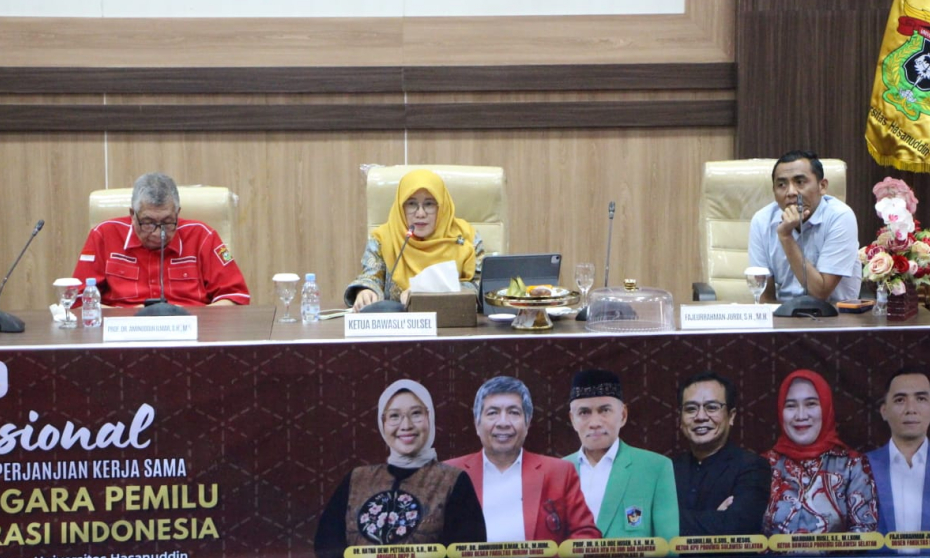
Amid the noise of vote counting and political euphoria, a subtle yet often overlooked issue arises: how election officials maintain their composure when unobserved. Public trust in democracy stems not only from participation rates but from firsthand observations of the neutrality of those administering elections.
A recent incident at a polling station in Panakkukang during the 2024 election serves as a stark reminder. A 45-year-old resident, Rahman, observed a KPPS member wearing campaign apparel while on duty. Despite claiming to be on break, the act undermined the symbol of neutrality in the sacred voting space.
At TPS 05 near his home, he witnessed a KPPS member donning a candidate’s campaign T-shirt. When questioned, the official claimed to be on break. ‘Break from what, sir? Party insignia shouldn’t be worn inside the polling station,’ Rahman stated on Thursday, 28 May 2026.
Law is a ship sailing the ocean of ethics, bound for the island of justice. If the ocean of ethics is polluted, even the most advanced legal ship will wobble, and justice becomes difficult to achieve.
This moral commitment took centre stage at a national seminar titled ‘Integrity of Election Officials and Indonesia’s Democratic Future’, organised by the Election Ethics Council (DKPP) with Hasanuddin University (Unhas) and Muslim Indonesia University (UMI) in Makassar on Monday, 11 May.
DKPP member Ratna Dewi Pettalolo stressed that democracy must not be trapped in procedural formalities devoid of moral substance. The five core pillars—autonomy, honesty, fairness, accountability, and professionalism—must be the lifeblood of every official.
‘Integrity is far harder to build than merely transferring knowledge through technical guidance. Violations often begin with seemingly minor issues,’ said Hasbullah, Chairman of the South Sulawesi Election Commission (KPU). ‘Ethics is a matter of choice: when no one is watching, are you still honest?’
Academics emphasised the need for systemic improvements. Prof. Aminuddin Ilmar of Unhas’s Faculty of Law highlighted the importance of recruitment focused on track records to close loopholes for future violations. Meanwhile, UMI Postgraduate Director Prof. Laode Husein warned officials to remain vigilant against power interference to prevent public apathy.
Mardiana Rusli, South Sulawesi Election Supervisory Agency (Bawaslu) Chair, viewed citizens’ courage to report as a positive sign of growing collective awareness. Bawaslu and DKPP serve as beacons of justice for those seeking redress to correct overlooked procedures.
Civility in democracy is more than a slogan. It flourishes when officials, overseers, academics, and citizens dare to listen and improve themselves to uphold the dignity of people’s sovereignty.