
When East Flores Residents Had to Place Phones on Windowsills to Get a Signal
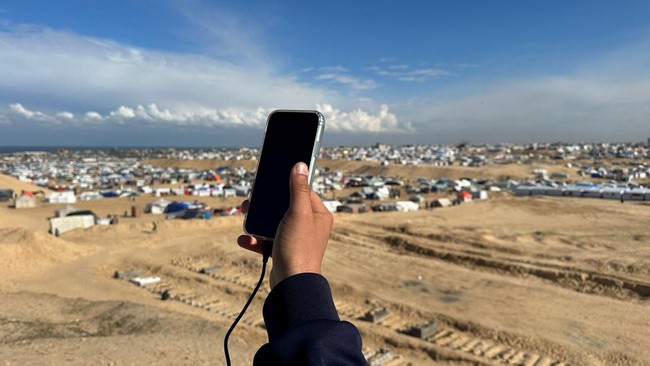
Unlike today, when internet access has become increasingly easy, people once had to struggle to surf the virtual world. This was the experience of residents in East Flores, who at one point had to place their mobile phones on windowsills just to catch a signal.
"I remember, we had to put our handphones on the door or on top of the window so we could get a signal to communicate," said Silvester Suban Toa Kabelen, Head of the East Flores Communication and Information Office, during the Bakti Media Connect 2026 event in Jakarta on Wednesday (12/8/2026).
Furthermore, residents often had to travel for kilometres just to gain internet access. Yet connectivity is crucial for accessing information, sending reports, transmitting data, and connecting with relatives in other regions.
"The local government needs fast information to forward to the provincial level, ministries, and as a consideration for decision-making. However, that was our main obstacle at the time," he revealed.
Today, six base transceiver stations have been built in East Flores, with 262 internet access points spread across government offices, village settlements, educational facilities, and health services.
On the same occasion, Fadhilah Mathar, President Director of Bakti under the Ministry of Communication and Digital, explained that his agency has provided 31,864 public service points across Indonesia. These facilities include 21,718 educational facilities, 1,878 health service points, 6,353 government offices, 489 community activity centres, 441 places of worship, 526 defence and security sector points, 168 tourist locations, and 245 public service and transportation points.
The 4G network now reaches 6,747 villages, whilst the Palapa Ring project has connected 131 cities and regencies, supported by the SATRIA-1 satellite with a capacity of 150 Gbps.
"The infrastructure that significantly accelerates digital connectivity is the presence of SATRIA-1. SATRIA-1 allows us to combine terrestrial and non-terrestrial solutions, especially in areas that are difficult to reach by fibre optic cable," Fadhilah concluded.