
When Does Juvenile Delinquency Cross the Line? A Psychologist's Explanation
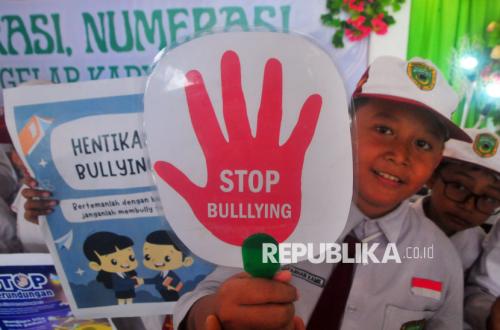
Cases of violence involving children as both victims and perpetrators have become a subject of intense public debate. One such case involves the late Aqib, a second-grade student at SDN 1 Kebondalem, Pemalang, who passed away after allegedly falling victim to bullying and violence by an older student.
A similar incident occurred in Garut Regency, where a high school student suffered an eye injury after being hit by an airsoft gun pellet fired by a senior student. Child and adolescent educational psychologist Bernadette Cindy expressed deep concern regarding this series of incidents.
She explained that during child and adolescent development, the ability to control impulses, regulate emotions, understand consequences, and empathise is still evolving. Consequently, children or adolescents may occasionally engage in rule-breaking or impulsive behaviour. However, if a child or adolescent engages in intentional, repetitive violence that causes fear or injury to a victim, it can no longer be considered ordinary delinquency.
“Therefore, we must be wise in labelling child delinquency. Normal delinquency occurs if a child only behaves in a rule-breaking or impulsive manner occasionally. If they are performing repeated and intentional violence, then their delinquency has crossed the line,” Cindy stated when contacted by Republika on Wednesday (7/10/2026).
Cindy noted that if delinquent behaviour has crossed the line, parents and teachers must act immediately to stop such behaviour and ensure that victims are protected. The perpetrator must also face consistent consequences.
“Parents and teachers also need to investigate the underlying factors and train skills in emotion regulation and conflict resolution. Seeking assistance from professionals such as psychologists, counsellors, or psychiatrists can also be an option,” said Cindy.
In handling children or adolescents who commit violence, Cindy suggests that they must still face consequences and be held accountable for their actions. Even though children and adolescents are still in the developmental stages of empathy and self-control, it does not mean they are free from accountability.
Consequences should be adjusted to the child’s age and the severity of the violation, while simultaneously providing an opportunity for the child to learn to correct their behaviour. “The principle is accountability without humiliation—being firm regarding their behaviour, but not labelling the child as a ‘bad child’,” Cindy said.
According to her, adults must also consider the perspective of social learning, where children learn from their environment. Therefore, adults must demonstrate that conflicts are resolved through boundaries and firm consequences, rather than through violence.
Source: jawawa.id (https://jawawa.id/newsitem/when-does-juvenile-delinquency-cross-the-line-a-psychologists-explanation-1791367079)
Originally published by Republika (https://ameera.republika.co.id/berita/tmj4uo425/kapan-kenakalan-anak-disebut-melewati-batas-ini-penjelasan-psikolog), translated from Indonesian