
When Does a Teacher Succeed in Deep Learning?
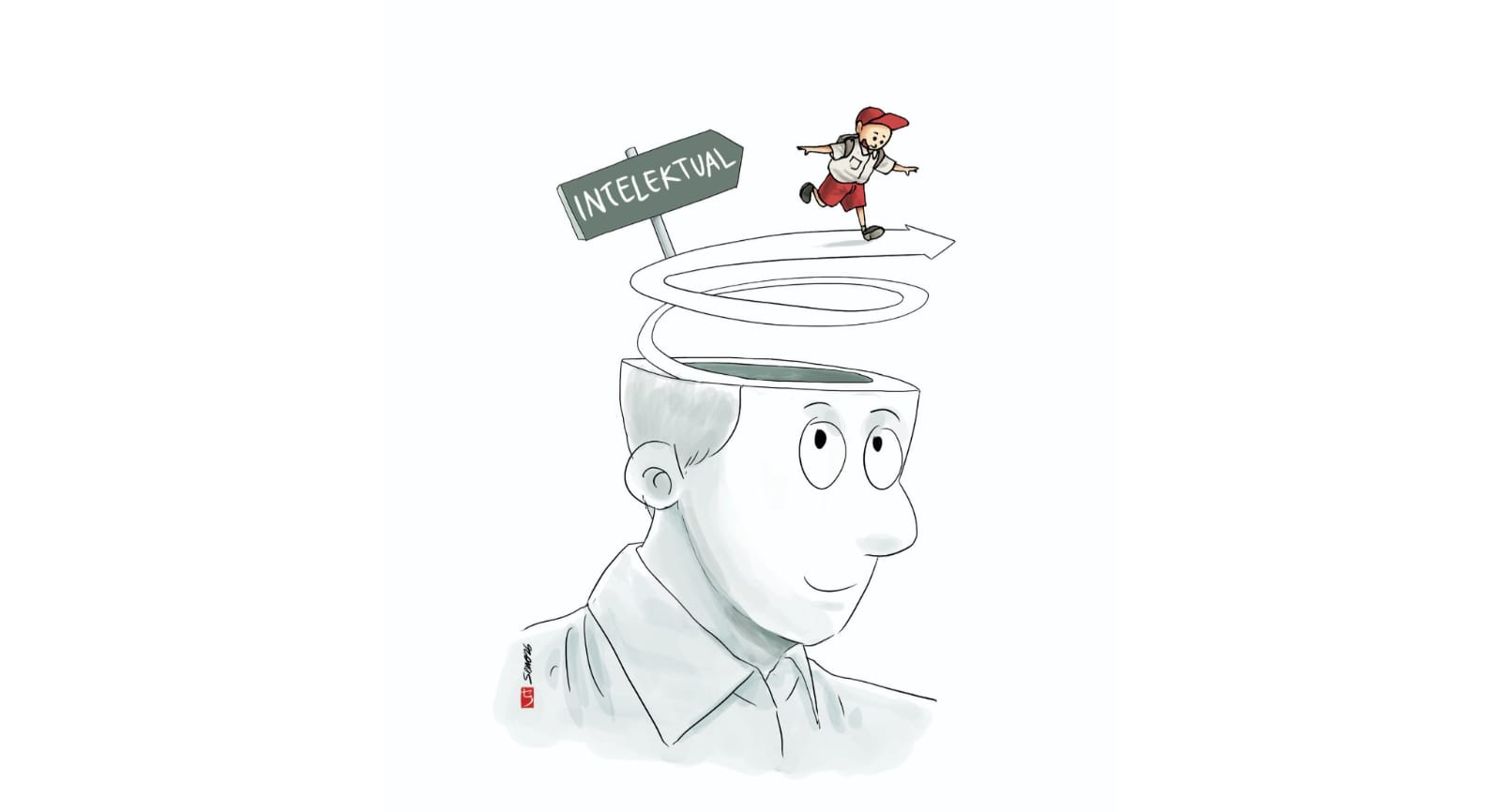
There is a very important question for us to discuss: when can a teacher be said to have successfully taught using the deep learning approach (PM)? Is it when the material has been delivered, the class is orderly, students achieve high scores, or the teacher uses a variety of methods and digital technology? All of these can be part of good learning. However, from the PM perspective, these measures are not sufficient. A teacher’s success must primarily be seen from the changes in students after experiencing the learning process.
This is where PM changes the paradigm of teaching success. A teacher is no longer judged solely on how well they explain the material, but also on how deeply students learn. The question is not only, “Have I finished teaching the material?”, but rather, “What do students truly understand, what are they able to do, and what do they reflect upon?”.
Fullan, Quinn, and McEachen (2018) position the teacher in deep learning as an activator, a driver who designs experiences so that students actively build competencies. The first indicator is the presence of the three PM principles: conscious, meaningful, and joyful. Students learn consciously when they understand the learning objectives, know why something is important to learn, and are able to manage their learning strategies. They are not merely physically present, but also mentally present. A teacher succeeds when learning awareness grows from within the student, not merely because of commands or grade pressure.
Learning must also be meaningful. New knowledge needs to be connected to experience, real problems, and knowledge that students already possess. If students merely memorise definitions and then forget them after the exam, learning has not been deep. As for being joyful, it does not mean the teacher must constantly joke, but rather that there is a positive, safe, challenging, and respectful atmosphere that makes students brave enough to try, ask questions, and not be afraid of making mistakes.
The second indicator is seen in the learning experience: understanding, applying, and reflecting. A teacher has not succeeded if students are only able to repeat information or work on problems identical to the examples. Understanding must move towards the ability to connect concepts, explain reasons, and see problems more holistically. From that understanding, students use knowledge to solve problems, make decisions, produce work, or explain phenomena in different contexts.
This process needs to be complemented by reflection. Students are invited to look back at what they have understood, the parts that remain difficult, the strategies that were effective, the mistakes that occurred, and what needs to be improved. Reflection turns students into learners who recognise their own learning process. Without reflection, learning easily stops as a momentary experience. A successful teacher provides space for students to improve their way of learning.
The third indicator is the development of the eight dimensions of the graduate profile: faith and devotion to God Almighty, citizenship, critical reasoning, creativity, collaboration, independence, health, and communication. Not all of them need to appear at once. The teacher selects the dimensions relevant to the learning objectives and designs activities to cultivate them. Learning does not only produce students who know, but also those who are able to think, communicate, collaborate, and take responsibility.
The fourth indicator is seen in the quality of the learning framework. PM requires teachers to manage pedagogical practices, learning partnerships, the learning environment, and digital technology. Teachers must not be trapped in a single method. Project-based learning, problem-based learning, experiments, discussions, or simulations are merely pedagogical choices. A method is meaningful when it suits the objectives, material, student needs, and helps them learn more deeply.
The classroom environment must be safe, inclusive, dialogical, and respectful. Partnerships with parents, the community, the world of work, universities, or other resource persons can enrich the learning experience. Digital technology is not a decoration of modernisation. Technology is used when it expands learning resources, improves collaboration, aids exploration, or deepens understanding. A teacher’s success is not in the number of digital devices, but in their pedagogical added value.
The fifth indicator is the teacher’s ability to see evidence of the impact of their teaching. Hattie (2012) emphasises the importance of teachers seeing learning through the eyes of students and making the impact of teaching visible. Therefore, assessment in PM is not merely about giving a score at the end. Assessment helps teachers know students’ learning positions, recognise difficulties, provide feedback, and determine the next steps. Hattie and Timperley (2007) show that feedback can have a strong effect when it helps students understand the objectives and their improvement steps.
Thus, the success of PM is not appropriately measured by how busy the teacher is teaching or how narrative the class sounds. The important measure is how significant the change in students is. Are they increasingly aware of the learning objectives? Is their understanding deeper? Are they able to use knowledge in new contexts? Are they brave enough to ask questions, collaborate, communicate, accept feedback, and reflect on their learning process? These questions are more substantive than merely ensuring that all pages of the book have been read and discussed.
Ultimately, a teacher succeeds in PM not when they become the most active speaker in the classroom. A teacher succeeds when intellectual activity shifts to the students. At that point, the teacher becomes a designer of experiences, an activator of learning, a provider of feedback, and a guardian of a respectful classroom ecosystem. The material may not always be more extensive, but understanding becomes deeper. The teacher does not merely finish teaching; students truly learn. Is that not where a teacher’s success lies?