
When Communities Become the Growth Engine of Malang City
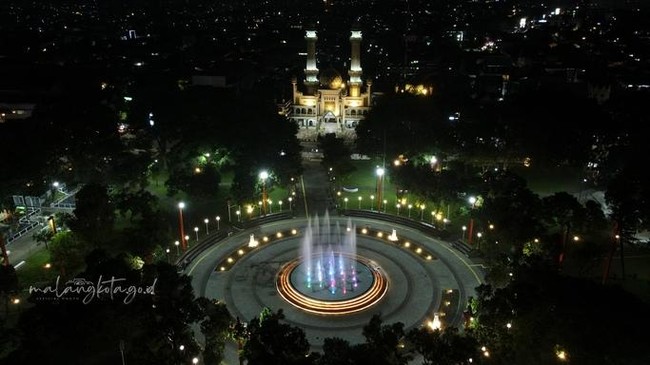
From dining tables to classrooms still lit at 8pm, Malang harbours an economic growth secret unseen in any statistical data. ‘Let’s drop by my office,’ my colleague said just after dinner. I glanced at the clock—it was 8pm, a Friday. ‘What’s going on at the office this late on a Friday?’ I asked. ‘Just come along,’ he replied simply, with a smile that piqued my curiosity. Eventually, I followed his invitation. My colleague—let’s call him Iqbal—is an old friend I met during the Australia-Indonesia youth exchange program in 2001. During the second phase of the programme, I spent two months in Malang, interning at one of the country’s largest media outlets. Time flies, and now Iqbal is a director at a prestigious educational institution in the city. On arriving at the office, I was taken aback. Lights were still blazing at 8:30pm. ‘Good evening!’ voices greeted me from inside. They were Iqbal’s business consulting students, working on assignments—not out of obligation, but because this culture had taken root. In the next room: laptops glowing, presentation slides open, discussions flowing freely. That night felt different. Joy, motivation, and hope radiated from the young faces. Iqbal explained his students were being groomed for careers at the Big Four firms post-graduation—and relentless studying was part of Brawijaya University’s campus culture. I returned home that night with one question echoing: what truly sets Malang apart? ‘When students arrive, they bring more than books—they bring money, ideas, networks, and energy.’ Student City: The Community Engine Malang is more than just an ‘apple city’ or ‘green city’—though both titles are well-deserved. It is a city sustained by communities, with its youth forming the largest driving force. Approximately 40% of Malang’s total population are students. This figure is more than a demographic statistic—it is the economic and cultural foundation shaping the city’s identity. More strikingly, nearly 30% hail from the Jabodetabek region (Jakarta metropolitan area). This means Malang has become a national education hub, attracting students beyond East Java, with economic consequences: a thriving culinary sector, a pulsating creative economy, and a startup ecosystem gradually finding momentum. Social Capital: An Underestimated Advantage In urban development discourse, we often fixate on physical infrastructure—roads, buildings, airports. Malang reminds us of a far harder-to-build and more resilient asset: social capital. Malang boasts a diverse and competitive education ecosystem. From Brawijaya University and State University of Malang to dozens of private institutions, inter-institutional competition drives curriculum innovation—including the Friday night study culture I witnessed firsthand. Communities grow organically across sectors: arts, technology, environment, cuisine—all active and interconnected. Affordable living costs make Malang hospitable for experimentation: young people can launch businesses, open coffee shops, or start startups without the crushing rent pressures of Jakarta or Surabaya. Challenges: Fragmentation and Talent Retention Yet Malang faces challenges. Community-driven growth carries inherent risks: fragmentation. Too many disconnected communities can slow collective innovation. The city must act as an orchestrator—building collaborative platforms rather than letting communities develop in isolation. Talent retention remains a major challenge. Malang produces thousands of qualified graduates annually, yet many opt for careers in Jakarta or other major cities. Collaboration between universities, local government, and industry is key to reversing this trend. ‘When Singapore and Europe come to learn from Malang, it’s time we stop looking down on our own city.’ Creative KEK: A School That Sells Work, Not Just Teaches My visit didn’t stop at Iqbal’s classroom. I toured Malang’s Special Economic Zone (KEK), where a creative industry school stands at its heart—not as an add-on, but as the brain. Here, young designers craft export-oriented local products. Musicians, animators, and digital content creators are honed not just for domestic markets, but for the global stage. The model is project-based: students tackle real industry briefs, not fictional assignments. Outputs can be sold, exhibited, or even patented. This is no ordinary school—it’s a creative talent factory integrated directly with the business ecosystem. At my hotel, I met a group of students from Singapore’s NUS and a professor from Ghent University, Belgium—not as tourists, but studying Southeast Asia’s creative economy comparatively. The fact that top European and Singaporean institutions choose Malang as a research lab speaks for itself. Culinary as a Classroom: When Dining Tables Become Real Lessons If the KEK is a formal laboratory, Malang’s streets are an open classroom that never closes. Thousands of students from various campuses