
When Climate Change Tests Indonesia's Water Resilience
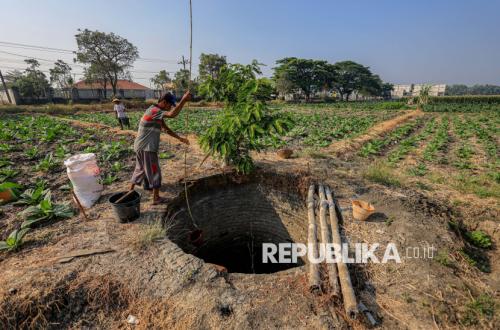
Every time the rainy season arrives, news about flooding almost always fills the media. Rivers overflow, roads are submerged, and thousands of homes are inundated. Yet only a few months later, when the dry season arrives, the news changes dramatically. Reservoirs shrink, rice fields dry up, communities queue for clean water, and the government must send water aid to various regions.
This paradox repeats itself year after year. In the rainy season we seem to have excess water, but in the dry season we actually experience water shortages. The question is simple: how can a country with more than 5,500 rivers, around 840 lakes, and an average rainfall of about 2,700 millimetres per year be increasingly vulnerable to water crises?
The answer lies in one word that we hear more and more often but whose impacts we may not yet fully understand: climate change. Climate change does not only cause the earth’s temperature to rise. Its impacts are far more complex, including altering rainfall patterns, prolonging dry seasons, increasing the intensity of extreme rainfall, raising the risk of flooding, and at the same time increasing the threat of drought.
The Intergovernmental Panel on Climate Change (IPCC) report confirms that Southeast Asia is one of the regions most vulnerable to changes in rainfall patterns and extreme weather events. As has already happened, Indonesia is experiencing increasingly unpredictable rainy seasons, more frequent extreme rainfall, and longer dry periods in a number of regions. These conditions have direct implications for water availability for communities, agriculture, industry, and power generation.
The Meteorology, Climatology, and Geophysics Agency (BMKG) also shows that climate phenomena such as El Niño and La Niña are now increasingly influencing rainfall distribution in Indonesia. In years when a strong El Niño occurs, hundreds of districts experience drought, river flows decline drastically, and agricultural production is affected. Conversely, during La Niña, rainfall increases sharply, triggering floods and landslides in many areas.
The challenge Indonesia faces today is not merely providing water, but maintaining water security amid an increasingly uncertain climate.
Water Resilience Has Not Become Mainstream Policy
So far, water development policy in Indonesia has tended to be dominated by an infrastructure provision approach. This includes the construction of dams, retention basins, irrigation networks, and drinking water supply systems. Over the past decade, the government has built dozens of new dams that have increased the national water storage capacity. However, climate change presents new challenges that cannot always be answered through infrastructure development alone.
The main problem is that water resilience policy still tends to be sectoral. Water resource management, spatial planning, forestry, agriculture, energy, and urban development often operate independently of one another. Yet changes in one sector will have a direct impact on other sectors.
For example, clearing forest areas in upstream regions can increase water runoff during the rainy season, while at the same time reducing groundwater reserves during the dry season. Likewise, increasingly massive urban development without infiltration areas causes rainwater to flow more quickly to the sea rather than being stored as water reserves.
Another problem is the high level of non-revenue water in drinking water supply systems in various regions. Network leaks, illegal connections, and operational inefficiencies cause some of the water that has been produced never to reach customers. Under conditions of climate change, every litre of water lost represents an increasingly expensive loss.
Water resilience has also not fully become a primary consideration in the preparation of regional development plans. Many regional governments still focus more on flood management during the rainy season and the provision of clean water aid during the dry season. They do not build systems capable of reducing the risk of both disasters simultaneously.