
When Cars Become 'Weapons' on Indian Highways
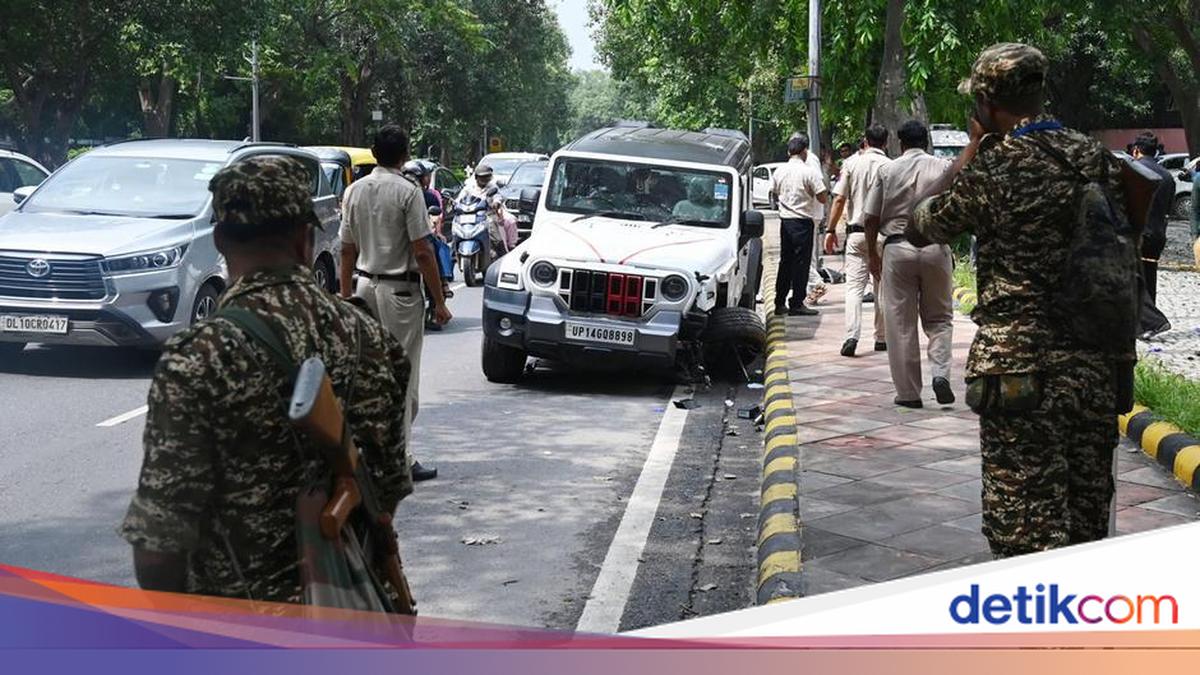
A dispute on a highway in Gurugram, a city on the outskirts of New Delhi, went viral last week after a 27-year-old female motorcyclist was allegedly chased and struck by a car.
Both parties provided differing accounts regarding the start of the dispute. To Indian media, the car driver claimed a group of motorcyclists overtook his vehicle and then slowed down in front of him. Meanwhile, Shivani Chauhan, the woman riding the motorcycle, stated that the car continued to tail her. According to Chauhan, the altercation began when she asked the occupants of the car to maintain a safe distance.
Footage from a camera mounted on Chauhan’s motorcycle shows the car striking her from the side before speeding away from the scene. Chauhan was thrown and tumbled onto the road. “I could have suffered severe fractures or internal injuries, or even died. People like that make the roads of Gurugram and Delhi feel unsafe,” Chauhan said, as quoted by several Indian media outlets.
According to media reports, the car driver claimed to have lost control of his vehicle. He also admitted to fleeing the scene out of fear of a retaliatory attack from the group of motorcyclists. The police subsequently arrested him on several alleged criminal charges, including attempted murder and stalking.
From disputes to collisions and shootings
Chauhan’s case is the latest example of how quickly disputes on India’s increasingly crowded highways are escalating into violence. In March, in Hassan, in the southern Indian state of Karnataka, several youths were reported to have shouted at the driver of a Toyota Fortuner SUV to slow down. According to police, the driver instead turned around and struck the group, resulting in one death and three others being seriously injured.
In the same month, in the northern Indian city of Dehradun, a dispute between the drivers of two SUVs, a Toyota Fortuner and a Mahindra Scorpio, regarding right-of-way, ended in a high-speed chase and gunfire. The incident killed Mukesh Joshi, a retired Army Brigadier who was not involved in the initial dispute. “The occupants of the Scorpio car waited outside a club until the early hours of the morning, then chased the Fortuner. When the shooting occurred, the Brigadier, who was walking in the morning, was hit by a bullet in the chest,” said senior police official Pramendra Dobhal.
Concerns regarding road safety have prompted the government of Daman, a small coastal town north of Mumbai, to take unusual measures. On 9 September, local officials gathered owners of Mahindra Thar and Toyota Fortuner SUVs to take a public pledge for traffic safety. Saurabh Mishra, the highest-ranking official in the district administration, warned that such large vehicles must not be used to intimidate others or to display power.
More vehicles, more congestion
Indian highways are known to be dangerous. Government data shows that an average of 485 people die every day due to traffic accidents in 2024. The data also reveals that the growth in the number of vehicles is now far outstripping the expansion of the road network. According to industry data, approximately 2.63 million SUVs were sold in India in the 12-month period ending March 2026. This figure accounts for 56% of all car sales in the country.
The increase in SUVs on the road does not necessarily mean more people are driving aggressively. However, the size and height of these vehicles, and the impression they convey, can influence the nature of road disputes. “For some drivers, the vehicle becomes a means to demonstrate strength and dominance,” former police officer Yashovardhan Azad told DW. “They drive as if they are above the law to show power to drivers of smaller vehicles,” said Azad.
He called for stricter law enforcement through the use of new technology, heavier penalties, and national programmes to encourage safer driving behaviour. “Intentionally hitting a smaller vehicle is not merely reckless driving. It demonstrates an intent to commit a crime,” he said.
Behind the wheel of an SUV, feeling powerful and invincible
Road safety expert and founder of Community Against Drunken Driving, Prince Singhal, believes the issue relates to both the vehicles and the behaviour of their drivers. “The terror involving SUVs is not just a traffic issue, but also a behavioural problem,” Singhal told DW. “SUV drivers hold the reins of a ‘beast’, and it is their mindset that determines the outcome.”
According to Singhal, while SUVs are a practical choice for navigating broken roads and long journeys, their design carries inherent risks. “The higher bonnet and bumper increase the risk of fatal injuries to the head and chest of pedestrians, children, cyclists, and other road users compared to lower, standard cars,” he noted.
Singhal stated that when driving an SUV, drivers often experience a “psychological sensation of being invincible”. This feeling can drive aggressive behaviour, intimidation of other road users, and traffic violations.
When traffic issues are perceived as personal attacks
Psychiatrist Ravi Prakash, who researches traffic behaviour at the Veditha Mind Care Clinic in Bengaluru, agrees. According to him, drivers “feel powerful and simultaneously protected inside a large, sturdy vehicle”.
However, he warned that other psychological factors are also at play. “There is a psychological phenomenon called ‘personalisation’, where an individual interprets an ordinary action from a stranger as something directed personally at them,” Prakash told DW. Someone cutting in front might simply be in a hurry, but another driver could interpret it as a personal affront.
Source: jawawa.id (https://jawawa.id/newsitem/when-cars-become-weapons-on-indian-highways-1790071251)
Originally published by detikcom (https://news.detik.com/dw/d-8674189/ketika-mobil-menjadi-senjata-di-jalan-raya-india), translated from Indonesian