
When Artisan Skills Become the Source of New Design Ideas
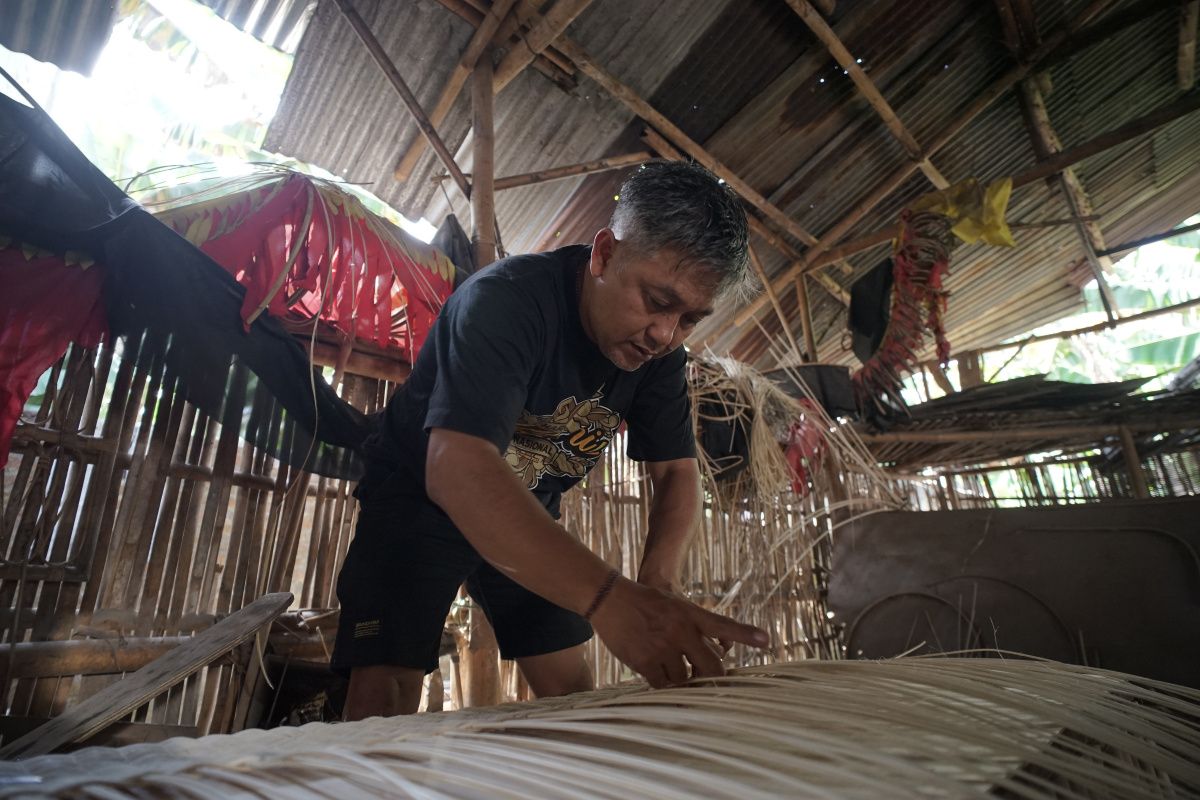
Semarang (ANTARA) - Amidst changing market tastes and increasingly diverse consumer needs, rattan artisans in Trangsan Village, Gatak District, Sukoharjo Regency, Central Java, are being challenged to do more than just produce new products.
They are also facing a more fundamental question: how to keep their crafts relevant without losing the knowledge and skills that form their identity? This question serves as the starting point for the development of 20 new rattan craft products through the 2026 Nusantara Art Innovation Programme (PISN).
The programme, which involves the Interior Design and Architecture Study Programme of Sebelas Maret University (UNS), the Trangsan Rattan Cluster, design practitioners, and partners from Japan, attempts to develop products not by bringing finished designs to the artisans, but by using the artisans’ knowledge as the source of design ideas.
Trangsan has a long history as a rattan craft centre. Crafting activities in the village have flourished since around 1910 and experienced rapid industrial growth when export market demand increased in the 1980s. While this development strengthened the production capabilities of the Trangsan community, market demands have simultaneously caused product designs to increasingly follow specific orders and consumer trends.
This is the condition that PISN 2026 aims to address. Rather than bringing external designs for artisans to execute, the development team first maps the potential possessed by each workshop. Five workshops—Pratama Rotan, Andi Rotan, Arafif Rotan, Cahaya Rotan, and Workshop Mbah Kacung—were studied based on their materials, techniques, product types, production capacities, and the characteristic shapes they have developed over time.
Through this process, artisans are not positioned merely as production executors. They are involved in determining development possibilities based on their existing experience. Weaving techniques, methods of shaping rattan, material selection, joint construction, and the understanding of material flexibility are all integral parts of the design process. Design ideas are then developed through discussions, sketches, visual references, model making, and direct experimentation within the workshops.
One of the results of this development is the ‘cepuk’ portable lamp, created in collaboration with the Andi Rotan Workshop. Its shape is derived from an object familiar to the lives of the Trangsan community: a chicken feed container. This characteristic shape was then translated into a lamp with a function better suited to modern household needs.
A similar process has been applied to several other products. The techniques and shapes already mastered by the artisans have been developed into stackable multipurpose baskets, cat baskets inspired by ‘kaso’ (traditional chicken carrying bags), hangers, stackable stools, coffee tables, and rattan-based fashion accessories.
This development demonstrates that innovation does not always have to begin by abandoning old products. In the context of Trangsan, innovation can actually begin by re-examining what the artisans already possess, and then seeking new functions and forms for that knowledge.