
When Algorithms Replace Teachers
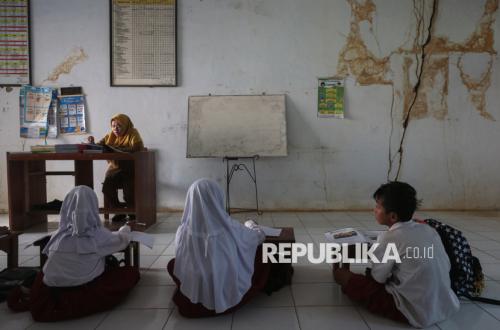
Towards the end of last year, a kiai at a large Islamic boarding school in East Java shared his unease. The students, he said, now trust ChatGPT more than their teachers’ explanations in the halaqah. They ask AI for interpretations of verses, then arrive with answers they believe to be absolute truth. Yet, AI has no chain of transmission, no teacher, and no heart.
This anxiety is not unfounded. Over the past three years, the integration of artificial intelligence into Islamic education has proceeded rapidly—too rapidly to be accompanied by adequate ethical reflection. A review of 47 reputable scientific articles from Scopus published between 2023 and 2026 reveals that while AI offers significant opportunities for personalised learning and accessibility, it also carries fundamental risks that threaten the very spirit of Islamic education.
Imagine a madrasa in a remote part of East Nusa Tenggara. With AI, students there can access tafsir materials, learn tajwid, or practise Arabic without waiting for a teacher to arrive. AI reaches the unreachable, personalises the uniform, and automates the repetitive. This is an undeniable strength.
But on the other hand, imagine a student asking a chatbot about differences between Islamic schools of thought and receiving a shallow, even erroneous, answer with no teacher to correct it. Imagine personal data changing hands without oversight. Imagine human interaction replaced by screens, and character formation sidelined by mere cognitive optimisation.
A SWOT analysis of global academic literature reveals worrying findings. Fewer than 10% of madrasas have established ethical protocols for digital learning. AI-supporting infrastructure is available in only 17.4% of madrasas. This means we are entering the AI era with minimal preparation, and the issue is not merely technical but ethical and spiritual.
From dozens of studies reviewed, ten major ethical challenges threatening the integration of AI in Islamic educational institutions were identified. First, AI lacks emotional intelligence. It cannot guide morals, grasp spiritual context, or teach adab, even though adab is the core of Islamic education. Second, algorithmic bias: AI is built on data that is not neutral and often misaligned with Islamic values.
Third, the risk of textual distortion. Misinterpretation of the Qur’an and hadith could become a doctrinal disaster without scholarly supervision. Fourth, privacy violations. Student data is a trust, yet there is no guarantee of security on commercial AI platforms.
Fifth, the erosion of human interaction. The millennia-old methods of talaqqi and halaqah are at risk of being displaced. Sixth, the decline of critical thinking. Dependence on instant AI answers weakens the analytical abilities of the younger generation.
Seventh, the gap between principles and implementation. Islamic values such as justice and trust remain normative, without operational technical guidance. Eighth, the digital divide. Rural Islamic boarding schools lag far behind in technological access, creating new inequalities.