
When AI changes the world's demand for copper
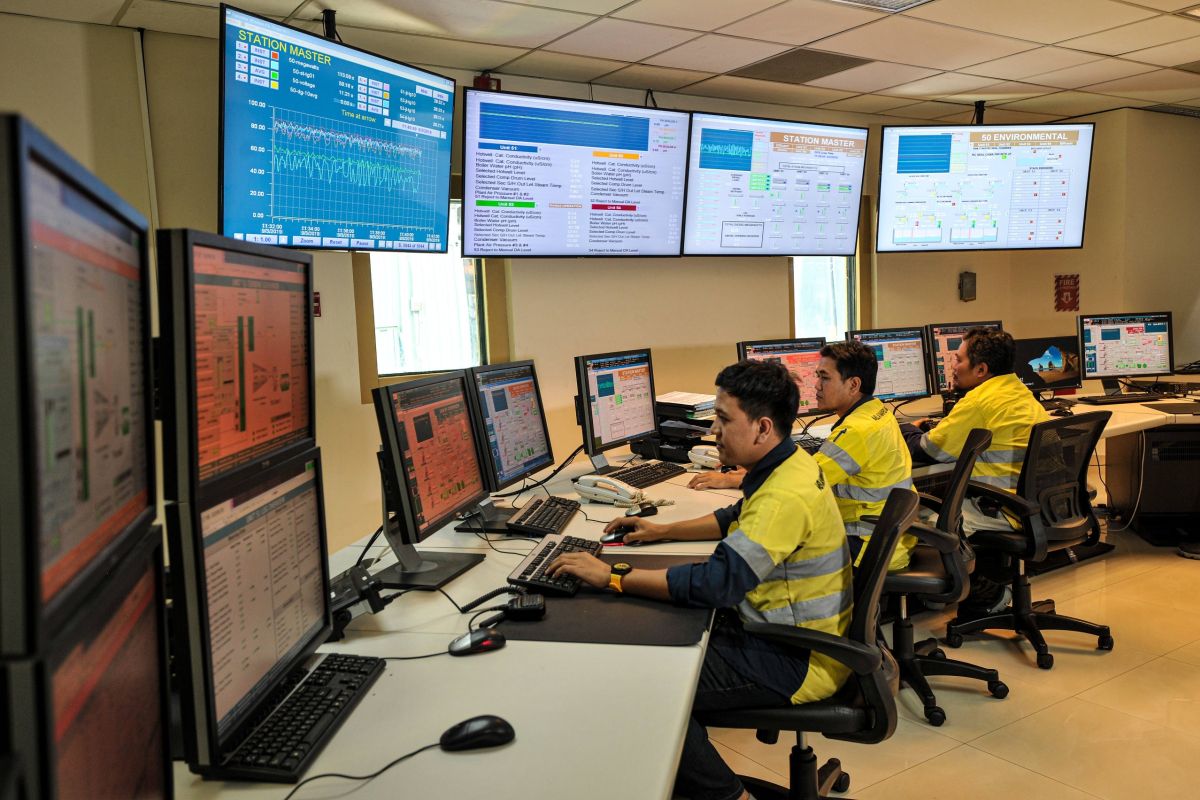
Data centers require large amounts of electricity. Transmission networks need cables, while solar and wind projects and electric vehicles depend on extensive electrical infrastructure and components.
Copper is central to that transformation because of its strong electrical and thermal conductivity, making it essential to electrification and many emerging technologies.
The International Energy Agency (IEA) identifies copper as one of the key minerals. Under its Stated Policies Scenario, total copper demand is projected to rise from about 25.9 million metric tons in 2023 to 31.1 million tons in 2030 and 36.4 million tons in 2040. Demand from clean energy technologies alone is projected to increase from 6.3 million tons in 2023 to 12 million tons in 2030.
This means the race for copper is no longer simply a matter of mining commodities. The metal is becoming part of the race to build the digital economy and the energy infrastructure of the future.
For Indonesia, that opportunity comes with a paradox. The country has substantial copper resources but has yet to become a major player in either mine production or downstream copper industries.
Data from the Investment and Downstreaming Ministry/Investment Coordinating Board (BKPM) show that Indonesia ranks among the seven countries with the world’s largest copper reserves, accounting for about 3 percent of global reserves. However, Indonesia ranks 11th in mine production and 18th in downstream copper industries.
That gap gives copper downstreaming strategic importance.
Pri Agung Rakhmanto, founder and adviser at the ReforMiner Institute, said at least three sectors would become major drivers of copper demand: infrastructure and electricity, including cables and transformers; new and renewable energy, such as solar and wind power plants; and the automotive industry, particularly electric vehicles (EVs).
All three share one characteristic: they require electrification on a large scale.
The IEA estimates that annual copper requirements for electricity grids under a sustainable development scenario could approach 10 million tons by 2040, compared with around 5 million tons in 2020.
At the same time, data centers built to support AI computing are adding pressure on electricity infrastructure. The AI story, therefore, is not only about software but also about the physical requirements for energy, grids and minerals.
For countries with copper reserves, this presents both an opportunity and a challenge.
Pri Agung said the government needs to build an industrial ecosystem capable of absorbing domestically processed copper.
“That will eventually absorb copper and processed copper (cathode) production from copper smelters operating in Indonesia,” Pri Agung said.
If domestic copper-consuming industries remain underdeveloped, he said, increased production would largely be directed toward exports.
Building smelters, therefore, increases value added but does not solve the entire downstreaming challenge. Indonesia also needs cable manufacturers, electrical component producers, energy equipment makers, EV manufacturers and other industries that use copper as a raw material.
A country cannot rely solely on mines and smelters. The challenge is to keep copper circulating longer within the domestic economy.
From Batu Hijau to Cathode, From Data to Efficiency
AMMAN stands at the intersection of rising copper demand and Indonesia’s downstreaming agenda.
The company operates the Batu Hijau mine, one of the country’s strategically important mineral assets. A new mining phase, expanded processing operations and the operation of its smelter have created a value chain stretching from the upstream mine to processed products downstream.
Rachmat Makkasau, president director of Amman Mineral Nusa Tenggara, expects AMMAN’s copper cathode production to reach 162,662 tons in 2026. The figure is projected to nearly double to 310,256 tons in 2027.
Gold production is projected to increase from about 16.1 tons to 28.67 tons, while silver production is expected to rise from 45.4 tons to 82.4 tons.
“Production will increase over the next three years because we will begin processing more ore,” Rachmat said at a hearing with Commission XII of the House of Representatives (DPR RI) recently.
The targets follow the completion of the capacity ramp-up at AMMAN’s smelter. Cathode production stood at around 79,848 tons in 2025 before being targeted to increase to 162,662 tons in 2026. The smelter has a processing capacity of about 900,000 tons of copper concentrate per year.
At the mine, AMMAN is targeting about 900,000 dry metric tons (dmt) of Batu Hijau concentrate production in 2026, containing about 485 million pounds, or around 220,000 tons, of copper and approximately 579,000 ounces of gold.
But higher production does not automatically translate into greater efficiency. Large-scale open-pit mining involves thousands of variables every day, ranging from ore characteristics and mineral grades to equipment conditions, weather, material flows, reagent consumption, water and energy use, and downtime.
This is where technology comes in—not simply to replace people but to help workers make decisions based on volumes of data that would be difficult to process manually.
At the Batu Hijau processing plant, AMMAN has developed the Artificial Intelligence Dashboard Automation (AIDA). The system uses historical and real-time operational data to analyze mineral-processing conditions and recommend operating parameters, including reagent dosage and water flow rates.
According to Vice President of Corporate Communications at AMMAN Kartika Octaviana, the transformation is part of a broader change.
“AMMAN’s digital transformation encompasses two main layers,” Kartika said.
The first is the digitalization of business processes through a cloud-based ecosystem integrating finance, procurement, human resources, data management and analytics. The second operates in the field, covering mineral processing, fleet ma