
When AI Arrives, Who Must Change
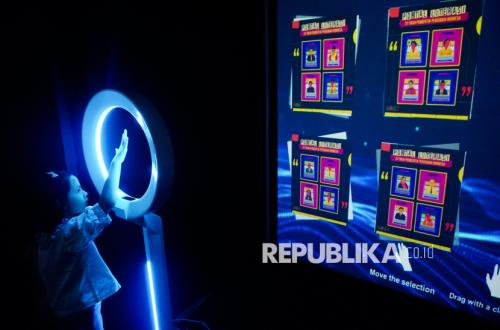
Bill Gates once made a statement that has left many educators anxious. In an interview in March 2025, the Microsoft founder predicted that within the next ten years, artificial intelligence will be capable of performing many tasks currently handled by humans, including those of doctors and teachers. Gates even suggested that great medical advice and excellent tutoring would become commonplace and free of charge.
Prof. Arif Satria, Head of the National Research and Innovation Agency, cited this prediction during a public lecture at UPN “Veteran” Yogyakarta on 10 September 2026. “Even Bill Gates says that in 10 years, teachers could be replaced by AI. The question is, how will we transform?” Arif stated. He then added a reflective thought: “Teachers who can be replaced by AI are ordinary teachers. Lecturers who can be replaced by AI are ordinary lecturers. Ordinary lecturers can only deliver information, good lecturers can explain, but great lecturers can inspire.”
At first glance, these statements seem to concern the future of teachers. However, they actually address the future of human resource management within education. In the article “When Algorithms Replace Teachers,” we attempt to map ten ethical challenges lurking in the integration of AI within Islamic educational institutions. Research published between 2023 and 2026 found that fewer than 10 per cent of madrasahs have established ethical protocols for digital learning, and AI support infrastructure is available in only 17.4 per cent of madrasahs. These figures indicate that we are entering the era of AI with minimal preparation.
Yet, one question remains unanswered in that writing: what must Islamic education management do? It is not about individual teachers or religious leaders (kiai) in pesantren, but about those who manage human resources within educational institutions. This is where the issue of human resources becomes crucial.
Unbalanced Readiness
In 2025, the National Research and Innovation Agency conducted a Digital Literacy Competency Evaluation of Madrasah Teachers. The findings were striking: generally, madrasah teachers demonstrate a positive attitude and high openness towards technology, including AI. They do not reject it; they are not suspicious; they want to learn.
However, psychological openness is not the same as competency readiness. A fundamental imbalance was revealed by the evaluation. We can imagine a madrasah teacher in a remote area of the country. They know AI is important. They see their students asking ChatGPT questions. They want to participate in using it. However, they have never been trained. They do not know where to start. They do not know what is permitted or prohibited. They only know that something is changing, and they have not been included in that change.
Data from various surveys reinforce this picture. One study found that AI integration in Islamic education is still limited by technical and infrastructural constraints, and that AI integration requires continuous teacher training and curriculum development aligned with Islamic values. Another study shows that community involvement, informal cross-generational training, and adaptive leadership can bridge the gap between teacher readiness and training deficiencies.
Nevertheless, study after study confirms the same thing: the training gap is the primary obstacle. A survey cited from the Ministry of Education, Culture, Research, and Technology (2025) revealed that 70 per cent of primary school teachers in disadvantaged areas have never participated in coding or AI training, and only 15 per cent feel confident teaching it. Indonesia’s Digital Literacy Index even only reached 3.54 on a scale of 5, which is classified as “moderate.”
If those figures are projected onto madrasahs, the picture is not much different. It may even be more complex, as madrasahs face additional challenges: maintaining the depth of religious content and Islamic ethics, which are moving much faster than the ability of the curriculum to adapt.
Source: jawawa.id (https://jawawa.id/newsitem/when-ai-arrives-who-must-change-1790906052)
Originally published by Republika (https://analisis.republika.co.id/berita/tm8gj9451/ketika-ai-datang-siapa-yang-harus-berubah), translated from Indonesian