
When a PNM Mekaar Customer's Child Says: My Parents Struggle in the Fields, I Struggle at School
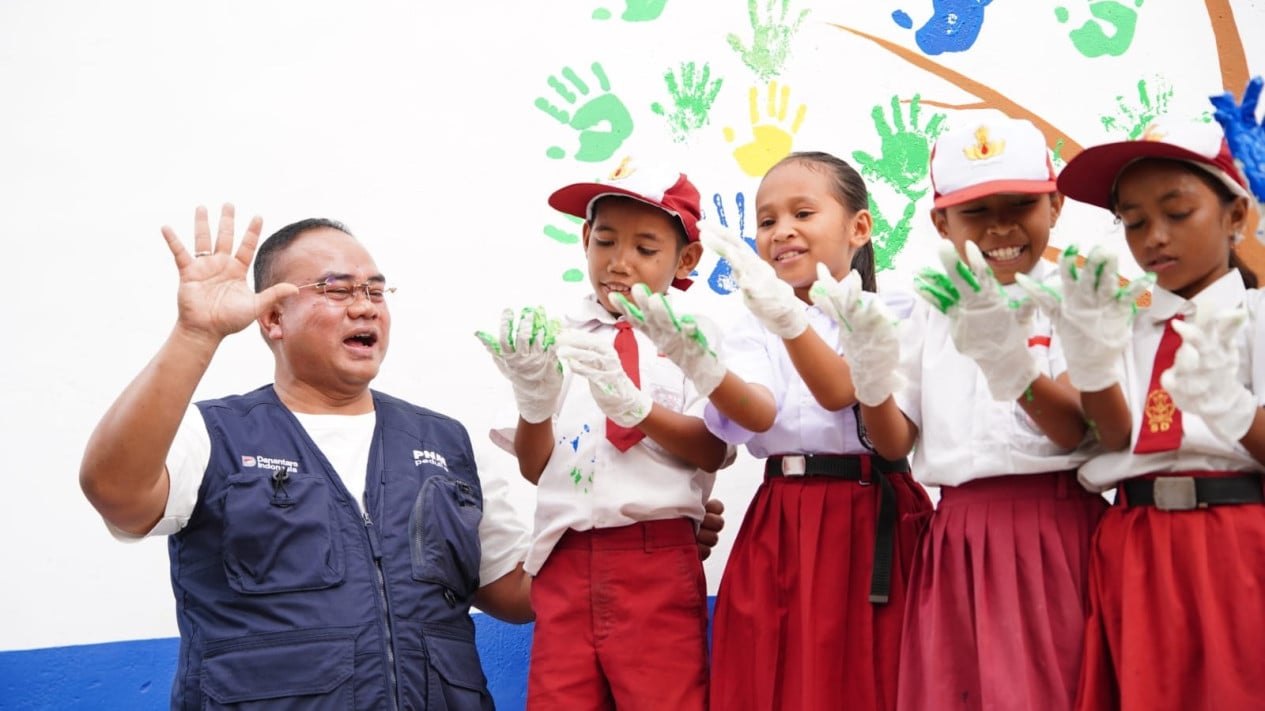
In the corner of West Manggarai, East Nusa Tenggara, lies Wae Moto Village, a frontier, outermost, and underdeveloped region. In this area with limited access, school is not just a building for learning, but a space where hope is nurtured. For the children of Wae Moto, education is a path to break the chain of limitation while opening up wider opportunities for the future. However, their enthusiasm has long coexisted with learning facilities that require attention, from school infrastructure to sanitation and cleanliness amenities that are not yet fully adequate.
Coinciding with National Children’s Day 2026, which carries the theme ‘Love Children, Protect and Build Their Future’, one of the women’s economic empowerment institutions under Danantara, PNM, through its PNM Peduli programme, has taken a simple yet impactful step for SD Inpres Wae Moto as a form of compassion translated into school revitalisation. This spirit is reflected in Mariva Yankezia, a 10-year-old student who comes to school every day with a simple yet profound conviction. ‘I remain enthusiastic about school because I know my parents work hard so I can study. I want to study seriously so I can make them proud,’ she said.
Behind that simple sentence lies the story of many children in Wae Moto who understand that every step towards school is the fruit of their parents’ struggle. This awareness makes education not just an obligation, but a form of respect for family sacrifice. Through PNM Peduli, care for the children’s future is realised by renovating classrooms to make them safer and more comfortable, improving sanitation facilities and school hygiene access, and equipping the school with necessary infrastructure gathered in coordination with the school. This effort stems from the belief that a proper learning environment is an essential part of shaping the quality of education. In a region still facing challenges with clean water access and sanitation facilities, the presence of hygiene amenities not only supports students’ health but also creates a more humane learning space, allowing children to grow, learn, and dream with greater confidence.