
What Would a Democratic Midterm Victory Mean for the Middle East, China and Beyond?
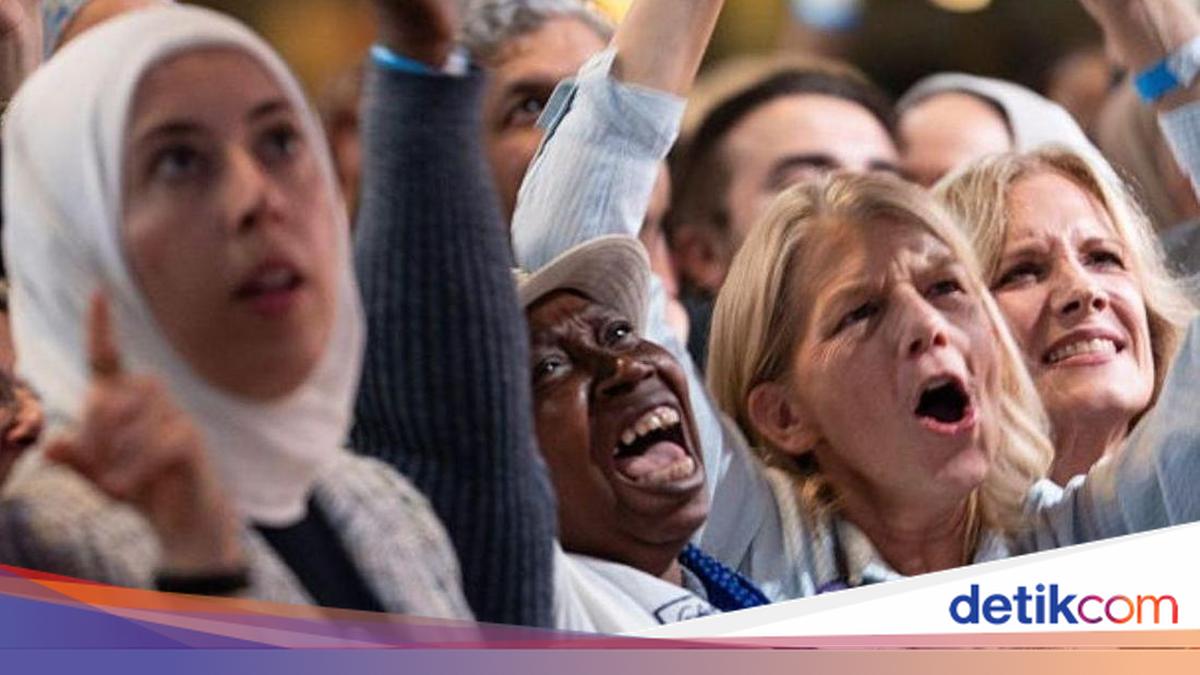
The Democratic Party has won the Senate and the House of Representatives in the US midterm elections. The victory means the party has taken control of Congress for the remainder of President Donald Trump’s term.
The major shift in the political landscape marks a significant setback for the president. He acknowledged that the war in Iran and the rising cost of living had contributed to the defeat of many Republican candidates.
US Vice-President JD Vance said: “The reason we lost is the war.”
BBC journalists explain what the Democratic Party’s midterm victory means for the rest of the world, from conflicts in Ukraine and the Middle East to trade relations with China.
Iran
Iran’s Supreme Leader has not appeared in public since before he was injured in a US attack in February.
Ghoncheh Habibiazad, BBC News Persian senior reporter in London
Iran’s Supreme Leader, Mojtaba Khamenei, said that those who believe a shift in US politics would bring a change in “US hostility towards Iran” are “very much mistaken”.
Khamenei also threatened that if the US attacked Iran again, Iran’s response “would extend to an even greater scale”.
Mojtaba Khamenei, who succeeded his father Ali Khamenei after he was killed in a US-Israeli attack on 28 February, has not appeared in public for months.
Mojtaba’s remarks came in a six-page written message released on Wednesday (4 November), coinciding with the anniversary of the 1979 takeover of the US embassy in Tehran.
Arab Gulf states
Saudi Crown Prince Mohammed bin Salman met Trump.
Frank Gardner, BBC security correspondent
In theory, Donald Trump’s Republican Party losing could be seen as a setback for the Arab Gulf states.
President Trump and his family have close personal and business ties with the countries. Dubai has a Trump International golf course, while Qatar gave him an aircraft worth US$400 million.
The United Arab Emirates, Qatar and Saudi Arabia have collectively invested billions of dollars in Affinity Capital, the company run by Donald Trump’s son-in-law, Jared Kushner.
Trump also chose Riyadh as the destination for his first overseas trip during his first presidential term, in 2017.
Relations between Saudi Arabia and his Democratic predecessor, Joe Biden, were very strained. Gulf leaders also had serious reservations about President Obama after he failed to punish Syrian President Bashar al-Assad for using poison gas.
But this year’s war in Iran has changed the way people think about Trump. As one commentator put it on 28 February: “President Trump has set the Gulf on fire.”
There are also concerns that Trump could reignite the war and provoke Iran into destroying their vital national infrastructure.
Where does Iran fit into the election result?
Rebecka Pieder, BBC reporter in Washington DC
US Vice-President JD Vance said the Republicans’ heavy election defeat was due to the decision to go to war with Iran.
The war has sharply increased costs for Americans, particularly petrol prices. While campaigning for a second term in 2024, Trump promised to bring petrol prices below US$2 a gallon. The average price in October was US$4.31 a gallon.
Trump also promised there would be no new wars if he returned to the White House. But the day before the midterms, the US launched a fresh attack on an island in Iran, and Trump told reporters he did not regret starting the war.
In response to the midterm results, Iran’s chief negotiator in talks with the US said the American people had “said NO TO WAR”.
However, Supreme Leader Mojtaba Khamenei said in a statement that he did not expect US policy to change after the election result.
Speaking to the BBC’s US partner CBS News, Trump said the conflict would end “when I say it’s over”.
China
China’s President Xi Jinping will be looking for opportunities to secure a better trade deal with the US.
Laura Bicker, BBC China correspondent
China will see an opportunity as it watches the Democrats’ midterm victory.
Trump imposed tariffs on Chinese goods entering the US to protect American producers from cheap Chinese products. But the plan backfired when Xi retaliated with hefty tariffs. This made many goods more expensive for Americans, including household items such as toys and clothing.
China also stopped buying US agricultural products, hurting farmers in states that support Trump.
The trade war ended in a truce that is due to expire next January. China may feel that Trump has learnt from his mistake after the midterms and will seek to reach a deal.
Xi will see an opportunity to improve conditions for China.
Russia
Russian President Vladimir Putin and Donald Trump have met several times.
Steve Rosenberg, BBC Russia editor
Dmitry Peskov, Vladimir Putin’s spokesman, told Russian media: “We very much hope Donald Trump will continue his peace efforts.”
“There are some ideas,” Peskov said, adding that “another round of trilateral negotiations will take place soon”. He was referring to planned talks in Abu Dhabi involving Russia, Ukraine and the US.
He added: “We have seen the success of Melania Trump’s humanitarian peace efforts.” Peskov was referring to a recent humanitarian operation in Russian-occupied Oleshky.
“We hope all of this will continue,” he said.
If peace efforts fail, Moscow is likely to blame Ukraine and Europe, as it has done before.
It may now also blame the Democrats and the midterm elections. It is unlikely to blame Donald Trump, as the Kremlin has invested heavily in its relationship with him and clearly still hopes to develop economic cooperation with the Trump administration.
World media
A cartoon image shows a man in a white shirt and red-and-white striped tie hitting a doll-sized Donald Trump on the head with a hammer.
BBC monitoring
For people in Ukraine, Iran and across the Middle East, the US midterms are not simply about domestic politics; they are about what the result means for ongoing conflicts.
In Ukraine, commentators focused on Trump’s handling of the Russia-Ukraine war. Journalist Roman Tsymbalyuk quipped that Trump had “ended every war but lost his own”, a dig at Trump’s claims that he is adept at ending global conflicts.
As Russia continues to attack Ukraine’s energy infrastructure, some in Kyiv hope a Democratic victory could strengthen support for tougher sanctions on Moscow. Others fear political deadlock in Washington could create fresh uncertainty over policy towards Ukraine.
In Moscow, the Kremlin has publicly expressed hope that Trump will continue efforts to broker an end to the war. Further talks between Russia and Ukraine are scheduled to take place this month.
However, Russian pro-war voices warn that a Congress controlled by the Democrats could limit Trump’s ability to secure any future deal with the Kremlin or ease sanctions on Russia.
Meanwhile, the Iranian government and state-linked media have portrayed the Democratic victory as a public rebuke of Trump’s war policy.
Iranian media highlighted what they described as the rising political cost of military confrontation with Tehran.
Source: jawawa.id (https://jawawa.id/newsitem/what-would-a-democratic-midterm-victory-mean-for-the-middle-east-china-and-beyond-1794052252)
Originally published by detikcom (https://news.detik.com/bbc-world/d-8742802/apa-dampak-kemenangan-demokrat-di-pemilu-sela-as-bagi-timteng-hingga-china), translated from Indonesian