
What We Know About Protests in France Spreading to Other European Countries
Protests over the cost of living in France have escalated. The demonstrations, led by groups of secondary-school pupils, have now spread to several other European countries.
These include Italy, Belgium, Portugal and Albania. Although the protests elsewhere in Europe were smaller than those in France, some were marked by clashes between demonstrators and police.
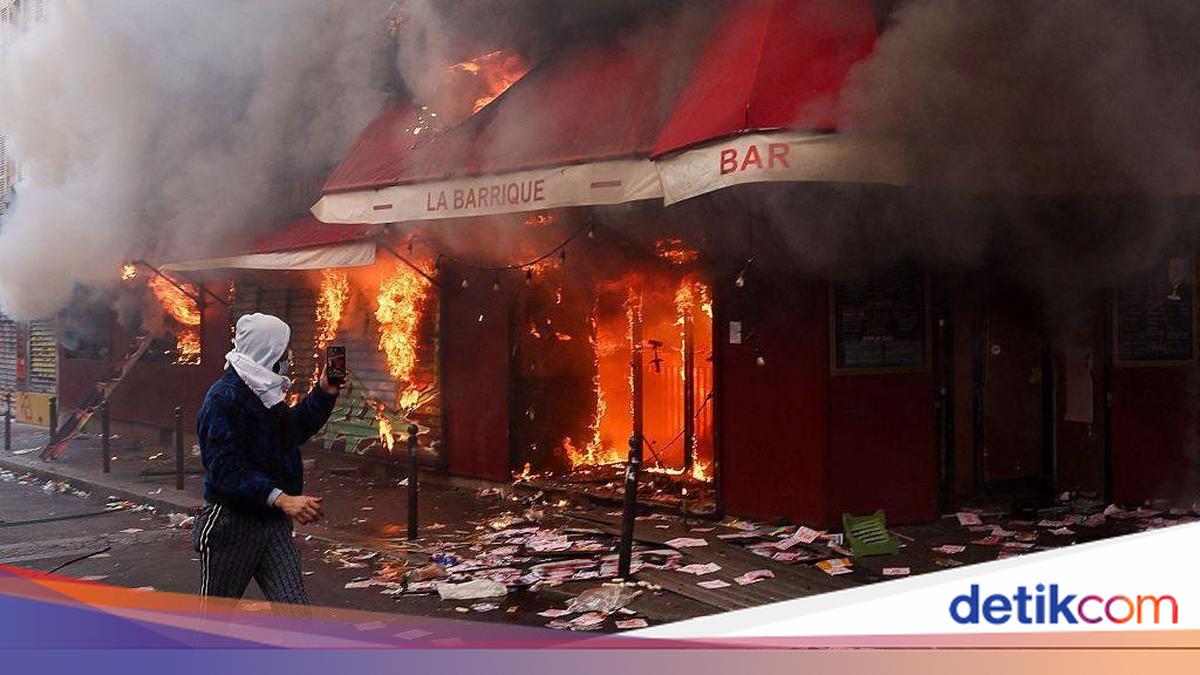
In France, protests took place in several cities on Saturday (17 October), with demonstrators opposing rising living costs and declining standards in public services. Protests in some areas descended into chaos, as hard-line groups damaged public buildings, looted luxury boutiques and supermarkets, and attacked vehicles and police officers.
In Marseille, a group of demonstrators dressed in black forced its way into the town hall and covered the building with anarchist graffiti. In Limoges, the town hall was set alight, while in Lyon rioters set fire to the tourism office.
Spread to other countries
Protests in Italy, Belgium and Portugal were driven by the high cost of living, Reuters reported on Monday (19 October 2026). In Albania, demonstrators protested against alleged government corruption, a lack of jobs and poor educational standards.
Protests over the cost of living in Italy descended into chaos. Clashes broke out between demonstrators and police in Milan. Officers fired tear gas at protesters who were throwing stones at them.
Clashes in Milan continued into Sunday (18 October), as demonstrators kept throwing stones at police and looted shops. Riot police deployed at the scene fired tear gas and used water cannon against hundreds of demonstrators involved in looting and arson near Piazza Duomo.
Similar clashes took place in Bologna, where a protest against the high cost of living was also held. Police used water cannon to disperse demonstrators there.
Protests also took place in several other Italian cities. A total of 28 demonstrators were arrested following clashes in Milan, Bologna, Brescia, Bergamo and Turin.
Italian Prime Minister Giorgia Meloni condemned the violence. “Demonstrating is a right. Turning our cities into battlegrounds is not a right,” she said.
Protests also broke out in Belgium, partly inspired by similar demonstrations in France. Hundreds of demonstrators, most of them young people, gathered in Brussels on Saturday (17 October), and some clashed with police.
Student groups in Belgium said the protests were against rising education costs and reforms they fear will make higher education harder to access.
Demonstrators chanted anti-fascist slogans. Some overturned a car near the protest site, while police fired tear gas and used water cannon to disperse the crowd.
Tens of thousands of demonstrators took to the streets of Lisbon on Saturday (17 October) to protest against high housing costs and other living expenses. House prices in Portugal have doubled since 2017, fuelling a crisis.
Demonstrators said low wages could not keep pace with housing costs and other rising expenses, leaving many people struggling to meet their day-to-day needs in Portugal.
The protest followed several days of mounting public discontent, including activists setting up a tent camp in Porto, which police later cleared.
In Albania, protests were held against alleged government corruption, a lack of jobs and poor educational standards. The student-led demonstrations called for the resignation of Prime Minister Edi Rama.
Police were reported to have fired rubber bullets at demonstrators.
2,400 people arrested
French President Emmanuel Macron criticised what he called “failures in anticipation and intelligence” by the French authorities, the Élysée Palace said on Monday (19 October), after a nationwide protest over rising living costs turned violent.
Despite acknowledging those failures, Macron rejected the resignation of Interior Minister Laurent Nunez. Macron and his government are facing pressure from opposition politicians calling for Nunez to be dismissed following mass demonstrations on Saturday (17 October) against the rising cost of living and fuel prices, which turned into riots.
Nearly 2,400 people were arrested, while almost 1,000 police officers and gendarmes were injured, the Interior Ministry said on Sunday (18 October).
Nunez acknowledged on Monday (19 October) that police across the country had “lost control” of the situation over the weekend.
As tens of thousands of people took to the streets nationwide to protest rising living costs and social inequality, crowds of young people, mostly men, clashed with police, looted shops and set fire to public and private property, including Limoges’s historic town hall.
Nunez agreed with Macron’s assessment of what he called a “lack of anticipation” by the authorities, and said he had offered his resignation “because I feel responsible for everything that happened”.
Macron instructed Nunez to “take all necessary steps to ensure transparency over the failures in planning and intelligence that led to the violence”, according to a statement from the president’s office. The president also ordered Nunez to “introduce new operational methods for security forces” to manage future crises, including how to deal with violent looters.
Provocateurs suspected of infiltrating protests
Violence broke out across France on Saturday (17 October) in the latest wave of demonstrations over difficult conditions in schools and the high cost of living.
At least 1,200 people were arrested in what the French government called an “escalation of violence”, while an estimated 550,000 people took to the streets.
In Paris, major clashes between demonstrators and police continued into the evening. Police used tear gas and water cannon to disperse the crowds.
Several buildings were set alight in the French capital and elsewhere. In Limoges, a large fire at the town hall caused part of its roof to collapse.
Looting was also reported in several cities, along with widespread vandalism targeting town halls and commercial buildings.
Protester dies
A mass demonstration over the cost of living in Paris ended in disorder. One person died after suffering a cardiac arrest.
Reuters reported on Sunday (18 October 2026) that a nationwide demonstration turned into riots on Saturday. Town halls were set alight, shops were looted and buildings were covered in graffiti as violent groups clashed with police in cities across France.
A protester died after suffering a cardiac arrest during the demonstration in Paris. Police recorded a total of 855 arrests following the unrest in the capital.
The interior minister said 1,800 people had been arrested across France during and after the demonstrations. More than 500 police officers were injured nationwide.
Dutch visitor Tije De Boer described the unrest as resembling a war zone. He said the protests forced him to evacuate the hotel where he was staying at Place de la République, which was badly damaged on Saturday.
“It feels like a war zone here,” said De Boer, a Dutch businessman who had travelled to Paris with his children to visit a friend.
Source: jawawa.id (https://jawawa.id/newsitem/what-we-know-about-protests-in-france-spreading-to-other-european-countries-1792457458)
Originally published by detikcom (https://news.detik.com/internasional/d-8714844/yang-diketahui-soal-demo-prancis-meluas-ke-daratan-eropa-lain), translated from Indonesian