
What We Consider Good May Not Be Best in the Sight of Allah
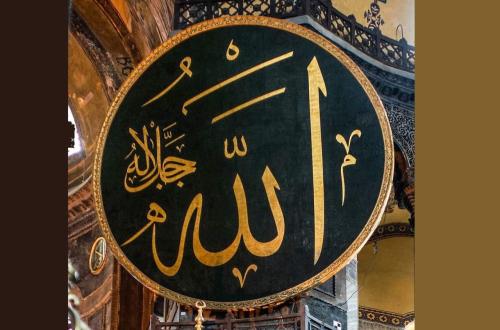
Many people who consider themselves believers and have fulfilled all the pillars of faith and Islam are sometimes filled with questions and dissatisfaction. For instance, they wonder why, despite having performed all forms of worship, their daily lives remain impoverished. They compare themselves to those who have no faith at all, even non-Muslims, whose lives appear far more comfortable. They have striven with all their might, yet a good and prosperous livelihood still does not flow to them. Similarly, a person may fall in love with someone but still fail to achieve a proper life as husband and wife. Many educated believers also often fail in school or university examinations. There are many disappointments that humans constantly face, though we should refer everything back to the hadith: ‘What we consider good may not be good according to Allah. What we consider bad may be good according to Allah.’
We should also reflect on the meaning of Surah Ar-Rahman, whose verses repeatedly ask: ‘Then which of the favours of your Lord will you deny?’ Consider that those who are disappointed are still alive and still healthy. They breathe oxygen freely without charge, unlike a sick person who must pay for every oxygen cylinder used. Their hearts are good, their kidneys are good, their brains are healthy and not insane, and their lungs are also good. It is merely because they have not obtained more material sustenance, such as a promotion or a long-desired position, that they become disappointed. Sometimes, this disappointment is even directed at Allah.
Many surahs and verses of the Holy Qur’an discuss patience. It is clearly stated in the holy verses: ‘Seek help through patience and prayer’ (2:45, 153). Since disappointment is a trial, it is fitting that the Holy Qur’an also states: ‘Those who, when disaster strikes them, say, “Indeed we belong to Allah, and indeed to Him we will return.” Those are the ones upon whom are blessings from their Lord and mercy. And it is those who are the [rightly] guided’ (QS 2:156-157).
Beyond what is revealed in the Holy Qur’an regarding patience, there are also many hadith on the subject. As explained in a hadith qudsi narrated by Bukhari: ‘Allah, the Mighty and Sublime, has said: When I test My servant by taking away the two things he loves most, and he remains patient, I will compensate him for them with Paradise.’ Since the reward for patience is Paradise, it is indeed fitting that we pray: ‘Our Lord, pour upon us patience and let us die as Muslims [in submission to You]’ (QS 7:126).