
What Time Is Today's Annular Solar Eclipse and What Are Its Effects?
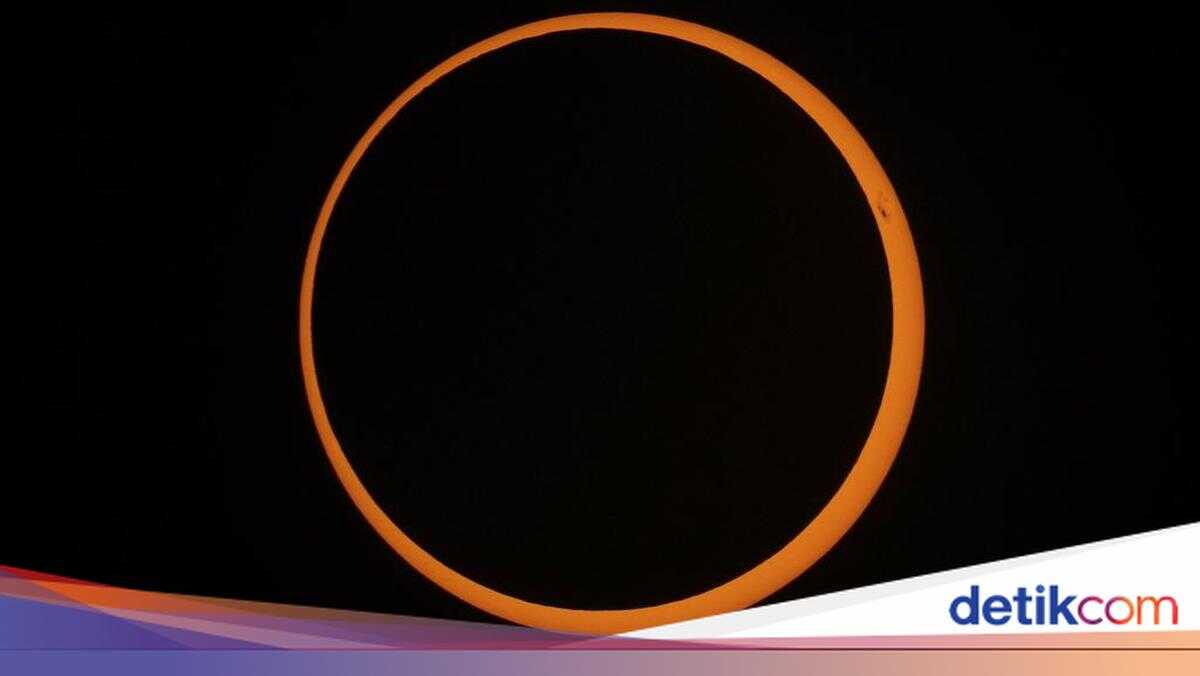
An annular solar eclipse took place on Monday, 17 February 2026. This astronomical phenomenon attracted attention due to its distinct phases spanning several hours from start to peak. However, not all regions were able to witness the February 2026 annular solar eclipse directly.
Annular Solar Eclipse Timing
According to the 2026 Almanac published by the Meteorology, Climatology and Geophysics Agency (BMKG), the annular solar eclipse occurred on 17 February 2026 with several phases in Universal Time (UT).
The partial eclipse began at 09:56:14 UT, or approximately 16:56 Western Indonesian Time (WIB). The annular phase commenced at 11:42:37 UT, or approximately 18:42 WIB. The peak of the annular solar eclipse occurred at 12:11:44 UT, or approximately 19:11 WIB. The annular phase ended at 12:41:21 UT, or approximately 19:41 WIB, and the partial eclipse concluded at 14:27:29 UT, or approximately 21:27 WIB.
BMKG noted that this phenomenon could not be observed from Indonesian territory, as its path crossed Antarctica, a small portion of southern Africa, and a small portion of South America.
Eclipse Effects and BMKG Warning
In connection with the event, the BMKG Class I Hang Nadim Meteorological Station in Batam reminded the public to be alert to the potential for high waves coinciding with the annular solar eclipse period. Head of the Hang Nadim Batam Meteorological Station, Ramlan Djambak, stated that while the eclipse phenomenon could not be witnessed in Indonesia, including in the Riau Islands region, sea wave conditions remained relatively high.
“Waves in parts of the Riau Islands, particularly Anambas and Natuna, are still quite high because the West Monsoon winds are still active — or the North Wind, as it is locally known in the Riau Islands,” said Ramlan, as reported by the Antara news agency on Friday, 13 February 2026.
He explained that the eclipse did not directly affect weather conditions in the region, as the phenomenon occurs periodically. However, sufficiently high wind speeds had contributed to increased sea waves, which were expected to persist until 17 February 2026. BMKG therefore urged fishermen and maritime transport operators to monitor weather and wave conditions before setting sail, particularly in the Anambas and Natuna areas.