
What They Say About the Potential of Civil Servants Being Replaced by AI
The use of technological developments, including artificial intelligence (AI), in the performance of civil servants (ASN) has become a topic of discussion. The potential for efficiency in the number and performance of civil servants as a result of using this technology has also been responded to by several members of Commission II of the House of Representatives (DPR).
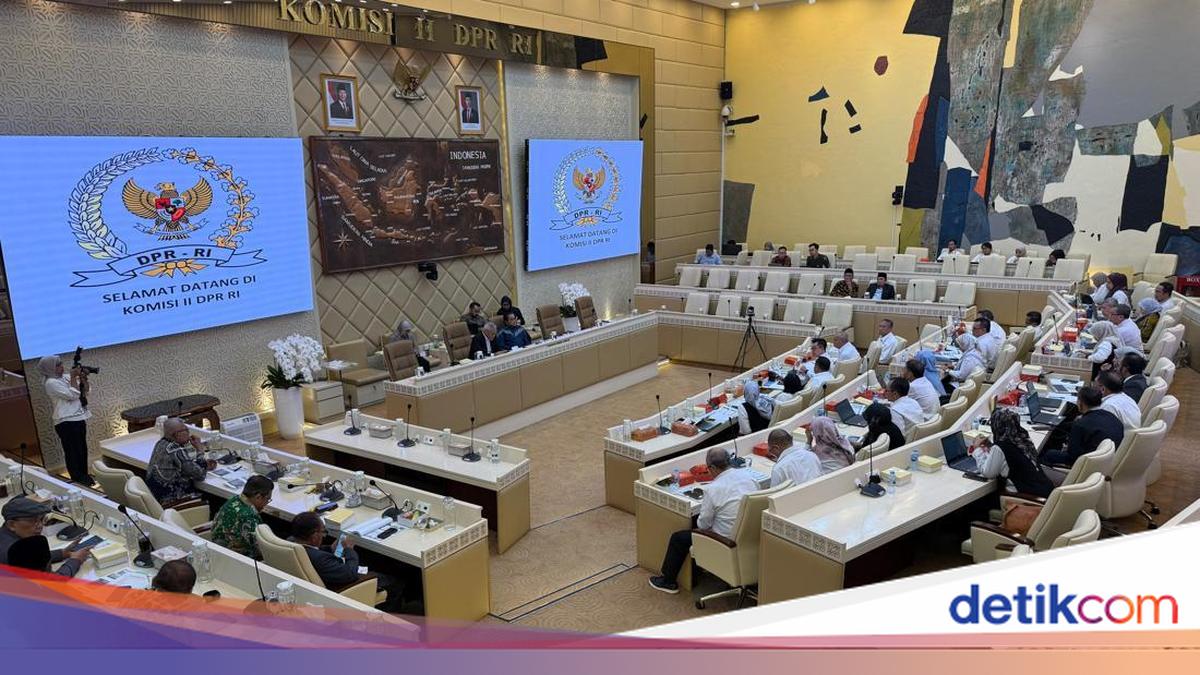
Deputy Chairman of Commission II of the Indonesian House of Representatives, Dede Yusuf, initially said that the use of AI can make work more efficient, work that previously required several people. The statement was made during a working meeting with the National Institute of Public Administration (LAN) at the DPR building in Senayan, Jakarta, on Monday (24/8/2026).
“If in the past we needed two or three people to make a presentation, now we don’t need to,” said Dede.
According to him, digitalisation developments also need to be followed by an evaluation of the need for the number of civil servants in the regions. He gave the example of sub-district offices which currently can have dozens of employees.
“In fact, as we know, with digitalisation and so on, perhaps it should not need to be dozens of people. Maybe 15 to 20 people is enough,” he said.
Dede questioned the government’s readiness to face these changes, including the possibility of a reduced need for civil servants due to the application of technology.
“Now, in this context, if we also pay attention, will our civil servants in the future become a mass product or will there be a reduction?” said Dede.
He also asked the National Institute of Public Administration (LAN) to prepare a concept for developing civil servant competencies so that they are able to adapt to technological developments, including AI.
“So, is there a future concept related to developing civil servant competencies in response to technological developments, innovation, including Artificial Intelligence?” he said.
Improving Civil Servant Competencies
On that occasion, Head of LAN Muhammad Taufik said that his institution has carried out a transformation of civil servant competency development. One of its focuses is improving civil servant competencies through learning in the field of AI.
“The achievements in implementing the competency development transformation over almost the past two years have been carried out by transforming and strengthening the learning ecosystem involving various parties, including many technology start-ups related to the private sector engaged especially in strengthening competency development in the field of AI,” said Taufik.
He revealed that LAN is collaborating with various technology companies, both domestic and foreign, to improve civil servant competencies.
“We are not only partnering with domestic parties, but also foreign ones. Not only the government, but also the private sector, such as Microsoft, Google, Amazon Web Services, and so on,” he said.
Taufik said that the competency development is directed so that civil servant learning does not merely produce certificates, but has an impact on performance.
“And we hope this makes it easier for civil servants to learn in an impactful way, learning that is truly oriented towards outcomes,” he said.
So, what are the responses from other legislators? Here is a summary compiled by detikcom.
Asking the Government to Prepare a Strategy
Member of Commission II of the Indonesian House of Representatives, Ahmad Irawan, responded to the discussion about the potential efficiency of civil servants along with the development of AI technology. He assessed that the issue is more appropriately referred to as an adjustment of needs to optimise public services.
“Technological developments cannot be avoided. Digitalisation is something that is needed to facilitate public services. Therefore, the government must prepare a grand strategy to face various changes and technological developments,” said Irawan to journalists on Tuesday (25/8/2026).
Irawan emphasised that the use of technology, including AI, does not automatically mean a reduction in the number of civil servants. According to him, the need for increasing or reducing civil servants must be determined based on a government assessment.
“Actually, it is not efficiency. But it is about adjusting needs to facilitate and optimise public services,” he said.
He said that technology such as AI is already being used in public services. Therefore, digitalisation needs to continue to be optimised so that services to the public become easier while making the government more optimal in utilising its resources.
“Actually, the use of technology such as AI is already in use. Increases or reductions will depend on the government’s assessment. Which ones need to be added or reduced,” said Ahmad.
According to him, many public services currently use digital systems. The use of this technology needs to continue to be encouraged so that the service process becomes more effective.
“Our public services now use many digital systems. We encourage this to be further optimised. So that the public can get convenience and the government can optimise its resources,” he said.
“Not all civil servants can be replaced by AI. There are some that still require human resources,” he concluded.
Potential Civil Servant Sectors Replaced by AI
Head of the PKB faction in Commission II of the Indonesian House of Representatives, Muhammad Khozin, responded to this matter. Khozin then revealed a number of civil servant sectors that could be affected by the use of AI.
“The sectors with the most potential to be affected include: office administration and general affairs; document and archive management; chatbot-based information and complaint services; data verification and validation; routine report preparation; and statistical processing and basic data analysis,” said Khozin.
Khozin said AI has the potential to replace routine work. However, he assessed that the function of civil servants cannot simply be replaced because they still require public decision-making and empathy-based services.
“AI does have the potential to replace routine, administrative work, document processing, data verification, and basic information services,” said Khozin.
“However, AI finds it difficult to replace civil servant functions that require discretion, legal considerations, supervision, public decision-making, social mediation, and services that require empathy,” he added.
Source: jawawa.id (https://jawawa.id/newsitem/what-they-say-about-the-potential-of-civil-servants-being-replaced-by-ai-1787701867)
Originally published by detikcom (https://news.detik.com/berita/d-8634391/kata-mereka-tentang-potensi-asn-digantikan-ai), translated from Indonesian