
What the Former Site of Historic Houses at Lempuyangan Station Looks Like
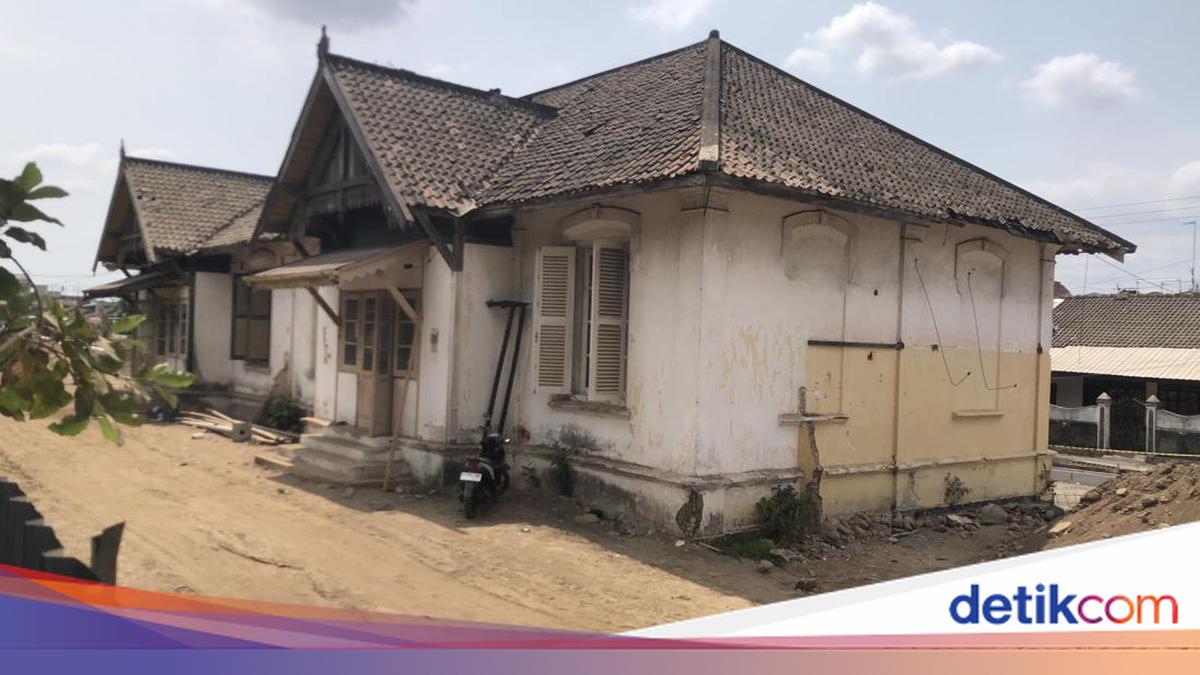
PT KAI has demolished 11 of the historic houses in front of Lempuyangan Station in Yogyakarta. Of the 13 former official residences belonging to KAI executives, only two buildings remain standing.
A detikJogja observation found no trace of the houses behind the row of food stalls in front of the station. Instead, an open stretch of land now runs from west to east. To the south, a row of residents’ houses is visible, formerly screened by the high wall that stood alongside the old houses.
Two historic houses remain standing in the west. Their original forms are intact, although they do not appear to have been restored. Several workers were seen building foundations and a retaining wall beside the planned road.
“Of the 13 company houses, 11 have been demolished and two retained in line with the guidance and recommendation of the Yogyakarta City Culture Office. They are actually two houses joined together, which makes them look like one. The recommendation from the preservation office was to leave them standing as a historic remnant,” said Feni Novida Saragih, public relations manager for KAI’s Yogyakarta regional operations area, when met by detikJogja on Friday (9 October 2026).
Bondi, 52, a resident whose home is directly beside the site, said the demolished houses had once served as official residences for KAI executives.
A wall about five metres high separated the residential complex from the neighbourhood, including Bondi’s home, which faced the wall.
“There used to be a wall there, you know. It was demolished. That wall must have been there for many years — it was already there in my grandmother’s time. I think my late father was living here when the wall was already up,” Bondi told detikJogja at his home on Friday (9 October).
“But it is PT KAI’s property, and the people living there were only the descendants [of the former occupants], so it was demolished,” he added.
Bondi said construction on the project directly in front of his home had been under way for the past five or six months. He said the development was needed both to make things more comfortable for rail passengers and to address recurring congestion.
“The station’s needs have changed, and the tracks need to be widened — or, you could say, the area needs to be transformed. This neighbourhood is different from what it was 20 or 30 years ago, so it needs to be developed more comprehensively than before,” Bondi said.
A neighbourhood road less than two metres wide runs in front of Bondi’s house. He said he had been told it would become a pavement, a plan also suggested by the foundations being built alongside it.
Bondi hopes that his home’s new position beside the main road, rather than behind a wall, will bring benefits, although he recognises that he will need time to adapt.
“This will become a pavement. The road will run right along the edge, and my house will be right beside it,” he said.
“We’ll have to get used to the change first. The building used to be shielded by the wall, with us behind it; now it is exposed like this. Hopefully it will be safe and perhaps bring some benefits,” he added.
Why the houses were demolished
Feni said the former residences, which had Dutch-style architecture, were demolished because the Lempuyangan Station platform area needed to be developed.
Lempuyangan Station is becoming busier each year, she said, with passenger numbers rising on both long-distance trains and the KRL commuter service. In 2024, the station served 5,392,700 passengers in total; in 2025, the number increased by 4 per cent to 5,605,414.
“On an average day, 12,586 passengers board or alight from long-distance trains at Lempuyangan Station. The Yogyakarta–Palur KRL Commuterline carries 3,500 passengers. In addition to passenger services, Lempuyangan Station also handles freight,” Feni said.
Feni said KAI had consulted the Yogyakarta City Government and local authorities about demolishing the historically significant houses, including through focus group discussions, presentations and coordination meetings.
“The 13 company houses are neither heritage buildings nor cultural heritage sites. This has been officially confirmed by the Yogyakarta City Culture Office, which says that the houses are not listed in the city’s register of regional heritage buildings or in its cultural heritage records,” she said.
Feni said the two houses were retained following a recommendation from the Culture Office. She did not provide details about their future use.
“Before the demolition, KAI made a complete record of the houses so that they would remain properly documented,” she added.
The site of the former houses will be used to expand the station area and build a replacement road. The existing road to the south of Lempuyangan Station will become part of the station.
“As an initial step in reorganising the area, particularly on the station’s southern side, the station grounds will be expanded, with a separate access road for passengers travelling to and from Lempuyangan Station and a public road,” Feni said.
Source: jawawa.id (https://jawawa.id/newsitem/what-the-former-site-of-historic-houses-at-lempuyangan-station-looks-like-1791593421)
Originally published by detikJogja (https://www.detik.com/jogja/berita/d-8700375/penampakan-lahan-bekas-rumah-kuno-di-stasiun-lempuyangan), translated from Indonesian