
What Is to Come Can Be More Beautiful
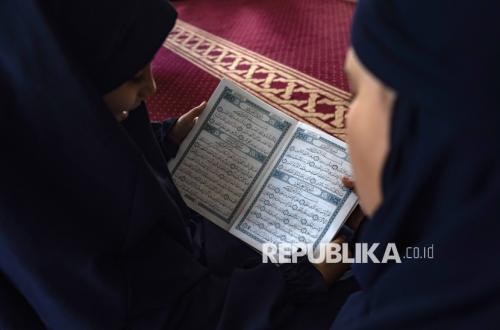
There are days when we feel that life is moving backwards. What once felt close suddenly drifts away. What we had carefully arranged falls apart because of circumstances we never planned. We see others arrive at their destinations while our feet seem to remain standing at the same crossroads. At times like these, the future easily looks like a long corridor without light.
There are also times when prayers seem to hang in the sky for too long. We have knocked, but the door has not opened. We have planted, but the soil has not yet grown anything. We have tried to keep our hearts trusting, yet quietly a small question arises: will tomorrow truly be better?
The Quran answers that restlessness with a very short verse. Only a few words. Yet it is like a hand placed gently on the shoulder of someone who is losing the courage to face the days ahead.
Allah says:
وَلَلْآخِرَةُ خَيْرٌ لَّكَ مِنَ الْأُولَىٰ
Wa lal-ākhiratu khairul laka minal-ūlā.
“And surely what comes after is better for you than what came before.”
(QS Ad-Dhuha [93]: 4)
When the Sky Seems Silent
This verse does not stand alone. It is found in Surah Ad-Dhuha, a surah revealed to bring comfort to the Prophet Muhammad (peace be upon him).
According to the explanations of the commentators, Surah Ad-Dhuha is connected to a period when revelation temporarily ceased. That situation became an opening for those who opposed the Prophet to hurl mockery. They said it was as though Muhammad’s God had abandoned him.
Imagine the feeling that accompanied that time.
A Prophet whose life depended entirely on Allah’s guidance suddenly had to pass through days when revelation did not descend. The sky that usually carried messages seemed to fall silent.
Then Allah opened Surah Ad-Dhuha with a beautiful oath:
وَالضُّحَىٰ وَاللَّيْلِ إِذَا سَجَىٰ
“By the morning brightness, and by the night when it grows still.”
It is as though Allah invited His Messenger to observe the passing of time. There is night. There is morning. There is darkness. There is light. And none of it remains forever. Then came the affirmation:
مَا وَدَّعَكَ رَبُّكَ وَمَا قَلَىٰ
“Your Lord has not forsaken you, nor does He hate you.”
Only after that did Allah say:
وَلَلْآخِرَةُ خَيْرٌ لَّكَ مِنَ الْأُولَىٰ
What is to come is better than what has passed.
Allah Is Teaching Us to See Further
In Tafsir ath-Thabari, the meaning of al-ākhirah in this verse primarily refers to the afterlife. What Allah has prepared for the Prophet Muhammad in the Hereafter is far better than what was given to him in this world.
Ibn Kathir also explains a similar meaning: the abode of the Hereafter is better for the Prophet than this world. The honour awaiting him with Allah surpasses everything the world possesses.
This is important. For Quranic optimism is not empty optimism that promises every worldly problem will end exactly as we wish.
The Quran offers something far more solid. That the journey of a believer moves towards Allah, and the end of a journey with Allah is never in vain. Because of this, the verse changes the way we view the future.
We often consider the future good only if it matches our plans. We ask for one door, then feel disappointed when that door closes. Yet perhaps Allah knows that behind that door lies a path that would harm us.
We weep over something that has gone. Yet we have not seen what is coming. We mourn a page that has ended, as though the book of life is finished. Yet Allah still holds so many pages we have not yet read.