
What is the social assistance decile? Understanding deciles 1 to 10 and how to check them
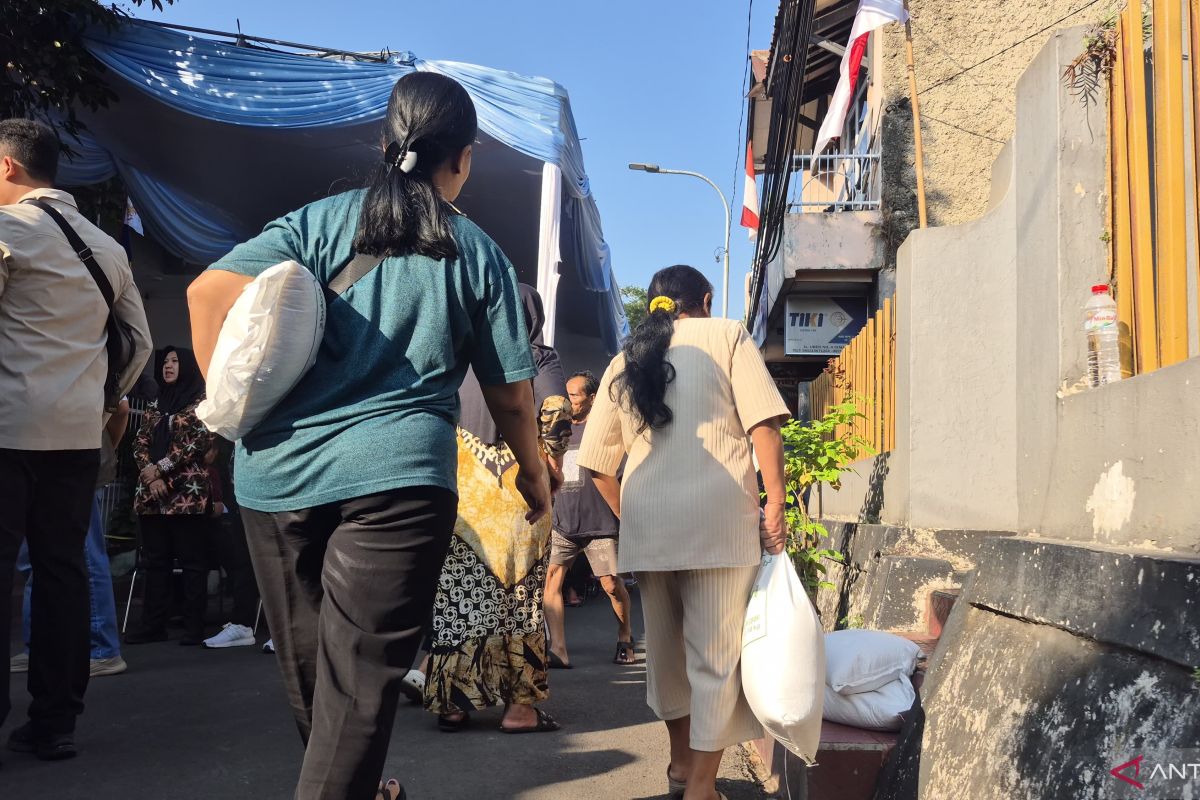
The government uses social and economic data to determine the targets of various social assistance programmes, or bansos. One term that often appears in this process is decile.
For people who have checked their social assistance status, the term decile may already be familiar. However, many still do not understand what decile actually means, how it is divided, and whether it determines whether someone can receive social assistance.
Currently, decile data is part of the National Socio-Economic Single Data (DTSEN). The government uses this data as one basis for determining the targets of social protection programmes.
The public can also check decile data and social assistance information independently using the Population Identification Number (NIK) listed on their identity card (KTP).
What is a decile in social assistance?
A decile is a grouping of families based on their level of social and economic welfare. The population is divided into 10 groups, from decile 1 to decile 10.
Each decile generally represents about 10 percent of families based on their welfare ranking. Thus, decile 1 is the group with the lowest level of welfare, while decile 10 is the group with the highest level of welfare.
The smaller the decile number, the lower the family’s welfare position in the data. Conversely, the larger the decile number, the higher the level of welfare.
However, a decile is not simply a grouping based on income. The government uses a number of social and economic indicators to determine a family’s position.
The Ministry of Social Affairs’ Social Assistance Check data includes several variables, such as employment, education, housing conditions, electricity capacity, and asset ownership.
This means that a person with a certain income is not automatically placed in a particular decile. The family’s overall social and economic conditions are also taken into account.
Deciles are used as one basis for determining the targets of social assistance programmes. Therefore, a decile position can influence a family’s chances of meeting the criteria for a particular programme.
Based on the Ministry of Social Affairs’ Social Assistance Check data, deciles 1 to 4 are groups that can be proposed as recipients of the Family Hope Programme (PKH) and the basic food programme.
Meanwhile, decile 5 has a different position. Official Social Assistance Check data states that the decile 5 group can be proposed as participants in the Health Insurance Contribution Assistance scheme (PBI-JK).
Deciles 6 to 10 are groups with increasingly higher levels of welfare. Decile 10 is in the group of the 10 percent of families with the highest level of welfare.
Nevertheless, the public needs to understand that a decile does not mean an automatic ticket to receive social assistance. Each programme has its own criteria and recipient determination mechanism.
In other words, a person in a particular decile will not necessarily receive all types of social assistance directly.
In simple terms, the decile division can be understood as follows:
Decile 1: The group of 10 percent of families with the lowest level of welfare. This group is one of the priorities in various social protection programmes.
Decile 2: Still included in the group of families with low welfare levels and can be targeted by a number of social assistance programmes in accordance with applicable provisions.
Decile 3: Has a higher level of welfare than deciles 1 and 2, but is still included in the group that can be proposed as recipients of certain assistance.
Decile 4: Included in the bottom 40 percent of families by welfare level. Ministry of Social Affairs data states that deciles 1 to 4 can be proposed as recipients of PKH and the basic food programme.
Decile 5: Positioned in the middle group in the welfare ranking. Social Assistance Check data states that decile 5 can be proposed as PBI-JK participants.
Decile 6: Included in the group with a higher level of welfare than the previous five deciles.
Decile 7: Indicates a higher welfare position in the national ranking.
Decile 8: Positioned in a relatively higher welfare group.
Decile 9: Included in the group with a high level of welfare.
Decile 10: The group of 10 percent of families with the highest level of welfare in the ranking.
This division should not be used to assess a person’s economic condition based solely on the decile number. The ranking is produced from various social and economic variables recorded in the government system.
DTSEN, or the National Socio-Economic Single Data, is a government database containing the social and economic conditions and welfare rankings of the population.
The data is formed by combining a number of government databases and then matching them with population data. The data can also be updated periodically so that the recorded conditions of the population are more in line with the latest situation.
In the context of social assistance, DTSEN is one of the data sources used to determine programme targets.
Because people’s socio-economic conditions can change, decile positions are not always permanent. Changes in employment, housing conditions, asset ownership or other socio-economic factors can affect data updates.
How to check your decile using your NIK
People who want to know their decile position and check social assistance information can use the official Ministry of Social Affairs Social Assistance Check website.
The check is done online using the 16-digit NIK listed on the KTP.
The steps are as follows:
Open the official Ministry of Social Affairs Social Assistance Check website at https://cekbansos.kemensos.go.id/.
Enter the 16-digit NIK as listed on the KTP.
Enter the captcha code that appears on the page.
Click the Search Data button.
The system will display the search results based on the available data.
It is important to use the official government website.
Source: jawawa.id (https://jawawa.id/newsitem/what-is-the-social-assistance-decile-understanding-deciles-1-to-10-and-how-to-check-them-1786769515)
Originally published by Antara (Indonesian) (https://www.antaranews.com/berita/5695725/apa-itu-desil-bansos-kenali-desil-1-sampai-10-dan-cara-ceknya), translated from Indonesian