
What Is the Right to Express an Opinion? It Is Now Proposed in Connection with Vice-President Gibran
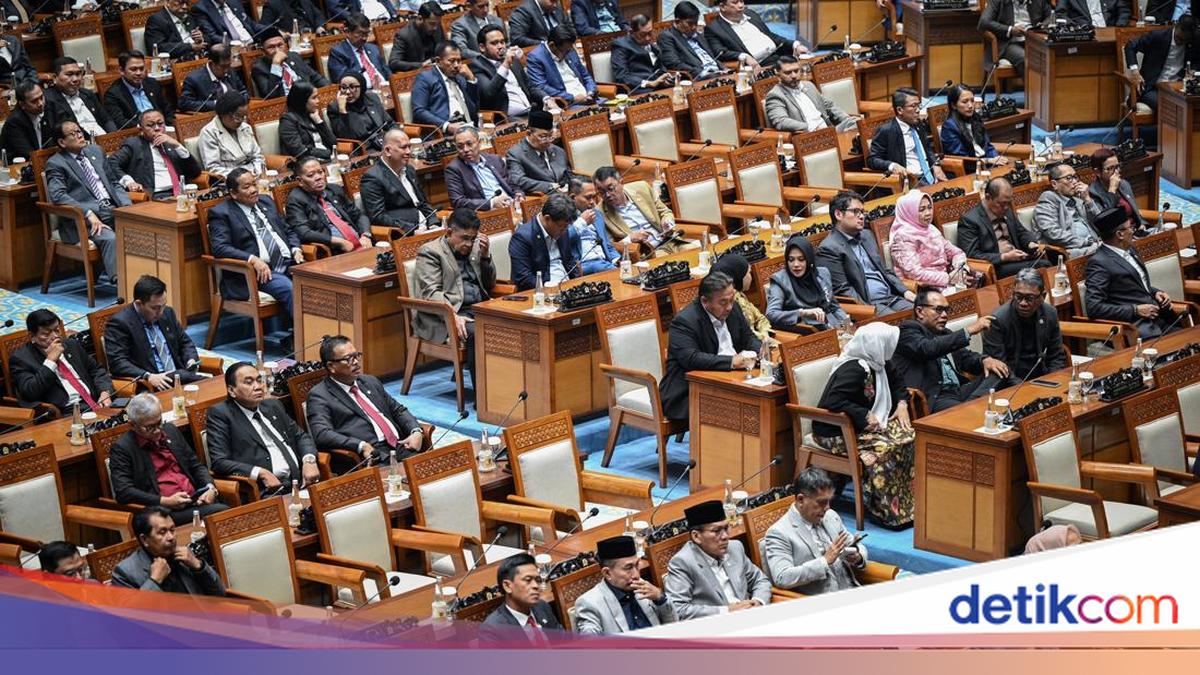
The House of Representatives (DPR) has put forward a proposal to invoke its Right to Express an Opinion over the controversy involving Vice-President Gibran Rakabuming. The rules governing this right are set out in legislation and the DPR’s rules of procedure.
The right is regulated under Law No. 17 of 2014 on the People’s Consultative Assembly (MPR), the DPR, the Regional Representative Council (DPD) and Regional People’s Representative Councils (DPRD), known as the MD3 Law. Article 79 states that the right may be proposed on several grounds, ranging from government policy to alleged violations by the President or Vice-President.
Article 79
- The Right to Express an Opinion referred to in paragraph (1)(c) is the DPR’s right to express an opinion on:
government policy or an extraordinary event occurring in Indonesia or internationally;
follow-up to the exercise of the right of interpellation referred to in paragraph (2) and the right of inquiry referred to in paragraph (3); or
an allegation that the President and/or Vice-President has committed a violation of law, including treason against the state, corruption, bribery, another serious criminal offence or disgraceful conduct, and/or no longer meets the requirements to serve as President and/or Vice-President.
At least 25 MPs must propose it
The technical details for submitting a proposal to exercise the Right to Express an Opinion are set out in DPR Regulation No. 1 of 2020 on the Rules of Procedure. Article 191 states that a proposal must meet several conditions, including being put forward by at least 25 DPR members.
Article 191
The Right to Express an Opinion referred to in Article 8 paragraph (1)(c) shall be proposed by at least 25 (twenty-five) members.
A proposal to exercise the right referred to in paragraph (1) must be accompanied by documents containing at least:
the subject matter and reasons for proposing the expression of an opinion;
the findings from the exercise of the right of interpellation or the right of inquiry; or
the subject matter and valid evidence concerning an alleged act, or the subject matter and valid evidence concerning an alleged failure to meet the requirements to serve as President and/or Vice-President.
At least two-thirds of all DPR members must attend
Paragraph 3 of Article 191 also sets out the requirements for approval. At least two-thirds of all DPR members must attend the plenary session.
“(3) If approved at a DPR plenary session attended by at least two-thirds of the total number of members, and the decision is taken with the approval of at least two-thirds of the members present, the proposal referred to in paragraph (1) becomes the DPR’s Right to Express an Opinion,” the article states.
How the proposal is processed
The process is further set out in Articles 191 to 195. The stages for proposing the Right to Express an Opinion are as follows:
- Announcement at a plenary session
The DPR leadership announces the proposal at a plenary session and distributes it to all DPR members.
- Deliberations by the House Deliberative Council (Bamus)
The Bamus discusses the proposal and schedules a plenary session to decide on it. The proponents may be given an opportunity to briefly explain their proposal.
- Decision at a plenary session
The DPR decides whether to accept or reject the proposal. For it to become a right of the DPR, the quorum and two-thirds approval requirements described above apply.
- Formation of a special committee (Pansus)
If the proposal is accepted, the DPR forms a Pansus comprising representatives of all parliamentary factions.
- The Pansus examines and discusses the matter
The Pansus discusses the issue with the President. The President may appoint a minister or relevant official to represent him. The Pansus may also hold working meetings, hearings and public hearings.
- The Pansus submits its report
The Pansus submits a report on its work to a DPR plenary session no later than 60 days after it is established.
- The DPR’s final decision
The plenary session discusses the Pansus report and takes a decision on the matter covered by the Right to Express an Opinion.
50 MPs sign proposal concerning Gibran
A number of DPR members have signed as proponents of the Right to Express an Opinion over the controversy involving Vice-President Gibran Rakabuming. Around 50 members have signed the proposal so far.
“About 50 members have signed,” DPR member Mardani Ali Sera said when asked for confirmation on Tuesday (10 November 2026).
Mardani Ali is among the MPs who signed the proposal. He confirmed that the letter had also been submitted to the DPR leadership. “The letter has been submitted to the leadership,” he said.
Mardani said the signatories came from various factions. “Many factions. From the majority of factions,” he added.
Several DPR members have signed as proponents of the Right to Express an Opinion over the controversy involving Vice-President Gibran Rakabuming. Mardani Ali Sera shared a photograph of himself holding a document entitled ‘Proponents of the Right to Express an Opinion’. His name appears first on the list.
Source: jawawa.id (https://jawawa.id/newsitem/what-is-the-right-to-express-an-opinion-it-is-now-proposed-in-connection-with-vice-president-gibran-1794297081)
Originally published by detikcom (https://news.detik.com/berita/d-8746503/apa-itu-hak-menyatakan-pendapat-kini-diusulkan-terkait-wapres-gibran), translated from Indonesian