
What Is the Quds Force? Iran's Elite Unit for Overseas Operations
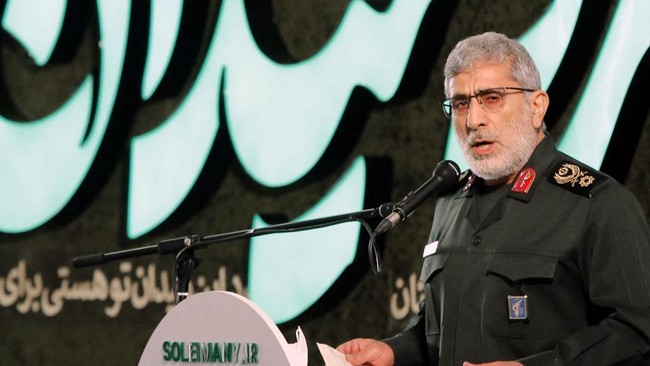
Within Iran’s Islamic Revolutionary Guard Corps (IRGC), one unit is often cited as one of Tehran’s most important tools abroad: the Quds Force. The Quds Force is the IRGC’s overseas operations unit. Unlike the regular military tasked with defending Iran, the Quds Force is better known for its operations abroad, particularly in building relationships with armed groups close to Iran.
According to the Council on Foreign Relations (CFR), the IRGC was formed after the 1979 Iranian Revolution as a force outside the Iranian military. From the outset, the corps was created to protect Iran’s new government and answers directly to the Supreme Leader. Over time, the IRGC grew into one of the most powerful institutions in Iran. In addition to its ground, naval, air, and Basij militia forces, the IRGC also oversees the Quds Force as its expeditionary or foreign operations arm.
The CFR notes that the Quds Force emerged as the IRGC’s external branch. This unit builds relationships with various armed groups in Afghanistan, Iraq, Lebanon, the Palestinian territories, Yemen, and other countries. The support provided includes training, weapons, funding, and military advice. The United States National Counterterrorism Center (NCTC) also explains that the IRGC comprises ground, naval, air, Basij, and IRGC-Qods Force components. The NCTC describes the Quds Force as the Iranian regime’s primary organisation for conducting covert activities abroad. The name Quds itself refers to Al-Quds, the Arabic name for Jerusalem. This name is closely tied to Iran’s political stance, which, since the 1979 Revolution, has placed the Palestinian issue as a key part of its foreign policy.
Iran’s Network in the Middle East
The Quds Force has drawn significant attention due to its role in the network of Iranian-allied groups across the Middle East. Some of the groups frequently linked to Iranian support include Hezbollah in Lebanon, Shia militias in Iraq, the Houthis in Yemen, and Palestinian groups such as Hamas and Palestinian Islamic Jihad. In Iraq, the Quds Force has long been associated with Iran’s ties to various Shia militias. Following the United States invasion of Iraq in 2003, Iran’s influence in the country grew. The CFR records that IRGC involvement in Iraq became a major source of tension between Tehran and Washington.
In Syria, the Quds Force also emerged during the conflict that followed the 2011 Arab Spring wave. Iran initially stated its personnel’s presence in Syria was related to a limited mission to protect Shia holy sites. Later, Iran acknowledged its forces were assisting the government of President Bashar al-Assad in the country’s conflict. In Yemen, the IRGC is also said to channel intelligence support, training, and weapons to the Houthis. The NCTC states the IRGC-QF provided weapons and training to the Houthis, which were subsequently used in attacks on commercial vessels in the Red Sea throughout 2024.
The exact number of Quds Force personnel is not publicly available. However, the NCTC estimates the IRGC has around 150,000 to 190,000 personnel. Of that number, the Quds Force is estimated to have approximately 5,000 to 15,000 members selected from within the IRGC.
Leadership of the Quds Force
The most famous name associated with the Quds Force is Qasem Soleimani. He led the unit from 1997 until 2020. Soleimani became a widely recognised figure for his role in expanding Iran’s network in Iraq, Syria, Lebanon, and other regions. Soleimani was killed in January 2020 in a United States drone strike in Baghdad, Iraq. Following his death, Iran appointed Esmail Qaani as commander of the Quds Force. Reuters reports that Qaani previously served as deputy commander of the Quds Force since 1997.
Qaani has a long background in the IRGC. He fought in the Iran-Iraq War in the 1980s and has foreign operational experience in Iran’s eastern region, including Afghanistan and Pakistan. Reuters notes that Qaani does not have a public profile as large as Soleimani’s and more often conducts meetings privately. Under Soleimani, the Quds Force was widely known for its involvement with Iranian-allied militias in the Arab world. Reuters reports that Iran’s proxy network, from Hezbollah in Lebanon to Iraqi Shia militias and the Houthis in Yemen, grew strong during Soleimani’s leadership of the Quds Force.
The Quds Force is also a major focus of United States attention towards the IRGC. In April 2019, the US designated the IRGC as a Foreign Terrorist Organization. The NCTC notes the United States also added the IRGC-QF to its terrorism-related list in October 2007 and has imposed sanctions on several of its members. For Iran, the IRGC and the Quds Force are part of the country’s security structure. For the United States and several Western nations, this unit is viewed as a primary actor in Iran’s foreign operations and support for armed groups in the region. To this day, the Quds Force remains one of the most secretive units within Iran’s military structure. Information regarding personnel numbers, field command chains, and operational details is largely kept from the public.