
What is the Government's Intention in Preparing the Industrial Zone Bill?
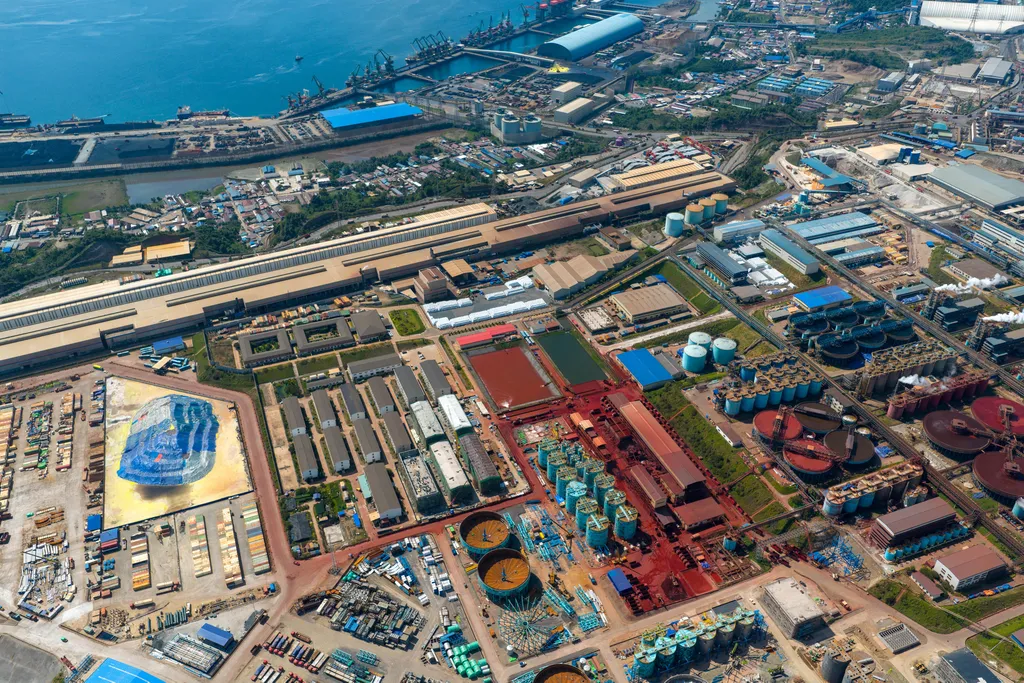
The government aims to introduce regulations that can reduce investment barriers while providing certainty for business operators in industrial areas.
KOMPAS/NIKSON SINAGA
By Aguido Adri
16 Jul 2026 20:13 WIB · Ekonomi & Bisnis
JAKARTA, KOMPAS — The government is preparing a Draft Law on Industrial Zones aimed at strengthening the ease of doing business while also enhancing the attractiveness of industrial zones as investment destinations. One of the concepts to be discussed with the DPR is the establishment of an agency similar to the National Industrial Zone Agency, which will be responsible for coordinating policies related to industrial zones.
“This is a concept that we will discuss with the DPR when the government and the DPR later discuss the Industrial Zone Bill. There is a possibility that there will be an article regulating the establishment of an institution that will manage policies related to industrial zones,” said Agus, Minister of Industry Agus Gumiwang Kartasasmita, on Thursday (16/7/2026), to the media after the Graduation Ceremony of SMK-SMAK & SMTI Year 2026, in Bogor City, West Java.
According to him, all the substance in the Industrial Zone Bill will be discussed together with the DPR, with the main goal of creating a more conducive business climate. The government aims to present regulations that can reduce various investment barriers while also providing certainty for business actors operating in industrial zones.
“The principle is ease of doing business. This will provide conveniences, and of course, it will also make our industrial areas more attractive to investment,” he said.
The drafting of the bill will also accommodate various issues that have been faced by managers and investors in industrial areas. Various obstacles that arise in the field will be inventoried and efforts will be made to include them in the provisions of the law to provide a stronger legal basis.
“The issues that have arisen in the field, particularly in industrial areas, will be incorporated as much as possible into the articles and clauses. It is hoped that after this bill is enacted into law, it will address various issues related to industrial zones,” he said.
The government assesses that strengthening regulations in industrial zones is necessary in line with efforts to enhance the competitiveness of the national manufacturing sector. Industrial zones are viewed as one of the important instruments in attracting new investments, accelerating industrial expansion, and creating job opportunities.
According to Indonesian industrial data, as of the second quarter of 2026, Indonesia had 180 industrial estates with nearly 12,000 companies as tenants. Throughout 2025, these estates attracted investment totaling Rp 6,744.58 trillion and employed approximately 2.35 million workers.
Meanwhile, the Industrial Zone Association (HKI) has urged the government and the DPR to promptly finalize the discussion on the Industrial Zone Bill. This regulation is considered an important instrument to address the overlapping authorities between ministries and local governments that have hindered investment and the expansion of business actors.
The Chairman of the Industrial Estate Association, Akhmad Maruf Maulana, stated that legal certainty has become an urgent need amid the government’s efforts to attract investment.
Various licensing issues still frequently arise due to the lack of synchronization between policies across ministries and agencies, as well as between the central and regional governments.
“In essence, we really need that to ensure certainty, as there are still overlaps between ministries and agencies. Non-overlapping permits are important,” said Maruf when contacted separately.
He exemplified that the efforts of the Ministry of Investment/BKPM to encourage investment often face obstacles related to land issues that fall under the Ministry of Agrarian Affairs and Spatial Planning/National Land Agency (ATR/BPN). On the other hand, the investment process also still encounters environmental licensing issues involving various agencies.
This condition has caused the process of industrial area development to proceed more slowly. In addition to inter-ministerial coordination, the lack of synchronization between the central government and local governments has also become a recurring issue.
“In the center, there is often a lack of synchronization with regional heads. Each has its own regulations, and ultimately, they do not align. This is what makes it somewhat difficult for us. With the existence of this bill, we hope for certainty in doing business,” he stated.
Maruf believes that if the Industrial Zone Bill is enacted into law, business actors will have a clearer legal reference for conducting expansion.
The regulation can serve as a primary reference for the development of industrial areas, including national strategic projects and special economic zones.
According to him, currently there are quite a number of business actors who have prepared for expansion, but the realization is hindered by convoluted bureaucracy and the lack of regulatory certainty.
“We hope that this bill will serve as the main reference for industrial zone actors so that investment acceleration can be carried out, especially in the current challenging economic conditions,” he said.
In addition to licensing aspects, HKI also proposed that discussions on the Industrial Area Bill accommodate issues of industrial gas supply and pricing.
Maruf hopes that the coverage of the Certain Natural Gas Price (HGBT) program will be expanded so that more industrial areas, particularly labor-intensive sectors, can access gas at competitive prices.
He also requested that domestic natural gas sales transactions be conducted in rupiah, rather than in United States dollars. The use of dollars in domestic gas transactions increases the cost burden on industry players when exchange rates are volatile.
“We hope that the gas sold to industries is priced