
What Is the DPR’s Right to Express an Opinion? Could It Lead to Impeachment?
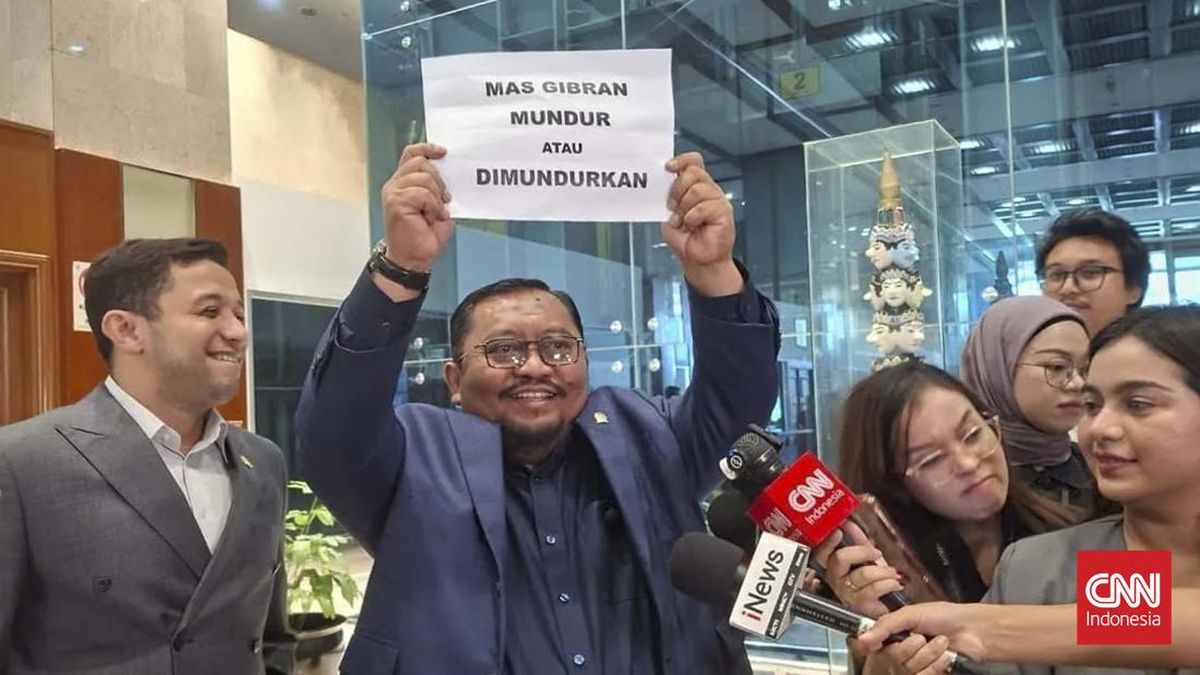
Dozens of members of the House of Representatives (DPR) have signed their support for exercising the right to express an opinion regarding Vice-President Gibran Rakabuming Raka, following controversy over the educational qualifications of Joko Widodo’s son for his candidacy in the 2024 presidential election.
Around 30 members from different parliamentary factions have signed. But what exactly is the right to express an opinion, and how is it exercised in parliament?
The right to express an opinion is a constitutional right that allows the DPR to state its official position or view on an important matter of state. Its legal basis is Article 20A(2) of the 1945 Constitution, and it is further set out in Article 79(1) and (4) of Law No. 17 of 2014 on the MD3 Law governing the MPR, DPR, Regional Representative Council (DPD) and Regional Legislative Councils (DPRD).
According to the DPR’s official website, under Article 79(4) of the MD3 Law, the House may exercise this right on three grounds:
Government policy or an extraordinary event occurring in Indonesia or internationally;
Follow-up to the exercise of the rights of interpellation and inquiry; or
Allegations that the President and/or Vice-President has committed a legal violation, including treason, corruption, bribery, another serious criminal offence or disgraceful conduct, and/or no longer meets the requirements to serve as President and/or Vice-President.
A proposal to exercise the right to express an opinion must be submitted by at least 25 DPR members.
For it to be adopted as an official position, it must be approved at a plenary session attended by at least two-thirds of all members.
If the proposal is accepted, the DPR will establish a special committee comprising representatives of all factions.
Under Article 213(1) and (2) of the MD3 Law, the special committee will present its report at a plenary session after completing its deliberations.
If the plenary rejects the committee’s report, the process is deemed concluded and the proposal cannot be resubmitted.
If the report is approved, the next steps depend on the matter under consideration, as stipulated in Article 214(1) and (2).
If the opinion concerns government policy, an extraordinary event, or the outcome of exercising the rights of inquiry or interpellation, the DPR will convey its official position or opinion to the government.
However, if the special committee concludes that the President and/or Vice-President has violated the law, engaged in disgraceful conduct or no longer meets the requirements for office, the DPR will refer the matter to the Constitutional Court (MK).
The MK will then examine the case and decide whether the DPR’s opinion has been proven. If it finds that the allegations are proven, the DPR will hold a plenary session to forward a proposal to remove the President and/or Vice-President to the People’s Consultative Assembly (MPR).
Conversely, the proposal to remove the President and/or Vice-President cannot proceed if the MK rules that the DPR’s opinion has not been proven.
This applies where the MK finds unproven the DPR’s opinion that the President and/or Vice-President committed treason, corruption, bribery, another serious criminal offence or disgraceful conduct, or no longer meets the requirements for office.
Dozens of DPR members are said to have signed in support of a proposal to exercise the right to express an opinion over the case concerning Vice-President Gibran Rakabuming Raka’s diploma.
The claim was made by Mardani Ali Sera, a member of Commission II of the DPR. He also shared a photograph of himself holding a document entitled ‘Proposers of the Right to Express an Opinion’. Mardani’s name was listed first.
‘Almost all [factions], more than 25,’ he said when contacted.
Mardani said members began signing the document on Monday evening, with more adding their signatures today. They come from different factions but are signing in their personal capacities.
Alongside the signature document, Mardani also showed a document containing an explanation and the relevant legal articles.
Source: jawawa.id (https://jawawa.id/newsitem/what-is-the-dprs-right-to-express-an-opinion-could-it-lead-to-impeachment-1794293458)
Originally published by CNN Indonesia (https://www.cnnindonesia.com/nasional/20261110124617-32-1425367/apa-itu-hak-menyatakan-pendapat-dpr-apakah-bisa-berujung-pemakzulan), translated from Indonesian