
What is the Difference between NU and a Political Party?
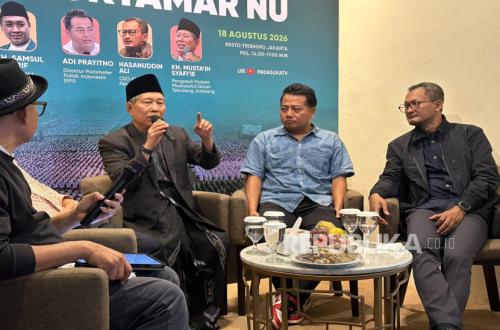
The emergence of transactional politics and alleged money politics at the 35th Nahdlatul Ulama (NU) Congress has been assessed as an ironic phenomenon. Transactional politics is completely at odds with the face of NU, which has long been known as a socio-religious organisation whose strength rests on morality and Islamic values.
“If this happens in a social and religious organisation, especially a large Islamic organisation, it is certainly very ironic,” said Adi Prayitno, Director of Indonesian Political Parameters (PPI), during the 35th NU Congress Discussion Series themed ‘Stop Transactional Politics at the NU Congress’, in Jakarta, Tuesday (18/8/2026).
He expressed hope that the alleged money politics at the NU Congress would remain nothing more than unproven gossip. According to him, leadership contestation must not cause NU to resemble a political organisation.
“I pray and hope that the rumours about money politics at this Congress are merely passing wind. Because if transactional practices truly occur, the simple question is: what is the difference between NU and a political party?” he said.
Adi stated that political transactions are not new in political contestation in general. However, the matter becomes different when such an issue emerges within a socio-religious organisation as large as NU. He expressed hope that NU would return to its khittah (founding principles) of serving the ummah and religion while distancing itself from transactional politics.
“NU’s only strength is morality and religious values. That is why I always hope NU returns to its khittah, serving the ummah, serving religion, and staying away from transactional political affairs,” he said.
Adi admitted he had initially been reluctant to discuss the money politics issue because he considered it NU’s ‘aurat’ (private matter). He stressed that the issue remains rumour and has not been openly proven. However, according to him, the concerns of a number of NU figures regarding the potential for transactional politics still need to be heard.
Adi also reminded that NU should not shift into an organisation oriented towards power struggles. According to him, if NU chooses to meddle in politics, hubbuddunya (love of worldly matters), and power affairs, the organisation should simply become a political party with a clear power orientation.
Adi expressed hope that this would not happen. He wants NU to remain a religious organisation grounded in morality, scholarship, piety, benefit, and service to the ummah.
In the same discussion, senior NU kiai from Tebuireng Islamic Boarding School in Jombang, KH Musta’in Syafi’ie, assessed that the practice of money politics ahead of the 35th NU Congress is not merely an issue but a factual condition on the ground. Therefore, Kiai Musta’in stressed that such dirty practices must be resisted.