
What is the Difference Between BPNT and the Sembako Programme? Find Out the Amount and May Disbursement Schedule!
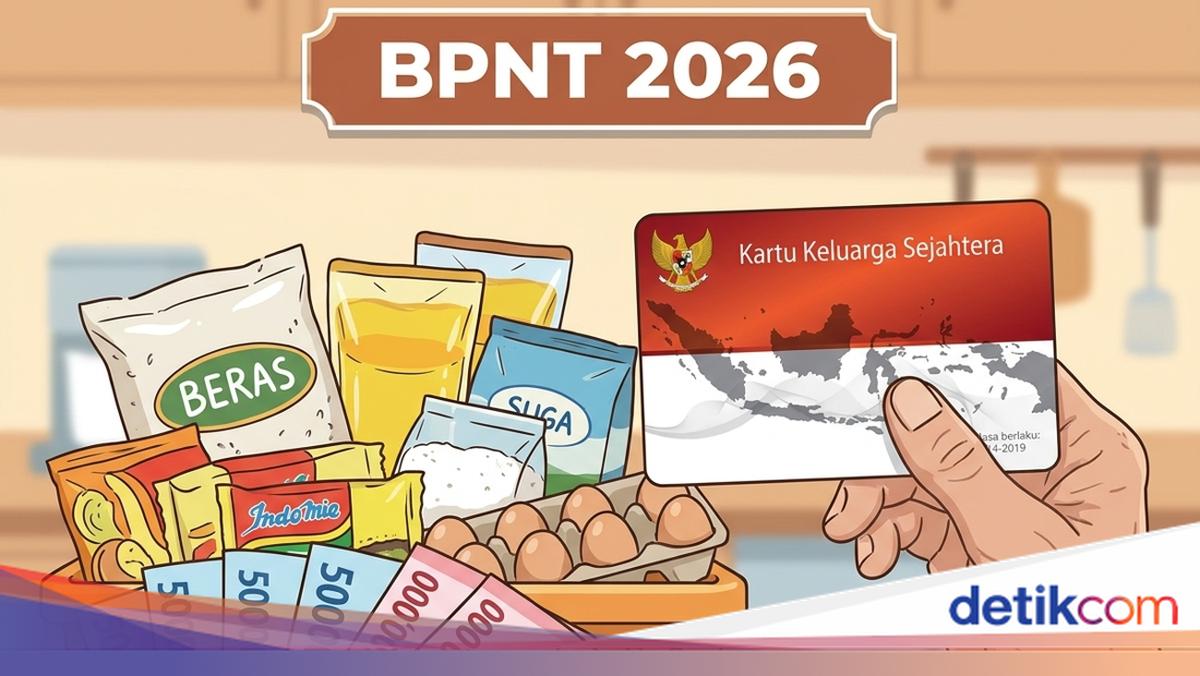
Social Assistance (Bansos) programmes represent aid provided by the Indonesian government to poor and vulnerable communities. This assistance typically comes in the form of money, goods, or services delivered to recipient families.
According to the Ministry of Social Affairs (Kemensos) website, there are several bansos programmes, ranging from PKH to Atensi. Among these, BPNT and the Sembako Programme are the most commonly received by the public because they directly relate to daily food needs.
These two programmes are often considered identical due to their similar objectives of assisting in meeting basic needs. However, they actually differ in several ways. What are those differences? Here is a complete explanation, including the amounts and the disbursement schedule for this May.
What is BPNT?
Based on the 2020 General Guidelines for the Sembako Programme by the Republic of Indonesia’s Kemensos, BPNT or Bantuan Pangan Nontunai is a non-cash food social assistance programme from the government distributed non-cash to Beneficiary Families (KPM). The assistance is provided monthly via electronic money, which is then used to purchase food items at e-Warong outlets.
This programme began implementation in 2017 in 44 selected cities as a transformation from previous rice subsidy programmes, such as Raskin and Rastra. The government then changed the assistance mechanism to cashless or non-cash BPNT through electronic cards to make distribution more practical and targeted.
In its execution, BPNT assistance was initially focused on purchasing rice and eggs to help meet community nutrition needs. The system also utilises banking services so that assistance can be directly received and used by KPM at designated agents or e-Warong.
What is the Sembako Programme?
Still compiled from the General Guidelines for the Sembako Programme and information on the Ministry of Finance (Kemenkeu) website, the Sembako Programme is a development of the BPNT programme that began implementation in 2020. This programme comes with an increase in aid value as well as an expansion of the types of food items that beneficiaries can purchase.
If previously BPNT was only focused on rice and eggs, the Sembako Programme allows KPM to buy other food items such as corn, chicken meat, beef, legumes, vegetables, and fruits. This policy is aimed at providing more nutritious food access while supporting stunting prevention in society.
The Sembako Programme also serves as one of the government’s instruments to secure community needs during the COVID-19 pandemic. Therefore, the government increased the number of aid recipients and raised the aid value to maintain people’s purchasing power during the economic and social crisis.
Differences in Amounts Between BPNT and the Sembako Programme
The change from BPNT to the Sembako Programme also brought adjustments to the amount of assistance received by Beneficiary Families (KPM). Referenced from the official Kemensos website, the aid value has increased over time, particularly to adjust to economic conditions and food needs of the community.
- BPNT Amount
At the start of its implementation, BPNT provided assistance of Rp110,000 per KPM per month. This assistance is distributed non-cash through electronic cards that can be used to purchase food items at designated e-Warong.
- Sembako Programme Amount
In 2020, when the Sembako Programme began as a transformation of BPNT, the amount received was Rp150,000 per KPM per month. Then, since March 2020, it was raised to Rp200,000 per KPM per month as part of the social safety net policy during the COVID-19 pandemic, and this assistance can only be used to buy specified food items. To date, this amount is still applied to every KPM in the Sembako Programme.
Recipients of BPNT and the Sembako Programme
Recipients of BPNT and the Sembako Programme basically come from the group of families with the lowest socio-economic conditions whose data is recorded in the government’s social welfare system. The data currently used refers to the Single National Social and Economic Data (DTSEN) or DTKS, with categories in deciles 1 to 4.
The Sembako Programme is a development of BPNT, so the recipient criteria remain the same. Determination of recipients is carried out by the Ministry of Social Affairs based on data that has been verified nationally.
The criteria for BPNT and Sembako Programme recipients are as follows:
Registered in DTSEN/DTKS
In deciles 1-4 category (poor and vulnerable families)
Possess a NIK matched with Dukcapil
Listed in the Ministry of Social Affairs’ Beneficiary List (DPM)
May Sembako Programme Disbursement Schedule
Disbursement of BPNT or also known as the Sembako Programme for May 2026 is carried out with an acceleration system so that assistance can be received more quickly by the public. The government through the Ministry of Social Affairs accelerates the disbursement process by adjusting the readiness of recipient data.
Cited from detikNews, Indonesian Social Affairs Minister Saifullah Yusuf or Gus Ipul stated that acceleration is done as long as the data is valid and ready for distribution.
“Insyaallah we will accelerate its distribution as long as we have received the data and we will coordinate with the Ministry of Finance and so on, we will hand it over or distribute it through Himbara or possibly with PT Pos,” said Gus Ipul on Tuesday (12/04/2026).
With this acceleration, the Sembako Programme disbursement schedule for May 2026 is estimated to begin after the 10th, entering the third week of April.
“Maybe around after the 10th. So the third week perhaps. We start in the third week of this April,” stated Gus Ipul on Wednesday (01/04/2026).