
What Is the Credit Limit for Indonesia's Domestic Credit Card? Here's the Answer
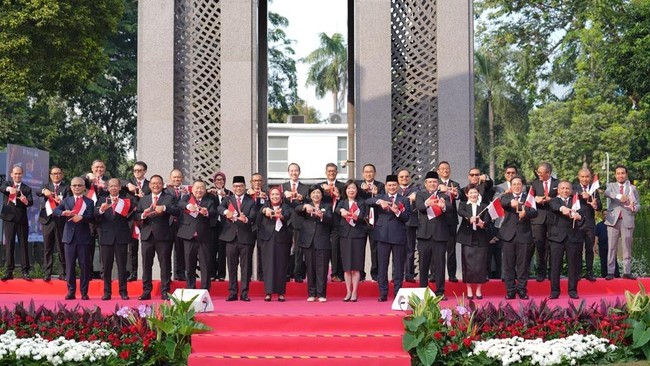
Bank Indonesia (BI) has officially launched the Kartu Kredit Indonesia (KKI) for the retail segment as an alternative credit card based on the domestic network, coinciding with the 81st Independence Day on Monday (17/8/2026).
The KKI is available for individuals and corporations or business actors. Seven banks have been appointed for the initial implementation of the KKI retail segment by Bank Indonesia, namely BCA, Bank Mandiri, BNI, BRI, CIMB Niaga, Permata Bank, and Bank Mega, as well as one next-mover payment service provider (PJP), BSI, which can issue the KKI.
BI has confirmed that both individuals and business actors can use the Kartu Kredit Indonesia (KKI) retail segment, for conventional as well as sharia-compliant services.
The public can apply for the KKI by registering with the payment service provider (PJP) that issues the KKI. The application, verification, approval, and activation process for the KKI follows the procedures and policies of each issuing PJP.
In the initial implementation phase, there are seven first-mover PJP issuers of the KKI, namely BCA, Bank Mandiri, BNI, BRI, CIMB Niaga, Permata Bank, and Bank Mega, as well as one next-mover PJP, BSI, which can issue the KKI.
The KKI is part of the card-based payment instruments (APMK) regulated in Board of Governors Regulation Number 32 of 2025 concerning the Regulation of the Payment System Industry. Under the current provisions, the requirements for prospective users include:
The minimum age for a prospective primary credit card holder is 21 (twenty-one) years or married; and
The minimum age for a prospective supplementary credit card holder is 17 (seventeen) years or married;
Having a minimum income of Rp3 million per month after deducting obligations;
As well as meeting the creditworthiness assessment and risk management process of the issuing PJP.
The PJP may request additional information or documents in accordance with the credit assessment process applicable at each PJP.
The credit limit and ownership limit for the KKI retail segment follow the applicable credit card provisions and the credit assessment applicable at each PJP.
The transaction mechanism using the KKI is that the credit card user selects the QRIS feature, whether QRIS MPM, QRIS CPM, or QRIS TAP, in the payment application, then selects the KKI as the source of funds and subsequently carries out the QRIS transaction as usual.
QRIS transactions can be carried out by scanning the QR code at offline merchants, presenting QRIS CPM, or tapping the phone on a QRIS TAP payment terminal.
BI’s Acting Governor, Destry Damayanti, said that the KKI serves as an efficient, prudent domestic deferred-payment instrument alternative that is integrated with the national payment infrastructure.
“The presence of this domestic scheme provides broader space for business actors to enter the digital ecosystem and provides an alternative business facility to support public consumption,” she said at the launch of the expansion of the 0% QRIS MDR and the implementation of the Kartu Kredit Indonesia (KKI) retail segment in Jakarta on Monday (17/8/2026).
Therefore, she emphasised that this policy is built on the principle of balance, providing benefits for the public, opening room for growth for merchants, and creating new opportunities for payment system service providers while maintaining industry sustainability.
Source: jawawa.id (https://jawawa.id/newsitem/what-is-the-credit-limit-for-indonesias-domestic-credit-card-heres-the-answer-1787021485)
Originally published by CNBC Indonesia (https://www.cnbcindonesia.com/market/20260818073640-17-760140/berapa-plafon-kartu-kredit-indonesia-ini-jawabannya), translated from Indonesian