
What Is Known About the Death Penalty Provision Not Used in the Disaster Funds Case
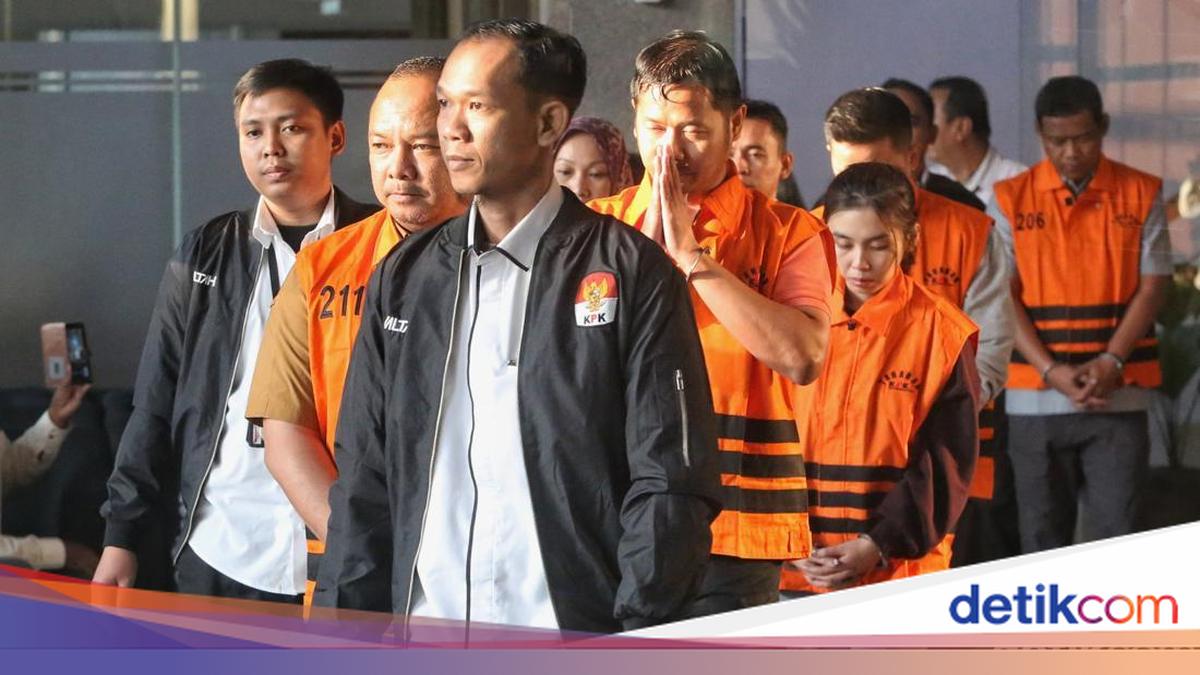
The Corruption Eradication Commission (KPK) has not used the death penalty provision to charge suspects in an alleged corruption case involving emergency funds (DSP) at the National Disaster Management Agency (BNPB). What does the provision say?
According to a report published on Sunday (18 October 2026), the BNPB’s DSP allegedly misappropriated through corruption was meant to fund responses to various disasters. The funds were allocated for forest and land fires in Kalimantan and Papua, a major earthquake in East Nusa Tenggara (NTT), and flooding in Aceh and Sumatra.
Achmad Taufik Husein, acting director of investigations at the KPK, said DSP disbursements were flexible, but their use had to meet prescribed requirements.
“DSP disbursement is flexible, but it must meet one of four requirements and conditions set out in BNPB Regulation No. [number] of 2020,” Taufik said at the KPK headquarters in South Jakarta on Friday (16 October).
He set out the four conditions for disbursing DSP. First, an emergency disaster status must be declared by a regent or mayor, governor, or the president. Second, a specific emergency status must be declared.
The other conditions are that the BNPB chief determine that the disaster risk warrants a response, or that humanitarian assistance is required overseas.
Taufik said the DSP allegedly involved in the case had been allocated to tackle forest and land fires and an earthquake in NTT, as well as recovery after flash floods in Sumatra.
The KPK has divided the case into two clusters. The suspects are:
First cluster:
Gery Prasetiawan, a private-sector individual.
Syifa Nrika Ghifarian, a private-sector individual.
Gabriel Purwaka Sigit, head of the BNPB’s Subdirectorate for Aid and Emergency Fund Management and commitment-making officer.
Bima Setiawan, an expert staff member and younger sibling of BNPB chief Lieutenant General Suharyanto.
Richard Erlangga, an expert staff member to Suharyanto.
Second cluster:
Richard Erlangga (RIC), an expert staff member to the BNPB chief at the time.
Gabriel Purwaka Sigit (GPS), head of the BNPB’s Subdirectorate for Aid and Emergency Fund Management and its commitment-making officer.
Syifa Nrika Ghifarin (SNG), a private-sector individual.
Gery Prasetiawan (GER), a private-sector individual.
Why the KPK did not charge the suspects under the death penalty provision
The KPK has explained why it did not use the death penalty provision against suspects in the BNPB disaster-fund case. Taufik said that, in a case initiated by a sting operation, investigators had limited time to determine the suspects’ status.
“As for why we did not apply Articles 2 and 3, as you know, the investigation was conducted covertly and then an arrest took place. The KPK had only 24 hours to decide whether the case should proceed to the investigation stage,” acting investigation director Achmad Taufik Husein said at a press conference at the KPK’s Merah Putih building in Kuningan, South Jakarta, on Friday (16 October).
The provisions in question are Articles 2 and 3 of Law No. 31 of 1999 on the Eradication of Corruption. Article 2 states that anyone who unlawfully enriches themselves, another person or a corporation in a way that may harm state finances or the national economy may be sentenced to life imprisonment, or to a prison term of between four and 20 years, and fined between Rp200 million and Rp1 billion.
Under Article 2(2), the death penalty may be imposed if the offence is committed under certain circumstances.
Article 3 provides that anyone who, with the aim of benefiting themselves, another person or a corporation, abuses the authority, opportunity or means available to them through their office or position, thereby potentially harming state finances or the national economy, may receive a life sentence or a prison term of between one and 20 years, and/or a fine of between Rp50 million and Rp1 billion.
Returning to Taufik’s explanation, he said the latest Criminal Procedure Code requires investigators to promptly name suspects when a covert investigation culminates in an arrest. He said this was why investigators did not apply the provisions in question.
“Given those circumstances, and the evidence gathered during the investigation, after presenting the case we applied the provision already mentioned: Article 12(i), concerning conflicts of interest,” Taufik said.
“Some procurement activities were also linked to companies affiliated with public officials, their relatives, or people who had a relationship with or were trusted by the head of the BNPB,” he added.
Source: jawawa.id (https://jawawa.id/newsitem/what-is-known-about-the-death-penalty-provision-not-used-in-the-disaster-funds-case-1792288230)
Originally published by detikcom (https://news.detik.com/berita/d-8712034/yang-diketahui-soal-pasal-hukuman-mati-tak-dipakai-di-kasus-dana-bencana), translated from Indonesian