
What Is High Shareholding Concentration, the Issue Highlighted by MSCI? An Explanation
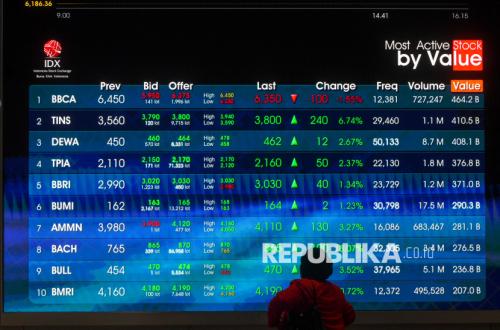
JAKARTA — High Shareholding Concentration (HSC) has emerged as one of the issues highlighted in Morgan Stanley Capital International’s (MSCI) assessment of Indonesia’s capital market. The issue concerns the disclosure of shareholder information and whether share prices on the exchange are being formed fairly.
Permata Bank Chief Economist Josua Pardede said dominant share ownership could become a concern when share-price formation is deemed not to reflect market conditions fairly. The issue is also linked to suspected stock-price manipulation, which has attracted investors’ attention.
According to Josua, MSCI has been concerned about governance and the transparency of share ownership since late last year. MSCI had previously warned that Indonesia could be downgraded from emerging-market to frontier-market status.
However, Josua explained that MSCI’s announcement on 15 October 2026 was not a final decision to downgrade Indonesia’s market to stand-alone status. Indonesia remains in a consultation phase, giving the government and other stakeholders an opportunity to present evidence of improvements to the capital market.
Josua therefore said capital-market reform must be demonstrated through concrete action, rather than merely the introduction of new rules. Enforcement by the Financial Services Authority (OJK) and the Indonesia Stock Exchange (BEI) is an important part of restoring investor confidence.
He welcomed administrative action taken by OJK and BEI against a number of listed companies and securities firms. The measures are expected to strengthen MSCI’s and global investors’ confidence in improvements to governance in Indonesia’s capital market.
Josua warned that if Indonesia were downgraded to stand-alone market status, the impact would extend beyond short-term share-price movements and could also affect capital flows and companies’ funding costs.
“If we were indeed downgraded to stand-alone status, there could be equity outflows of around US$3 billion to US$5 billion,” Josua told Republika on the sidelines of the Wealth Wisdom Jakarta 2026 event in Jakarta on Thursday (22 October 2026).
He said the change in status could prompt global funds that track MSCI indices to reduce or end their allocations to Indonesian equities, increasing pressure on the domestic capital market.
In addition, foreign fund outflows could raise companies’ cost of capital. Listed companies could face more expensive financing when seeking additional funds, particularly as global interest rates are expected to remain high for longer.
Josua stressed that improving the capital market requires coordination between the government and financial-sector regulators. Governance reform, transparency of share ownership and enforcement of rules are expected to strengthen investor confidence and preserve the capital market’s role as a source of financing for the economy.