
What Impact Will 5G and AI Have on Trains? This is What Passengers Will Experience
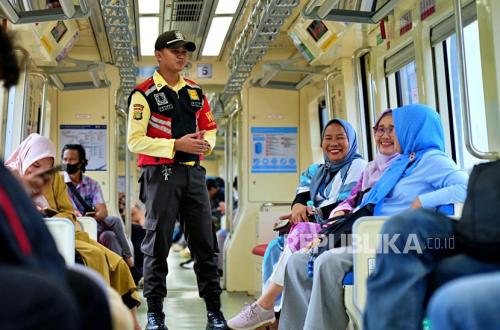
Digital transformation is beginning to permeate Indonesia’s national railway sector. PT Kereta Api Indonesia (KAI) is collaborating with Huawei and PT Solusi Sinergi Digital Tbk (Surge) to adopt 5G and artificial intelligence (AI) technologies. For passengers, this partnership promises safer, more efficient, and comfortable journeys. The cooperation was marked by the signing of a memorandum of understanding (MoU) held at Tanah Abang Station, Jakarta, on Wednesday. KAI CEO Bobby Rasyidin described this step as the beginning of a major leap in developing technology-based transportation systems in Indonesia. “Hopefully, this becomes the starting point for making a big leap forward,” said Bobby. One of the most noticeable impacts for passengers is the enhancement of journey safety. Through the implementation of a 5G network based on future railway mobile communication systems (FRMCS), train operations can be monitored in real-time. This allows for more precise journey scheduling, including reducing the potential for accidents at level crossings. Not only that, AI technology will also be used to detect disruptions on trains, particularly in freight carriages. With AI-based video analysis, the system can provide automatic warnings if potential issues arise. As a result, the inspection process becomes faster and more accurate compared to manual methods. “In the transportation industry, safety must not tolerate any compromise at all,” Bobby emphasised. For service users, the integration of this technology also has the potential to deliver more punctual services. AI-based systems enable predictive maintenance, so technical disruptions can be anticipated before they impact journey operations. In addition, this partnership includes strengthening information and communication technology (ICT) infrastructure, including backbone networks, wireless connectivity at stations and depots, and cloud-based solutions. This infrastructure serves as the foundation for developing broader digital services in the future. As an initial stage, the implementation of 5G technology will be trialled on the Rangkasbitung-Tanah Abang route. This pilot project focuses on improving journey safety and efficiency before being expanded to a wider network.