
What Impact Could Additional North Korean Troops Have on the Ukraine War?
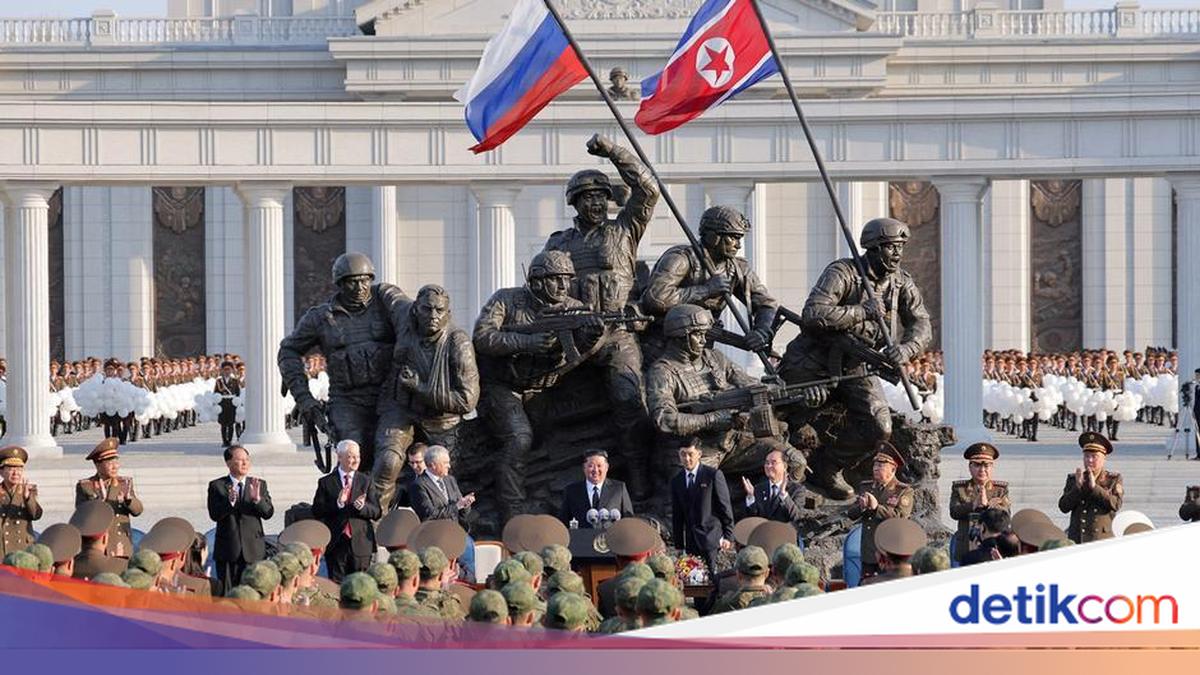
Ukrainian President Volodymyr Zelenskyy has claimed that North Korea is preparing a large wave of troop deployments intended to assist Russia in its war against Ukraine. He suggested that up to 50,000 North Korean soldiers could potentially be stationed on Russian territory. In late July, the Ukrainian leader stated that Russia wanted to bring in 30,000 additional North Korean troops, later adding that Pyongyang had decided to deploy between 30,000 and 50,000 personnel. However, he did not specify whether this figure includes North Korean soldiers already involved in the conflict. In the same statement, Zelenskyy also said North Korea is gaining valuable experience in modern warfare and urged South Korea to strengthen cooperation with Ukraine, particularly in air defence and drone technology. A few days later, Zelenskyy issued another statement claiming Russia had received additional ballistic missiles from North Korea, which were reportedly used in an attack on Zaporizhzhia.
Russia and North Korea signed a defence pact in the summer of 2024. A few months later, Pyongyang began sending combat troops to Russia, with analysts estimating that around 14,000 to 15,000 personnel have been deployed, primarily in the Kursk region. North Korea subsequently agreed to send approximately 6,000 additional personnel consisting of engineering corps and military construction workers. Furthermore, according to South Korean and Ukrainian authorities, Pyongyang has supplied millions of artillery shells and ballistic missiles to Russia. South Korea’s intelligence agency estimates that around 6,000 North Korean soldiers have been killed or wounded since their involvement in the conflict. On Thursday, 13 August, Japan’s Kyodo News agency cited Ukrainian military intelligence as confirming the plan for additional North Korean troop deployments. The source indicated that up to 50,000 North Korean soldiers could be stationed in Russia before the end of November. These troops are expected to serve in the Kursk, Bryansk, and Belgorod regions, allowing Russian forces to be concentrated on the front lines in Ukraine.
South Korean lawmaker Yu Yong-weon stated that military cooperation between Moscow and Pyongyang is deepening. The former military journalist said he had already heard reports of plans for additional North Korean troop deployments during his last visit in February. He expressed concern that the plan is becoming a reality. He noted that if the number reaches 30,000 to 50,000 personnel, it would be far larger than the initial deployment of around 20,000 troops and support personnel. However, he could not confirm whether a deployment of this scale would actually occur, though he stressed that the increasingly close military cooperation between Pyongyang and Moscow warrants serious attention from the South Korean government and military.
Former Deputy Director of South Korea’s National Intelligence Service (NIS), Han Ki-bum, urged caution regarding the claims. He noted that Ukraine initially mentioned an additional 30,000 personnel before raising the estimate to 50,000 without publishing detailed evidence of the plan. Nevertheless, Han assessed that North Korea has a sufficiently large reserve of military personnel that sending such a number would not significantly weaken its own defence. He explained that any country involved in a protracted war will always feel a shortage of personnel, even if most wars end in a stalemate. Han also suggested that North Korean troops would likely be deployed to guard Russia’s rear areas, thereby freeing up more Russian soldiers for the front lines in Ukraine.
Han further noted that North Korea also benefits from the cooperation, gaining direct experience in 21st-century modern warfare and the ability to test its weaponry under real combat conditions. The increasingly close partnership with Russia is also believed to give North Korea access to Russian missile, naval, and air defence technology. The defence expert estimated that of the approximately 6,000 North Korean casualties, around 2,000 are likely fatalities. He also mentioned that an estimated 1,000 to 2,000 soldiers and engineering personnel are believed to have returned to North Korea. War veterans and the families of fallen soldiers are reportedly receiving houses and various special facilities from the government. Han explained that while North Korean forces suffered heavy losses initially, they became more effective as they adapted to the battlefield. Their aggressive fighting style may explain why Putin and other Russian officials have praised their bravery.
Ahn Chan-il, head of the World Institute for North Korea Studies, assessed that deploying up to 50,000 North Korean troops is militarily very feasible. The former North Korean soldier who defected in 1979 believes Pyongyang is likely to send elite troops for special operations. He noted that North Korean special operations forces are highly capable in reconnaissance, surprise attacks, and ambushes, and have demonstrated their combat abilities on the Kursk front, making them an attractive asset for the Russian military. However, if the number of troops sent reaches around 30,000, Ahn estimates that the deployment would include not only elite forces but also infantry, engineering corps, military construction workers, and even female medical personnel. He also revealed that North Korean women are being sent to Russia to work in factories, restaurants, and hospitals, effectively serving as a source of foreign currency earnings for the regime.