
What If Israel Takes Over Al-Aqsa Mosque?
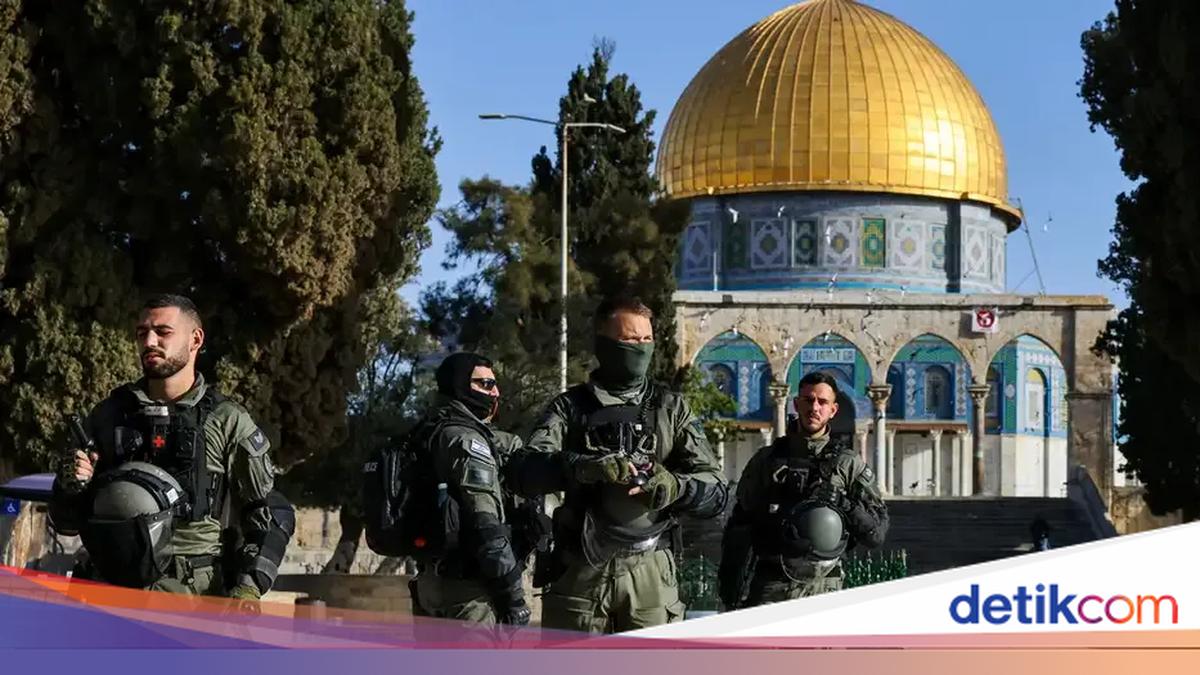
The statement issued after this week’s meeting in Jordan indicates what might happen next.
Israel’s violation of one of Islam’s holiest sites, the Al-Aqsa Mosque in East Jerusalem, could trigger “a religious conflict with repercussions extending beyond the region and threatening regional and international peace and security”. That was the statement of the foreign ministers of 10 Arab League member states following an emergency meeting in Amman, Jordan, last Wednesday. The statement was also signed by the foreign ministers of Indonesia, Pakistan, Turkey and Malaysia.
The Jordanian foreign minister called the meeting because of mounting evidence that the Israeli government is quietly altering an arrangement that has been in place for decades. The arrangement was intended to maintain intercommunal peace at the Al-Aqsa Mosque compound, an area of profound importance to Muslims, Jews and Christians.
“We warn that tampering with the status quo … could ignite a religious conflict whose echoes will extend beyond Palestine and Jordan to the entire Islamic world,” Jordanian Foreign Minister Ayman Safadi told the British newspaper The Guardian before the meeting.
Israel’s Foreign Ministry responded by saying the statement was inaccurate. According to them, Jerusalem “has never been more open and accessible to worshippers of all faiths” than it is now.
Why is Al-Aqsa so important?
Al-Aqsa is considered the third holiest site in Islam, after Mecca and Medina in Saudi Arabia. The compound, also known as the Temple Mount, is the holiest site in Judaism—two Jewish Temples are believed to have stood there. It is also important to Christians because of its connection to the life of Jesus Christ as recorded in the Bible.
Al-Aqsa carries enormous political weight. For many, the mosque is the embodiment of Palestinian identity as well as a flashpoint in a city that is desired as the capital of a future Palestinian state.
Because of the site’s significance, when Israel first occupied East Jerusalem in 1967, the Israeli government judged that national security interests required Muslims to continue being allowed to worship there. Jews were only permitted to visit and were not allowed to pray inside the compound. Instead, Jewish visitors performed religious rituals at the wall below the mosque compound, known as the Western Wall or Wailing Wall.
Jordan was also allowed to maintain its century-long custodianship of the site. To this day the mosque is managed by a religious body called the Islamic Waqf, which Jordan funds with around US$20 million or €17 million per year. Israeli authorities remain responsible for security there.
This fragile arrangement is known as the “status quo”. However, a number of recent reports indicate that the situation is beginning to change.
Jerusalem residents say dozens of mosque officials employed by Jordan have been barred from entering Al-Aqsa throughout this year.
The number of Muslim worshippers also fell by half during 2025, according to Jerusalem-based monitors. Conversely, more Jewish worshippers are being allowed to enter and are increasingly openly performing religious rituals—something that had been prohibited for decades, including by Jewish religious authorities themselves. The Times of Israel reported in January that police for the first time openly permitted Jewish visitors to bring prayer sheets into the compound.
In June, reports also emerged of an Israeli-American plan to turn the mosque area into a “multi-faith centre”. US Secretary of State Marco Rubio later denied any knowledge of such a plan.
Why is it happening now?
This is not the first time that governments of Muslim-majority countries and activists in Jerusalem have issued such warnings.
For decades, hardline Jewish groups, often referred to as the Temple Mount movement, have demanded the right to pray at the site. The most extreme groups even want the mosque destroyed and a new Jewish Temple built in its place.
At first, those groups were largely ignored, wrote Jerusalem-based lawyer Daniel Seidemann in 2025. Seidemann is the founder of Terrestrial Jerusalem, an organisation that monitors developments in the city. But according to him, the “hardline groups” have now moved into the political mainstream.
“Over time, the Temple Mount movement, backed by more than 100 rabbis associated with the settler movement in the West Bank, has become increasingly visible, increasingly vocal, and increasingly provocative,” Seidemann said.
“This crisis has been decades in the making,” said Omar Rahman, a researcher at the Middle East Council on Global Affairs. “Efforts by religious extremist groups to destroy the Al-Aqsa Mosque have existed at least since the 1980s, when a number of plans to do so were uncovered. But those groups and ideologies now have greater representation in the Knesset, Israel’s parliament.”
A report by the Ir Amim Association in October 2025, an organisation focused on Israel-Palestine issues in Jerusalem, found that politicians—including from the national-conservative Likud party led by Prime Minister Benjamin Netanyahu—frequently violated the rules regarding the Al-Aqsa status quo, but never faced consequences from the authorities.
“In practice, Netanyahu has allowed and normalised serious violations of the status quo,” the organisation wrote. Yet Netanyahu “continues to state that his government remains committed to the status quo and that nothing has changed.”
What happens if the Al-Aqsa status quo continues to erode?
“It would be very unwise to make any predictions,” Joost Hiltermann, special adviser for the Middle East and North Africa at the Crisis Group think tank, told DW.
But Hiltermann said it is important to understand that “while the fate of Jerusalem as a city may be a primary Palestinian concern, the fate of Islam’s holy sites in Jerusalem is an enduring concern for Muslims around the world. Not just the Arab world, but also the largest Muslim countries such as Indonesia, Pakistan and Bangladesh. Therefore, any Israeli attempt to change the status quo will face a global reaction.”
Past changes have triggered violence. In 2000, Ariel Sharon, then Israel’s right-wing opposition leader, visited Al-Aqsa. The event is seen as one of the triggers of the Palestinian uprising known as the Second Intifada. In 2017, when Israeli authorities installed cameras and metal detectors at the site, demonstrations broke out in which several people were killed.
UNESCO has designated the Old City of Jerusalem, including the Temple Mount, as a World Heritage site. Therefore, according to observers, any change in the area could be interpreted as a violation of international law.
One possibility if violations of the status quo continue is the outbreak of mass demonstrations in Muslim-majority countries.
“Arab governments will be reluctant to engage in any confrontation with Israel, but their people will be furious,” Hiltermann said. “Governments will have to manage that anger. They will try to do so by launching harsh criticism of Israel without any follow-up action—they are already very skilled at that. The same will happen in Indonesia and other countries. However, all of them may struggle to control the anger at home.”
According to Rahman, the consequences of further Israeli violations will depend on how far the changes at Al-Aqsa go.
“It will trigger a fairly significant reaction, but the scale is difficult to predict,” he said. “It could trigger a catastrophic religious war, or it might only produce a diplomatic reaction. It could also simply add to the pile of grievances against Israel.”
Because of Al-Aqsa’s importance to Muslims, a number of countries may also struggle to contain waves of anti-Israel sentiment, even if they actually want to do so. Countries such as Morocco and the United Arab Emirates, for example, which have normalised relations with Israel, could feel compelled to sever those ties.
Because Al-Aqsa is also central to Palestinian identity, the Gaza-based militant group Hamas frequently states that it is defending the mosque. Extremist groups with Islamist backgrounds also use the issue of defending Al-Aqsa to recruit members.