
What Have We Sent for Tomorrow?
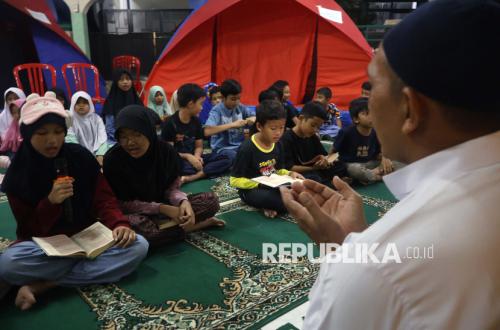
There are days when we are so busy preparing for tomorrow. Calendars are filled, work is planned, savings are calculated, children’s education is considered, and old age is prepared for. Yet the Qur’an poses a quieter question with a far longer reach: of all today’s busyness, what have we actually sent for the ‘tomorrow’ that never ends?
That question appears in Surah Al-Hashr verse 18. Interestingly, Allah does not merely command the believers to be pious, but inserts between two commands of piety an invitation to look back at what has been done. As if faith is not enough merely to be felt; its traces need to be examined.
يَا أَيُّهَا الَّذِينَ آمَنُوا اتَّقُوا اللَّهَ وَلْتَنْظُرْ نَفْسٌ مَا قَدَّمَتْ لِغَدٍ ۖ وَاتَّقُوا اللَّهَ ۚ إِنَّ اللَّهَ خَبِيرٌ بِمَا تَعْمَلُونَ
Yā ayyuhallażīna āmanuttaqullāha waltanẓur nafsum mā qaddamat ligad(in), wattaqullāh(a), innallāha khabīrum bimā ta‘malūn(a).
“O you who believe, fear Allah and let every soul consider what it has sent forth for tomorrow (the hereafter). Fear Allah. Indeed, Allah is fully aware of what you do.”
QS Al-Hashr: 18. The text of the verse and its meaning place ‘tomorrow’ as something that must be prepared for through deeds done now.
What Have We Stored to Meet Allah?
Ibn Kathir opens his explanation of this verse from the most fundamental word: piety. When Allah says, “ittaqūllāh”, fear Allah, Ibn Kathir explains it as carrying out what Allah has commanded and abandoning what He has forbidden. So piety is not merely a feeling of fear in the heart, but an attitude that leaves traces in choices and actions.
What is interesting is that the command to be pious appears twice in a single verse. Between the two lies the sentence, “waltanẓur nafsum mā qaddamat ligad”, let every soul look at what it has prepared for tomorrow.
Ibn Kathir provides a very powerful explanation of this part: human beings are commanded to take account of themselves before they are taken to account later. They must look at what righteous deeds they have stored for the day when they return and stand before Allah.
It is here that the word “ghad” or “tomorrow” acquires its depth of meaning. Tomorrow in everyday conversation is merely the distance of one night. But in this verse, Ibn Kathir understands it as the day of return to Allah and the day when human beings are brought before Him.
There is something deeply touching about that choice of word. The hereafter, which sometimes feels distant to human beings, is called by Allah with a word that is so near: tomorrow.
It is as if the Qur’an is eroding the illusion that we still have a very long time. We often treat the hereafter like a land that lies far away. Yet every sun that sets is reducing the distance towards it.
That is why this verse does not say that human beings should only think about the hereafter. It asks human beings to ‘look’ at what has been sent there.