
What Happens If the MK and MA Rulings on Gibran Are Not Implemented?
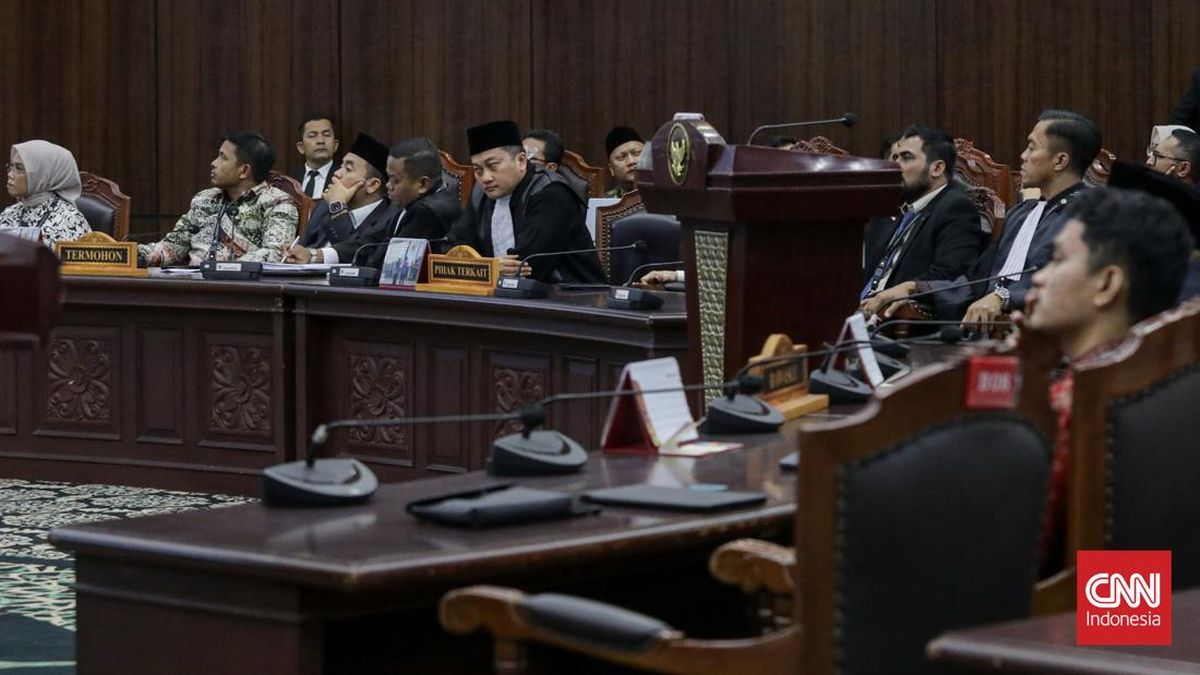
A constitutional law expert has warned that failure to follow up on rulings concerning Vice-President Gibran Rakabuming Raka’s educational history could prompt efforts to delegitimise the Supreme Court and the Constitutional Court.
“I think the serious implication is that if this is delayed or allowed to drag on, I fear there will be continued efforts to delegitimise the rulings of either the Constitutional Court or the Supreme Court,” Herdiansyah Hamzah, a constitutional law expert at Mulawarman University, told CNN Indonesia TV on Sunday (1 November).
The Constitutional Court and the Supreme Court have previously issued rulings relating to Gibran’s diploma and his certificate recognising the equivalence of his secondary education.
On Tuesday (6 October), the Constitutional Court said it had found no convincing evidence that Gibran held a foreign diploma, certificate or degree that could serve as the basis for recognising him as having completed at least senior secondary education, as required under Article 169(r) and Article 227(l) of the General Election Law.
On Friday (30 October), the Supreme Court ruled that the certificate recognising the equivalence of Gibran’s secondary education, which he used to meet the requirements for registering in the 2024 presidential election, was invalid. The court was also reported to have granted a request for the document to be withdrawn from its holder, the Director-General of General and Special Education at the Ministry of Primary and Secondary Education.
However, there has so far been no clear follow-up to the rulings by the institutions responsible for implementing them.
Herdiansyah said three serious consequences could arise if the Supreme Court and Constitutional Court rulings were not acted upon. One of them, he said, concerned the implications for Indonesia’s constitutional order.
He said the case had tarnished Indonesia’s elections, which are often held up as a model of democratic and credible polls. Yet, in his view, institutions representing the people’s sovereignty had not responded to the matter.
“If our colleagues in political parties and parliament do not respond to the rulings of the Constitutional Court and the Supreme Court, our fundamental problem is that the mandate entrusted to us by the constitution is at stake,” Herdiansyah said.
He stressed the importance of upholding the constitution’s standing and dignity by following through on the processes decided by the two courts.
Herdiansyah also warned the relevant institutions against appearing to defy rulings by the highest judicial bodies.
“If you tend to ‘reject’ or fail to respond to the Supreme Court and Constitutional Court rulings, it gives the impression that you are trampling on and insulting the judiciary,” he said.
Herdiansyah said the final and most serious consequence would be the emergence of arguments that efforts were being made to delegitimise the rulings of the two courts.
“The danger is that the longer this process is held up or allowed to drag on, the more efforts to delegitimise the rulings will come from all directions, and we do not want that situation to continue,” he said.