
What Are the Contents of the US-Iran Agreement Now in Effect?
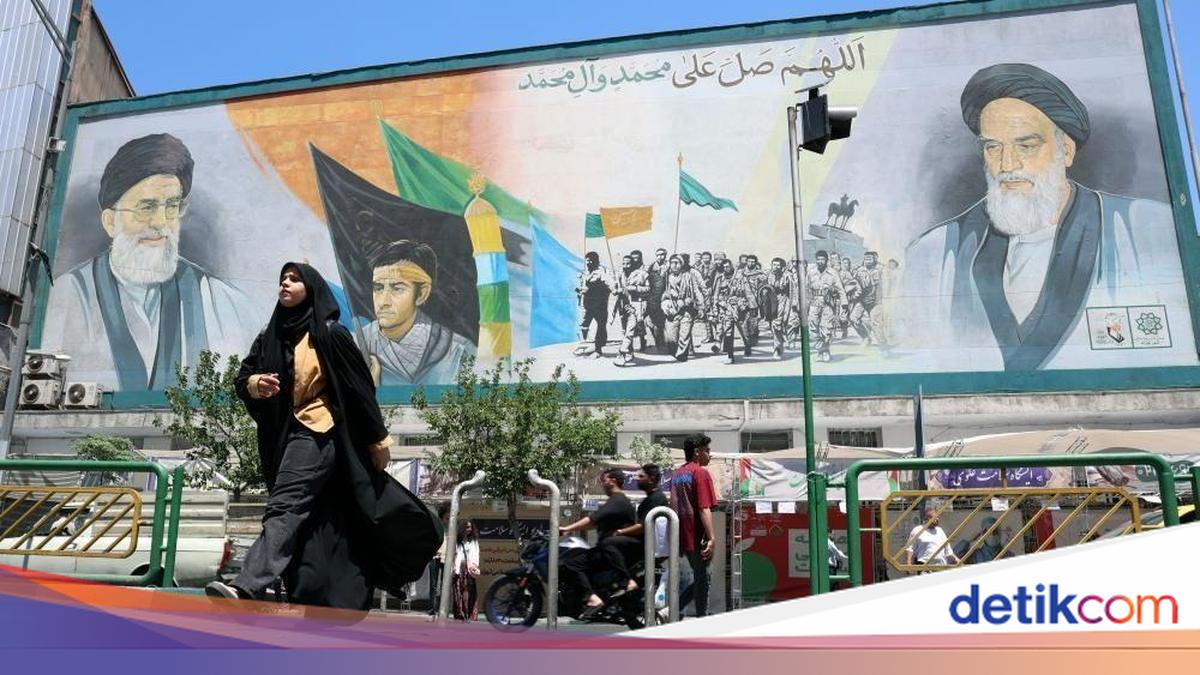
The latest agreement between the United States and Iran to extend a ceasefire came into effect on Thursday (18/06). US President Donald Trump signed the agreement on Wednesday evening while attending the G7 Summit in Evian-les-Bains, France. One of the agreement’s provisions is a deal to reopen the Strait of Hormuz, which is vital to the interests of many countries. “It’s been signed,” Trump told the press as he left the Palace of Versailles after attending a dinner with French President Emmanuel Macron. The agreement between the two countries was drafted in both English and Farsi, according to Iranian Foreign Minister Esmail Baghaei. “This demonstrates the highest level of transparency in our public communications,” Baghaei told the state-run news agency IRIB. “If the text were only in English, there might be subjective or differing translations,” he said.
The US-Iran agreement contains 14 points. One of the points states that Iran will never possess nuclear weapons. Another point concerns the allocation of $300 billion (approximately Rp5,349 trillion) for Iran’s “reconstruction and economic development,” though the US is not required to contribute to this fund. The agreement was signed four months after the conflict between Iran and the US, which was backed by Israel, erupted. The Trump administration described the agreement as “performance-based,” meaning Iran will only receive benefits if it adheres to the commitments it agreed to. However, the US-Iran deal still leaves many questions unanswered.
Point 1: Ending the conflict ‘on all fronts’
The first paragraph of the agreement states that the US, Iran, and their allies will cease military operations as soon as possible and permanently on all fronts, including Lebanon. From the US perspective, Trump is increasingly concerned that Israeli military operations against Hezbollah in Lebanon could derail the agreement with Iran. Iran, on the other hand, has repeatedly expressed its desire for Lebanon to be included in the ceasefire agreement with the US. Iran’s Foreign Ministry stated that any continuation of Israeli military operations in Lebanon would be a “violation of the agreement” and that “necessary measures will be taken” in response to such attacks. The US-Iran agreement states that both parties will not initiate new military operations or threaten each other.
Point 2: Respect for ‘internal affairs’
The text of the agreement, which was read verbatim to the press during a telephone briefing with US officials, states that the US and Iran will respect each other’s sovereignty and territorial integrity. Both countries agreed to refrain from interfering in each other’s internal affairs. This point is likely to be received negatively by some opposition groups in Iran. In early 2026, Trump had promised demonstrators in Iran that “US assistance is on the way.”
Point 3: A 60-day period that can be extended
The US and Iran will commit to negotiating and reaching a final agreement within a maximum of 60 days. This period can be extended by mutual consent. The countdown of the 60 days begins after the leaders of both countries formally sign the agreement. Trump signed the Iran document at the Palace of Versailles in France on Wednesday (17/06), according to a White House statement to the BBC. The document from the Iranian side was also signed by Iranian President Masoud Pezeshkian. Previously, the US and Iran indicated that there would be a formal signing ceremony in Geneva, Switzerland, at the end of the week. However, it remains unclear whether this ceremony will still take place.
Point 4: US to end blockade of Iranian ports
Once the agreement is signed, the US is required to cease its military blockade and “all interference or disruption” of Iranian ports. According to this point, the US blockade will be fully lifted within 30 days. During this period, the number of ships the US allows to pass through Iranian ports will be proportional to the traffic restored by Iran in the Strait of Hormuz. Within 30 days after the final agreement is signed, the US commits to withdrawing American troops from the vicinity of Iran. In practice, this means the US military will return to the positions and assets it held before the conflict with Iran broke out on 28 February.
Point 5: The Strait of Hormuz
This part of the agreement stipulates that, after the signing, Iran will “use its best efforts” to enable safe and free-of-charge passage for commercial vessels through the Strait of Hormuz. This point has been a primary US objective since the conflict with Iran erupted, which was followed by Iran’s decision to close the Strait of Hormuz, triggering a surge in global oil prices. The US-Iran deal promises that traffic through the Strait of Hormuz will reopen immediately. Both countries will also consider efforts to remove “technical and military obstacles” and conduct mine clearance.
Source: jawawa.id (https://jawawa.id/newsitem/what-are-the-contents-of-the-us-iran-agreement-now-in-effect-1781765574)
Originally published by detikcom (https://news.detik.com/bbc-world/d-8536748/apa-saja-isi-perjanjian-as-iran-yang-kini-telah-berlaku), translated from Indonesian