
What a Javan Rhino Expert Says About the Translocation Plan
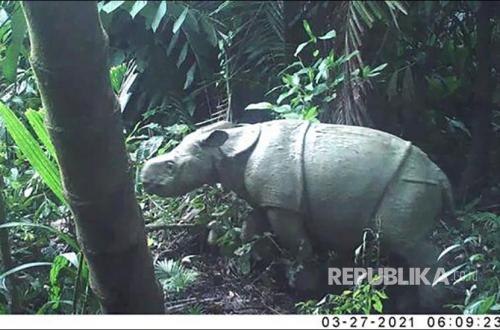
BANDUNG — Sofiatin, a lecturer in the Biological Resources Management Expertise Group at the School of Life Sciences and Technology of the Bandung Institute of Technology (SITH ITB), has weighed in on plans to move some Javan rhinos (Rhinoceros sondaicus) from Ujung Kulon National Park in Banten to Alas Purwo National Park in East Java. She said the proposed relocation requires a comprehensive, multidisciplinary scientific assessment.
Sofiatin’s research background is closely connected to efforts to conserve the Javan rhino. She completed her doctoral studies in biology at the Bandung Institute of Technology with a dissertation entitled “Estimating the Intrinsic Value of the Critically Endangered Javan Rhinoceros (Rhinoceros sondaicus) for Conservation”.
She completed the dissertation in December 2018 under the supervision of Professor Tati Suryati Syamsudin and Ahmad Sjarmidi. The research examined the intrinsic value of the Javan rhino as one basis for conserving a species classified as critically endangered.
That research also informs Sofiatin’s perspective on the challenges and strategies involved in protecting the Javan rhino, including the proposal to establish a second habitat through translocation.
“This is not simply a matter of moving animals, but of rebuilding a self-sustaining population to ensure the species’ survival,” she said in a statement released on Tuesday (24 November 2026).
She said translocation could be one conservation strategy for reducing the risk of extinction faced by the critically endangered Javan rhino. Its success, however, would depend heavily on habitat suitability, food availability, animal health, site security and support from nearby communities.
Sofiatin said a new habitat must meet the Javan rhino’s ecological needs. Her research in Ujung Kulon National Park in 2015–2016 identified around 80 plant species eaten by the rhinos, while earlier research had recorded about 120.
“Alongside food-plant diversity, the habitat needs open to semi-open canopy to support the growth of food plants, as well as dense canopy for cover. Fresh water, wallows, minerals, topography, temperature, humidity and the environment’s carrying capacity are also important factors,” she said.
She said moving the animals far from their original habitat would carry risks, from stress during transport to difficulties adapting to a new environment. Sofiatin therefore stressed the need for a thorough habitat assessment before any translocation takes place.
Besides Alas Purwo, the Cikepuh Wildlife Reserve in Sukabumi, West Java, which is relatively closer to Ujung Kulon, has also featured in risk-assessment studies. “However, every potential site still needs to be researched to establish whether it is suitable,” she said.
She said a population concentrated in a single area faces several threats, including natural disasters, disease, habitat constraints and inbreeding, which can reduce genetic diversity. Another challenge is the spread of langkap palm (Arenga obtusifolia), which can hinder the growth of understorey plants that provide food for the rhinos.
Population modelling using the Vortex software in her research suggested that Javan rhinos could survive for 50 years. However, under certain scenarios, the population was projected to fall to about half its initial size, or around 33 animals.
The results are simulations based on the study’s conditions and assumptions, not a definitive forecast of future population numbers. “The findings indicate that Ujung Kulon National Park still has the potential to sustain Javan rhinos, provided habitat management and threat mitigation are carried out consistently,” she said.
According to Sofiatin, conservation efforts could be strengthened through monitoring by the Rhino Monitoring Unit (RMU), health surveillance by the Rhino Health Unit (RHU), and technologies such as artificial intelligence (AI)-enabled camera traps, thermal drones and smart patrol systems.
“In addition, langkap management, genetic and reproductive research, anti-poaching measures, and joint funding involving the government, conservation organisations, universities and communities need to be developed further,” she said.
Sofiatin stressed that Javan rhino translocation should be seen as a long-term conservation strategy grounded in scientific readiness and careful risk management. Strengthening protection in the species’ existing habitat and researching the potential for a second habitat can proceed in parallel to safeguard its survival.
“Through an approach based on science, technology and collaboration among different parties, conservation efforts can help ensure that Javan rhinos survive and reproduce as part of Indonesia’s biodiversity,” she said.
Source: jawawa.id (https://jawawa.id/newsitem/what-a-javan-rhino-expert-says-about-the-translocation-plan-1795477896)
Originally published by Republika (https://news.republika.co.id/berita/toz8fk393/ini-kata-ahli-badak-jawa-soal-rencana-translokasi), translated from Indonesian