
Whale Shark Stranded in Sikka; Its Meat Was Cut Up and Shared
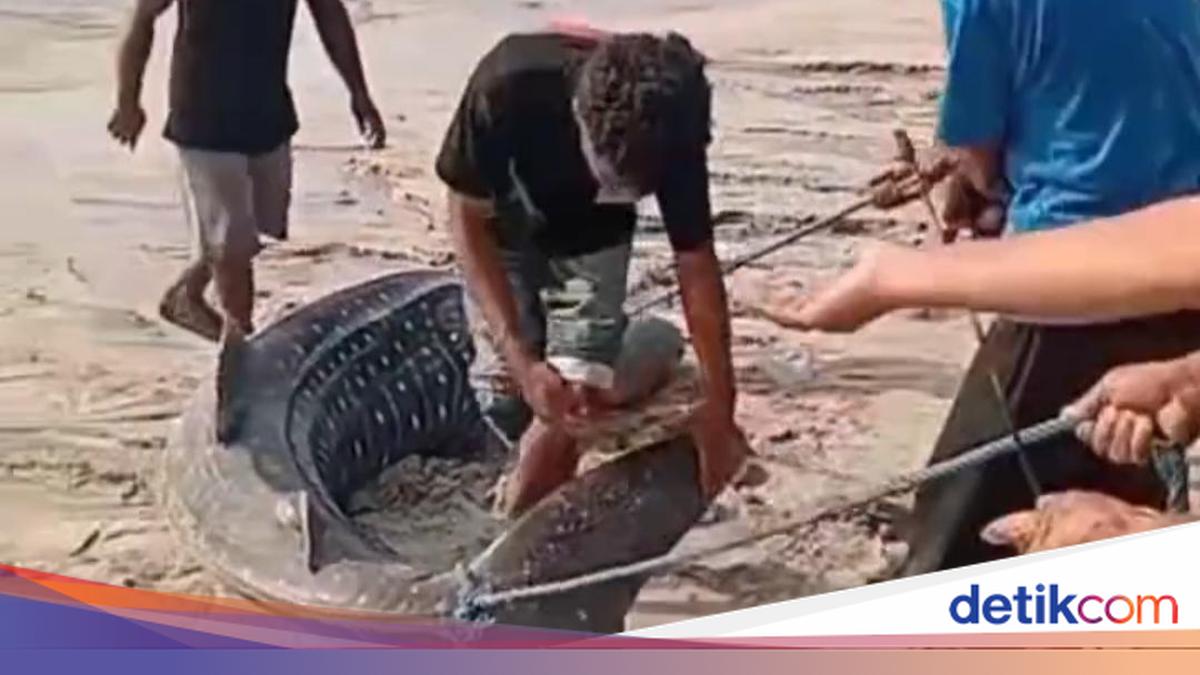
A whale shark (Rhincodon typus) was found stranded at Lowolabo Beach, in Lowolabo village, Paga district, Sikka regency, East Nusa Tenggara (NTT). It was discovered on Wednesday (28 October 2026).
In videos circulating online, residents can be seen tying blue nylon ropes around the large fish’s neck and tail before dragging it ashore. According to reports, people in Lowolabo village cut up the fish and shared its meat for consumption.
Lowolabo village’s acting head, Yoseph Nanggonis Da Lopes, confirmed that the whale shark had stranded and residents had cut it up for food. He stressed, however, that the animal was already dead.
“Yes, it happened two days ago, on Wednesday morning (28 October 2026), but it was already dead,” said Lopes, who is known as Gonis, when contacted on Friday (30 October 2026).
Gonis said the decision to butcher the fish was a spontaneous reaction. Residents, he said, did not clearly understand that the species is protected.
“People did not know or understand that this type of fish is classified as a rare animal protected by law,” Gonis explained.
He added that residents had not received adequate education about laws and regulations concerning protected wildlife. As a result, they butchered the animal for food after finding it dead.
“Some people did not know. They dragged it to the shore with nylon ropes, then cut it up and shared it for consumption,” Gonis said.
According to Gonis, Sikka regional government officials went to the site after the incident to inspect the whale shark.
“The regional government realised that residents had not been properly educated about protected wildlife,” he said.
Gonis said whale sharks had stranded at Lowolabo Beach repeatedly. He said this had led residents to treat them as a source of meat.
“They have stranded often, so residents have made a practice of butchering them because they have not been educated. The meat has now all been distributed,” Gonis concluded.