
WGII Data Reveals Vast Area of Community-Managed Lands with Potential for Conservation
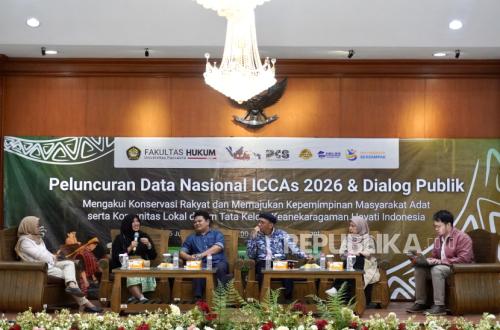
Indigenous peoples and local communities play a vital role in preserving Indonesia’s biodiversity. Recent data shows that the potential for Community Conserved Areas (AKKM), also known as Indigenous Peoples and Local Community Conserved Territories and Areas (ICCAs), reaches more than 29.5 million hectares across various regions in Indonesia.
Data released by the Indonesian Working Group for ICCAs (WGII) notes that as of May 2026, there are 527 registered AKKM sites covering 1.01 million hectares. These areas are managed by 192 communities, comprising 169 indigenous groups and 23 local communities.
Beyond the registered areas, spatial analysis indicates that the potential for AKKM reaches 29.54 million hectares. Papua holds the largest potential at approximately 11.67 million hectares, while Kalimantan records the largest registered AKKM area, totalling 671,323 hectares.
Lasti Fardilla Noor, Knowledge Management Manager at WGII, stated that most community-managed areas hold significant value for biodiversity conservation. According to Lasti, approximately 69.3 per cent of AKKM territories overlap with high conservation value areas, including forests, peatlands, karst, savannas, mangroves, seagrass, coral reefs, and Key Biodiversity Areas (KBA).
“These findings demonstrate that conservation efforts by Indigenous Peoples and Local Communities are not merely normative claims, but are reflected through tangible ecological indicators,” Lasti said in a press release on Saturday (6/6/2026).
WGII data also notes that AKKM territories serve as habitats for approximately 77 per cent of Indonesia’s bird species diversity. Furthermore, at least 240 species of flora and fauna found in these areas are classified as threatened according to the International Union for Conservation of Nature (IUCN).
In addition to serving as habitats for wildlife and plants, AKKM areas are a source of livelihood for local populations. At least 2,845 plant species are utilised for food, medicine, construction materials, and ritual or cultural needs.
Nevertheless, most community-based conservation areas still face issues regarding legal certainty. Approximately 92.5 per cent of registered AKKM areas are located within state forest zones. The potential AKKM area located within state forests is estimated to exceed 23.36 million hectares.