
Western Sanctions Fail to Curb Russian Oil, Global Demand Remains High
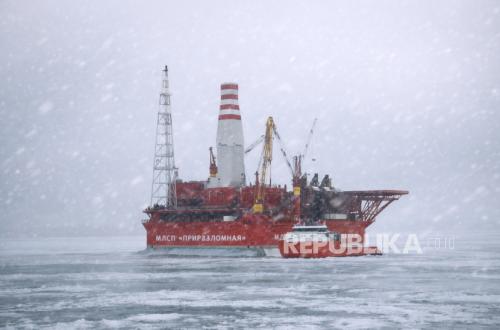
REPUBLIKA.CO.ID, JAKARTA — Western sanctions against Russia, intended to pressure Moscow’s energy revenues, are instead confronting a more complex reality. Amid geopolitical conflicts and global supply disruptions, Russian oil continues to flow and is even increasingly sought after by several countries.
A Reuters report indicates that Russian oil exports remain stable, even increasing through maritime routes despite attacks on energy infrastructure and logistical restrictions. This signals the resilience of Russia’s export system, which has yet to be shaken.
The International Energy Agency notes that Russia’s oil revenues have surged significantly due to global price increases. This spike is partly triggered by conflicts in the Middle East that have disrupted the world’s energy supply balance.
In this situation, many countries are turning to Russian oil as a more affordable alternative. China and India have become the two largest buyers, absorbing the majority of Russia’s post-sanction exports.
According to an Associated Press report, the shift in global energy trade flows shows that Western sanctions have not halted demand but rather redirected the market towards Asia and the Global South.
The Druzhba pipeline, the main route for distributing Russian oil to Europe, has also come back into focus. Disruptions on this route have proven to directly impact the region’s energy stability.
In Europe itself, attitudes towards Russian oil are beginning to show new dynamics. Italy’s Deputy Prime Minister, Matteo Salvini, has previously highlighted the importance of a pragmatic approach in addressing the energy crisis.
Meanwhile, in Hungary, the government under Péter Magyar has asserted that the country cannot yet fully detach from its dependence on Russian energy.
Budapest has even made the flow of Russian oil a part of political negotiations with the European Union and Ukraine, particularly regarding the Druzhba pipeline.
Hungary’s newly elected Prime Minister, Péter Magyar, has openly urged Ukrainian President Volodymyr Zelenskyy to continue the transit of Russian oil through the Druzhba pipeline.