
Western Europe Records Hottest June in History
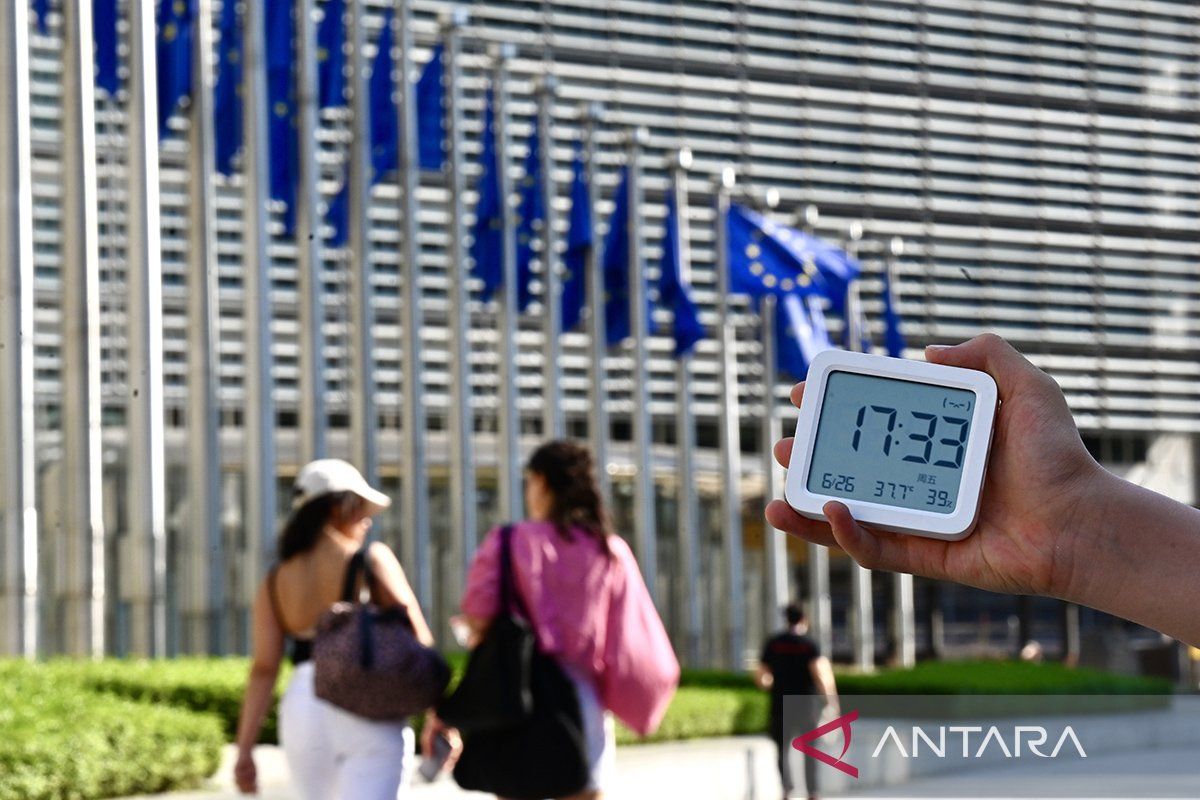
Brussels (ANTARA) - Western Europe experienced its hottest June in history in 2026, while global temperatures ranked as the second highest ever recorded for the month, according to a statement from the Copernicus Climate Change Service (C3S) on Thursday.
The EU’s climate monitoring service said the heat was driven by continued warming over land and sea, with sea surface temperatures reaching their highest point for any June in the recorded data.
June recorded an average global surface air temperature of 16.54 degrees Celsius.
The service said the average sea surface temperature in oceans outside the polar regions, between 60 degrees latitude south and 60 degrees latitude north, reached a record 20.86 degrees Celsius.
It noted that exceptionally high sea temperatures continued across much of the tropical Pacific as El Nino conditions developed, and were expected to strengthen in the coming months.
Severe heatwaves swept across much of western and central Europe during the second half of June, breaking monthly and all-time temperature records in several countries.
Western Europe recorded an average temperature of 20.74 degrees Celsius – the hottest June ever recorded in the region.
Across Europe as a whole, the average land temperature reached 19.14 degrees Celsius, the second highest June on record.
The heatwave occurred just weeks after another extreme heat event in May and was followed by extreme heat in early July, underscoring the increasing frequency and intensity of heat extremes, according to C3S.
“June 2026 underlines how devastating climate change is,” said Samantha Burgess, strategic lead for climate at the European Centre for Medium-Range Weather Forecasts (ECMWF).
In addition to the extreme heat, much of western Europe experienced drier-than-average conditions in June.
C3S said persistent high pressure and heatwave conditions contributed to drought risk in parts of eastern Europe and increased wildfire activity, particularly in the Iberian Peninsula and southern France.
Dry soils across western and central Europe, which had built up during the May heatwave, further worsened drought conditions.
Arctic sea ice extent in June was around 5 per cent below average, the sixth lowest on record for the month.
The largest decline was observed in the northern Barents Sea, particularly around Svalbard and Franz Josef Land.
In Antarctica, sea ice extent was around 8 per cent below average, also ranking as the sixth lowest for June.