
Western China emerges as new hub for global business
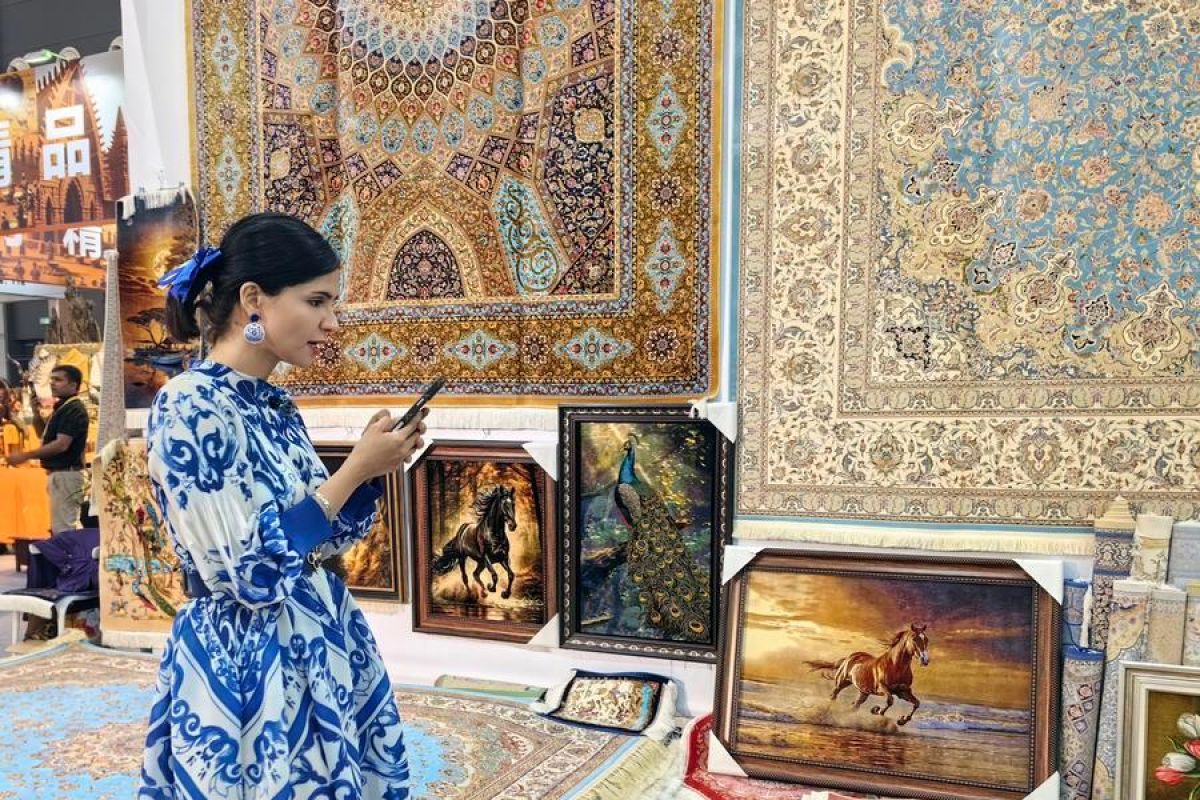
Xi’an - In the 10th Silk Road International Exposition, ornate carpets, intricate handicrafts and essential oils attract steady streams of visitors. Nearby, an Iranian vendor is live-streaming to promote products to Chinese buyers via an e-commerce platform.
For Mahdi Barid Olyaei, an Iranian participant, the exhibition is more than a trade show. Attending the event in Xi’an, Shaanxi Province, northwestern China, for the second time, he brought a more diverse product range.
“We previously worked mainly with partners in eastern China. Western China is a new market for us. We hope to better understand local consumption habits and expand our presence by connecting directly with buyers and finding more wholesale partners through this exhibition,” Olyaei said.
Olyaei’s enthusiasm was echoed by many other international participants. The five-day exhibition, which ended on Monday (25 May), drew nearly 200 foreign companies from 64 countries and regions, with many viewing it as a gateway to Western China’s rapidly growing market.
Covering 72% of China’s land area and home to 27% of its population, Western China is increasingly prominent as a new frontier for openness. This momentum is supported by China-Europe freight train services and the New International Land-Sea Trade Corridor, both enhancing regional connectivity.
In the first quarter of this year, China-Europe freight trains departing from and arriving in Xi’an completed 1,631 journeys, a 7.4 per cent year-on-year increase, accounting for nearly 30% of the national total. Delivery times have been significantly reduced, with the fastest trains reaching Germany in just 10 days and Central Asia in five.
Beyond facilitating trade, improved connectivity allows logistics providers, manufacturers, and port operators to build more integrated industrial chains and share development opportunities.
According to Evgenii Nikitin, CEO of Russian aluminium giant Rusal, the company established a branch in Xi’an as the city now handles over 40% of the firm’s aluminium shipments to China via rail.
Foreign firms can also find niches in Western China, leveraging its diverse resources and healthy industrial ecosystem. At the Sichuan exhibition area, a high-resolution optical satellite developed by Huantian Wisdom Technology Co., Ltd. drew attention.
With a 0.5-metre spatial resolution, the satellite acts like a space-based camera, providing detailed geospatial data for agricultural monitoring, ecological protection, and disaster prevention.
“Uzbek officials are interested in using our service framework to provide satellite data and technical solutions for their country,” said Ji Muye, head of the company’s international business division.
This growing appeal is reinforced by policy support. China’s revised catalogue of industries encouraging foreign investment, effective since February, underscores the country’s commitment to attracting global capital in key sectors such as advanced manufacturing and green development, with particular focus on central, western, and northeastern China.
At the local level, regional governments are aligning foreign investment priorities with their industrial strengths while exploring opportunities in emerging sectors. For instance, Chongqing in southwestern China is promoting research, development, and manufacturing of small and medium-sized agricultural machinery suited to mountainous terrain, while Guizhou Province has expanded support for computing infrastructure hardware and software.
Pan Yuanyuan, a researcher at the Chinese Academy of Social Sciences’ (CASS) World Economics and Politics Institute, noted that differing needs between eastern and western China create diverse opportunities for foreign companies.
“Differentiated strengths allow firms to find suitable market segments, and highly specialised niche markets often harbour unexpected business opportunities,” she said.