
West Sumatra Government Accelerates River Sedimentation Mitigation to Prevent Recurring Floods
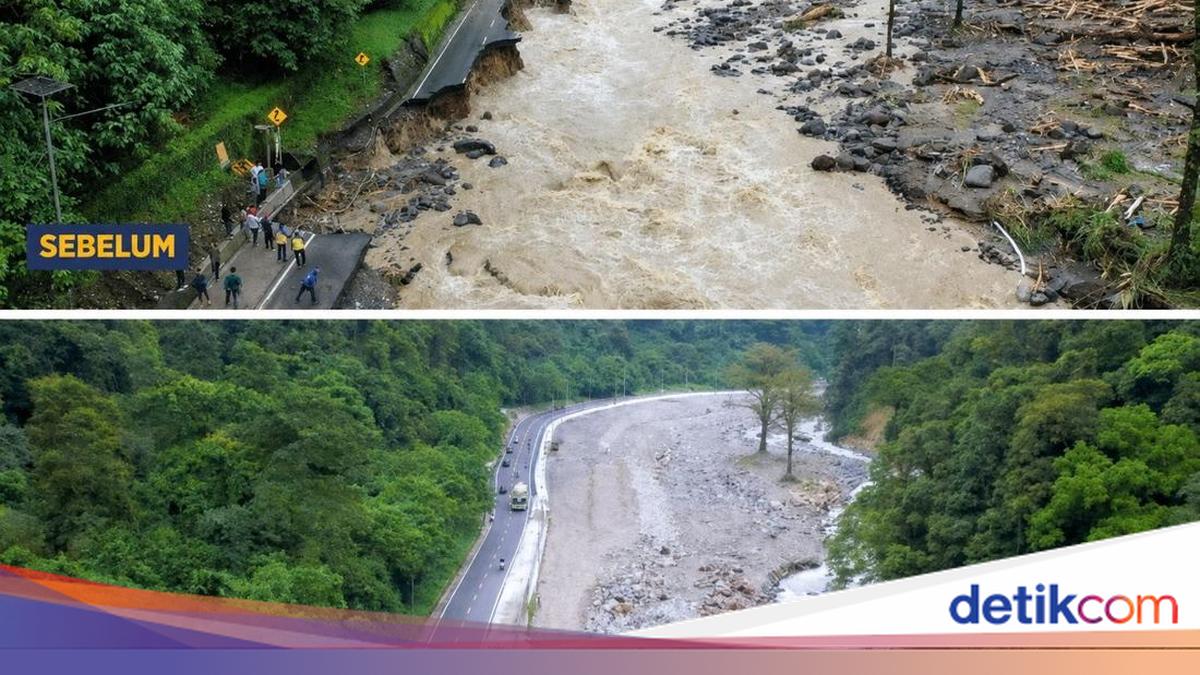
The Provincial Government of West Sumatra is pushing for the acceleration of post-hydrometeorological disaster rehabilitation and reconstruction. River sedimentation management has now become an urgent priority to reduce the risk of recurring floods caused by high rainfall.
West Sumatra Governor Mahyeldi Ansharullah conveyed this while receiving the Specific Working Visit Team of Commission VIII of the Indonesian House of Representatives (DPR RI) at the Governor’s Palace in West Sumatra on Friday (28/8). The meeting discussed recovery progress as well as the identification of further handling needs in disaster-prone areas.
Based on official data, the total value of damage and losses due to the disaster reached Rp33.4 trillion. The West Sumatra Provincial Government then proposed a budget allocation of Rp21.4 trillion through the Post-Disaster Rehabilitation and Reconstruction Plan (R3P).
The central government has approved a budget of Rp17.9 trillion for multi-year infrastructure financing for the 2026-2028 period. A number of physical works have already begun this year, but acceleration remains urgent given the threat of extreme weather still looming.
“Works in 2026 have already started, but there is still public concern because high rainfall is again causing floods,” said Mahyeldi in a written statement on Monday (31/8/2026).
According to Mahyeldi, sediment accumulation in various river channels has narrowed water capacity, triggering overflows. This issue has become a major concern following the return of floods in Padang City and the Maninjau area previously.
“When high rainfall returns, as experienced in Padang, floods could recur. This is our concern because sedimentation in rivers is still largely unaddressed,” he said.
Meanwhile, Principal Secretary of the National Disaster Management Agency (BNPB) Rustian emphasised the importance of applying the principle of building back better. Infrastructure quality standards must be improved to be far more resilient to potential future disasters.
“The main principle of reconstruction in 2026 is directed towards Build Back Better, building better,” said Rustian.
Mahyeldi added that accelerating the recovery of this region requires close collaboration between the central government, provincial government, and regency and city governments. All stages of work must adhere to the R3P document to ensure targeted handling of residents’ needs.
Commission VIII of the DPR RI also provided full support for the acceleration of infrastructure rehabilitation in high-risk areas. All results of the field review will be submitted to the Task Force for the Acceleration of Post-Disaster Rehabilitation and Reconstruction (Satgas PRR) of Sumatra.