
West Papua Provincial Government Prepares Task Force to Accelerate TB Control
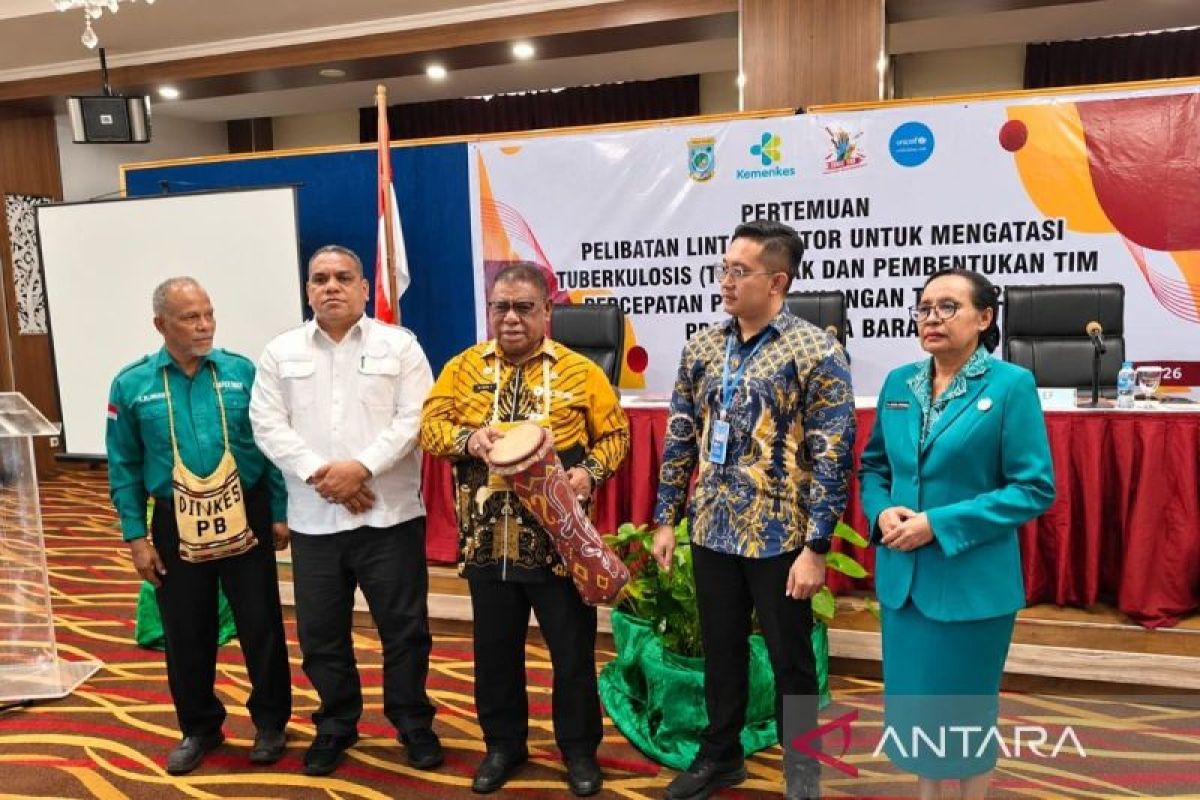
Manokwari (ANTARA) – The West Papua Provincial Government is preparing a task force to accelerate tuberculosis (TB) control and improve case detection and treatment, particularly among children, where coverage had reached only 41 per cent by September 2026.
West Papua Regional Secretary Ali Baham Temongmere said in Manokwari on Thursday that setting up the task force was intended to strengthen cross-sector coordination and ensure TB control was carried out effectively.
“This task force must not exist only on paper. It needs an action plan, a budget and a regular meeting schedule,” Ali Baham said.
He said the task force was being established in follow-up to Presidential Regulation No. 67 of 2021 on Tuberculosis Control and West Papua Governor Regulation No. 37 of 2024.
“The programme’s implementation and the task force’s performance will be evaluated regularly to ensure that regional agencies carry out their responsibilities in line with their respective mandates,” he said.
Ali Baham said the estimated TB response target across West Papua in 2026 was 3,063 cases, with children accounting for about 16 per cent, or 489 cases.
From January to September 2026, TB case detection and treatment coverage stood at 60 per cent. Only 200 cases among children had been detected, or about 41 per cent of the target.
“There is still a gap in detecting TB cases among children, which could lead to delayed diagnosis and treatment,” Ali Baham said.
He said children generally contracted TB from adults in their immediate surroundings. Other contributing factors included nutritional status, housing quality, poverty and limited access to healthcare.
Combating the disease therefore required the involvement of various government agencies, community organisations, religious and customary leaders, and development partners, down to village level.
“There may still be many children in West Papua who are ill without a diagnosis or treatment,” he said.
He instructed the Regional Development Planning Agency (Bappeda), the Regional Financial and Asset Management Agency (BPKAD) and the Health Office to ensure TB-control programmes were included in regional planning and budget documents for 2027.
The Education Office is to make better use of schools, while agencies responsible for women’s empowerment, child protection and family planning, as well as the Family Welfare Movement (PKK) and integrated health posts (posyandu), are to strengthen early detection.
“The Social Affairs Office will integrate social protection for patients, the Village Community Empowerment Office (DPMK) will strengthen health cadres, and the Public Works and Spatial Planning Office (PUPR) will support the provision of healthy housing,” he said.
Ali Baham said the Population and Civil Registration Office (Disdukcapil) would ensure access to civil registration and health insurance, while the Communications and Information Office (Diskominfo), together with the mass media, would expand public education on TB prevention.
The provincial government is seeking support from the Indonesian Military and National Police to reach remote areas, as well as the involvement of religious and customary leaders in reducing stigma that discourages families from seeking examinations for their children.
“TB control programmes should also be integrated with HIV/AIDS, malaria and leprosy control, because these are connected in the delivery of health services,” he said.