
West Kalimantan Quarantine Destroys Illegal Commodities from Malaysia at Aruk Border Post
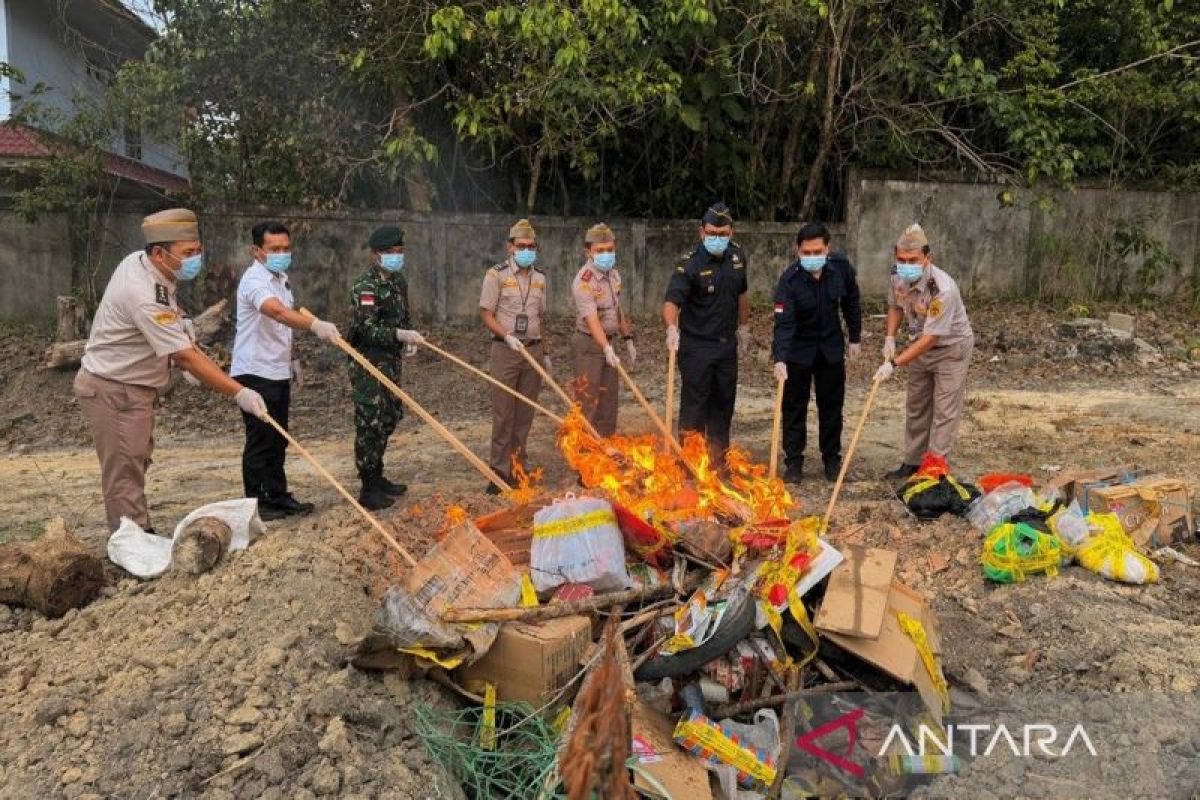
Pontianak (ANTARA) - The West Kalimantan Quarantine Agency has carried out a mass destruction of various illegal commodities originating from Malaysia that were secured in the area of the Aruk State Border Crossing Post as an effort to prevent the entry of dangerous pests and diseases into Indonesian territory.
“This destruction serves as a strong message to all parties that we will not tolerate illegal commodities that have the potential to bring diseases into West Kalimantan,” said the Head of the West Kalimantan Quarantine Agency, Ferdi, in Pontianak on Monday.
Ferdi stated that the action is part of the strict enforcement of quarantine regulations on every carrier medium entering from abroad, particularly through border routes.
He explained that all the destroyed commodities were not equipped with official health certificates and were not reported to officials, thus posing a high risk of carrying animal quarantine pests and diseases (HPHK), fish quarantine pests and diseases (HPIK), or plant quarantine disruptive organisms (OPTK).
The action is an implementation of Law No. 21 of 2019 on Animal, Fish, and Plant Quarantine. The destroyed commodities are the result of intensive supervision by quarantine officers from January to March 2026, after they were previously detained for failing to meet administrative and technical requirements.
He explained that the destruction process was carried out by burning and crushing in accordance with standard operating procedures to ensure that the commodities no longer serve as sources of disease spread.
The destroyed commodities include around 300 plant seedlings, such as pineapples, coconuts, and oil palm. In addition, there were 15 kilograms of various types of meat, from beef to bat meat, as well as 240 packages of processed pork.
Officers also destroyed fishery products in the form of salted fish and shrimp with a total weight of around 100 kilograms.
Ferdi emphasised that the success of this supervision would not have been possible without cross-agency synergy and support from the community in the border area.
He assured that the West Kalimantan Quarantine Agency will continue to tighten surveillance at entry points to prevent disease threats from abroad.
“Our commitment is clear: to protect the biosecurity of West Kalimantan from disease threats that could harm the agriculture, livestock, and fisheries sectors,” he said.