
West Kalimantan cultivates Sharia economy through RABBANI Khatulistiwa
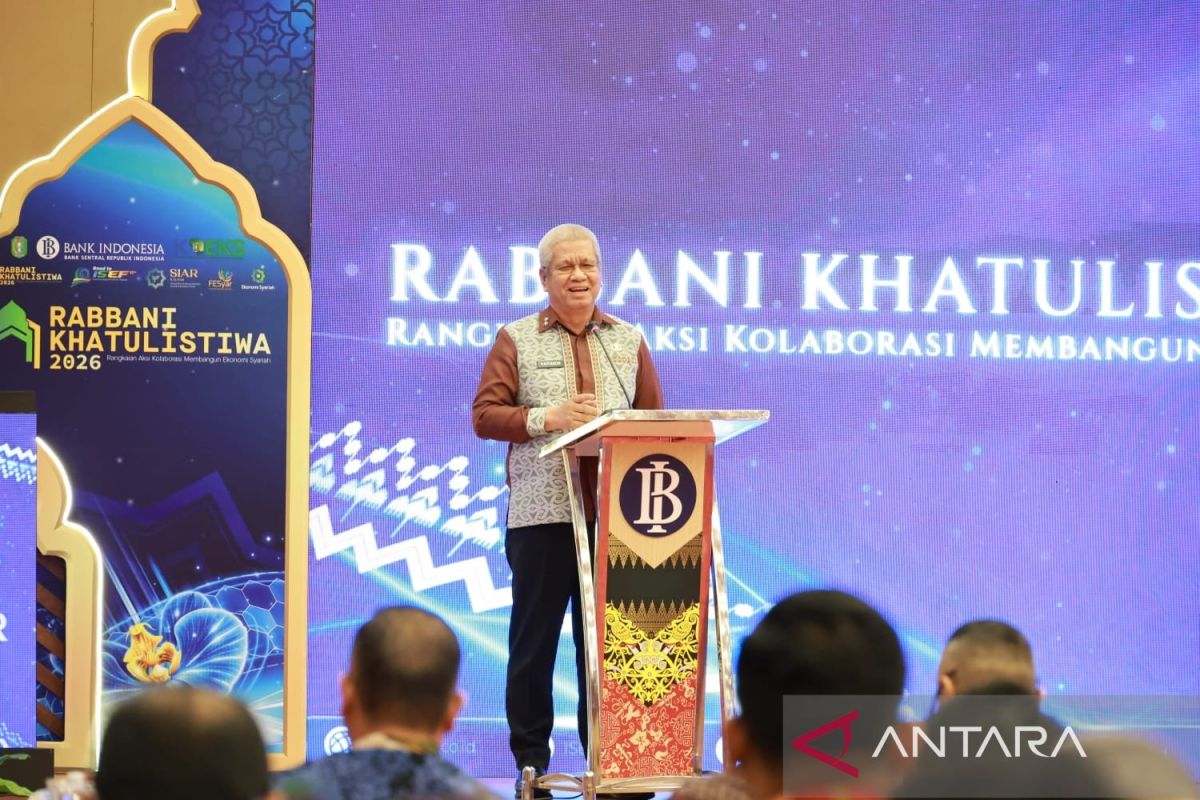
The Provincial Government of West Kalimantan, together with Bank Indonesia, is strengthening the Sharia economy as a new source of inclusive and sustainable economic growth through the RABBANI Khatulistiwa 2026 (Collaborative Action Series for Building the Sharia Economy). RABBANI Khatulistiwa 2026 focuses on developing the halal value chain and empowering MSMEs and pesantren.
“In the first quarter of 2026, West Kalimantan’s economic growth reached 6.14 per cent year-on-year. This shows that the momentum for regional economic recovery and expansion is continuing well,” said West Kalimantan Regional Secretary Harisson at the opening ceremony of RABBANI Khatulistiwa 2026 at the Bank Indonesia West Kalimantan Representative Office hall on Friday. He noted that West Kalimantan’s economy demonstrated positive performance amid global economic uncertainty, with growth of 5.39 per cent in 2025, up from 4.90 per cent the previous year, making it one of the highest growth rates in the Kalimantan region.
He assessed that this achievement was inseparable from the contribution of the micro, small, and medium enterprise (MSME) sector and the development of Sharia economic and financial activities within the community. Currently, West Kalimantan has around 338,000 MSMEs and more than 5,100 halal business operators, which are considered significant capital for strengthening regional economic competitiveness while expanding the Sharia economic base.
Harisson explained that RABBANI Khatulistiwa 2026, themed “Strengthening the Halal Value Chain and Halal Lifestyle for the Independence of Pesantren and the West Kalimantan Ummah,” is a strategic momentum to strengthen the halal ecosystem in an integrated manner. According to him, Sharia economic development does not only focus on production aspects but also encompasses financing access, marketing, halal certification, and the strengthening of the increasingly prevalent halal lifestyle in society.
“West Kalimantan’s Sharia economic potential is very large and needs to be continuously strengthened through the development of the halal value chain, increasing MSME capacity, and strengthening the role of pesantren as a driving force for the economic independence of the ummah,” he said. He emphasised three main focuses for Sharia economic development in West Kalimantan: strengthening the halal value chain, strengthening Sharia finance and social aspects, and increasing Sharia economic literacy and inclusion. Harisson added that these three aspects must run simultaneously so that the Sharia economy can have a broader impact on economic growth and public welfare.
The West Kalimantan Provincial Government, Harisson continued, is committed to strengthening collaboration with all stakeholders to build a stronger and more competitive halal ecosystem. “We hope that the synergy of all stakeholders will continue to be strengthened to build the halal ecosystem, expand access to financing and markets, and encourage MSMEs, Sharia business operators, and pesantren to become more productive and competitive,” he said. Additionally, the RABBANI Khatulistiwa 2026 event is part of West Kalimantan’s efforts to improve regional performance in Sharia economic and financial development ahead of the 2027 Anugerah Adinata Syariah assessment.
Meanwhile, Bank Indonesia West Kalimantan Representative Office Head Doni Septadijaya stated that Indonesia has a very large halal market potential that must be matched by increased production capacity and national halal industry competitiveness. He noted that the spending value of Indonesian Muslim consumers on halal products has reached more than Rp3,197 trillion, opening significant opportunities for regions to strengthen their role as halal product producers. According to Doni, West Kalimantan has great potential to support national Sharia economic development through halal products based on local resources, modest fashion development, and the expansion of the halal value chain involving MSMEs and pesantren.
“MSMEs must enter the halal value chain to be able to upgrade and develop sustainably,” he said. Doni explained that Bank Indonesia continues to encourage Sharia economic development through three main pillars: strengthening the halal value chain, strengthening Sharia finance and social aspects, and increasing Sharia economic literacy and inclusion. The RABBANI Khatulistiwa 2026 series itself takes place from 9 to 20 June 2026, featuring various activities such as a Syariah Fair, Syariah Forum, coaching clinic, and Syariah Championship involving business operators, pesantren, Sharia financial institutions, and the general public. “Through these activities, Bank Indonesia is targeting financing realisation of Rp4.2 billion and MSME product sales transactions reaching Rp2.65 billion as part of efforts to strengthen the Sharia economy’s contribution to regional economic growth,” he said.
Source: jawawa.id (https://jawawa.id/newsitem/west-kalimantan-cultivates-sharia-economy-through-rabbani-khatulistiwa-1781870098)
Originally published by Antara (Indonesian) (https://www.antaranews.com/berita/5614963/kalbar-tumbuhkan-ekonomi-syariah-lewat-rabbani-khatulistiwa), translated from Indonesian