
West Java's Tasikmalaya Set to Become Indonesia's Furniture and Craft Hub
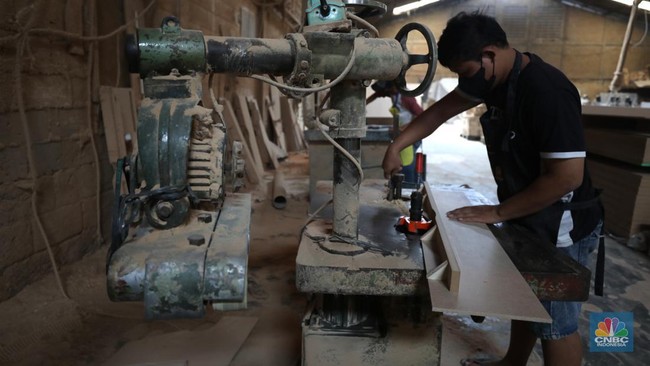
The industrial map of Indonesia is set to expand further. While Madura in East Java is being prepared as a new industrial area with incoming investors from various countries, the Priangan region of Tasikmalaya in West Java is also being pushed to level up into an export-oriented centre for the furniture and craft industry.
Tasikmalaya has long been known for the ability of its artisans to process bamboo, mendong, wood, natural fibres, and various handmade products. However, this has not been enough to bring Tasikmalaya into the global industrial competition. Business actors must start changing their approach, from merely receiving orders to becoming companies capable of building their own markets.
‘The main problem in Priangan is not a lack of talent. What we need to fix is the mindset, positioning, and access to markets. We must change the way of thinking from just being able to make things to being able to master the market,’ said Abdul Sobur, Chairman of the Indonesian Furniture and Handicraft Industry Association (HIMKI), in a statement on Tuesday (11/8/2026).
According to Abdul, the character of the global industry today means buyers do not only look at whether a company can produce good products. Consistency of quality, the ability to fulfil orders, production capacity, delivery punctuality, professionalism, and sustainability are increasingly decisive factors. ‘Global buyers purchase certainty, not just objects,’ Abdul Sobur stated.
The development of the Priangan industry should not be fixated solely on bamboo or mendong products. Other materials such as wood, combinations of wood with wicker, metal, and textiles can also be developed, including decorative products, souvenirs, and premium lifestyle items. The goal is to broaden the types of products without losing the local character. The materials used may differ, but the quality standards offered to the global market must remain high.
Furthermore, the position of players within the industrial chain needs to be changed. Companies that have so far acted as subcontractors are encouraged to move up to become Original Equipment Manufacturers (OEM), then Original Design Manufacturers (ODM), build their own brands, and eventually gain direct access to buyers.
To accelerate this process, HIMKI is pushing for the mapping of around 30 to 50 potential companies in Priangan. From this number, approximately 20 companies will be curated to become prospective exporters that are more ready to enter the international market. The target is for the first export orders, or a reactivation of exports, to appear within six to twelve months. Within 12 to 36 months, companies are expected to increase repeat orders while expanding their destination countries.
‘Tasik does not have to become a second Jepara. Be the best Tasik—strong in hand detailing, rich in materials, agile in production, and trusted by the world. Do not just be the best artisans in Priangan. Become exporters who make the world come to Priangan,’ said Sobur.