
West Java to Make Energy Infrastructure a Regional Investment Strategy
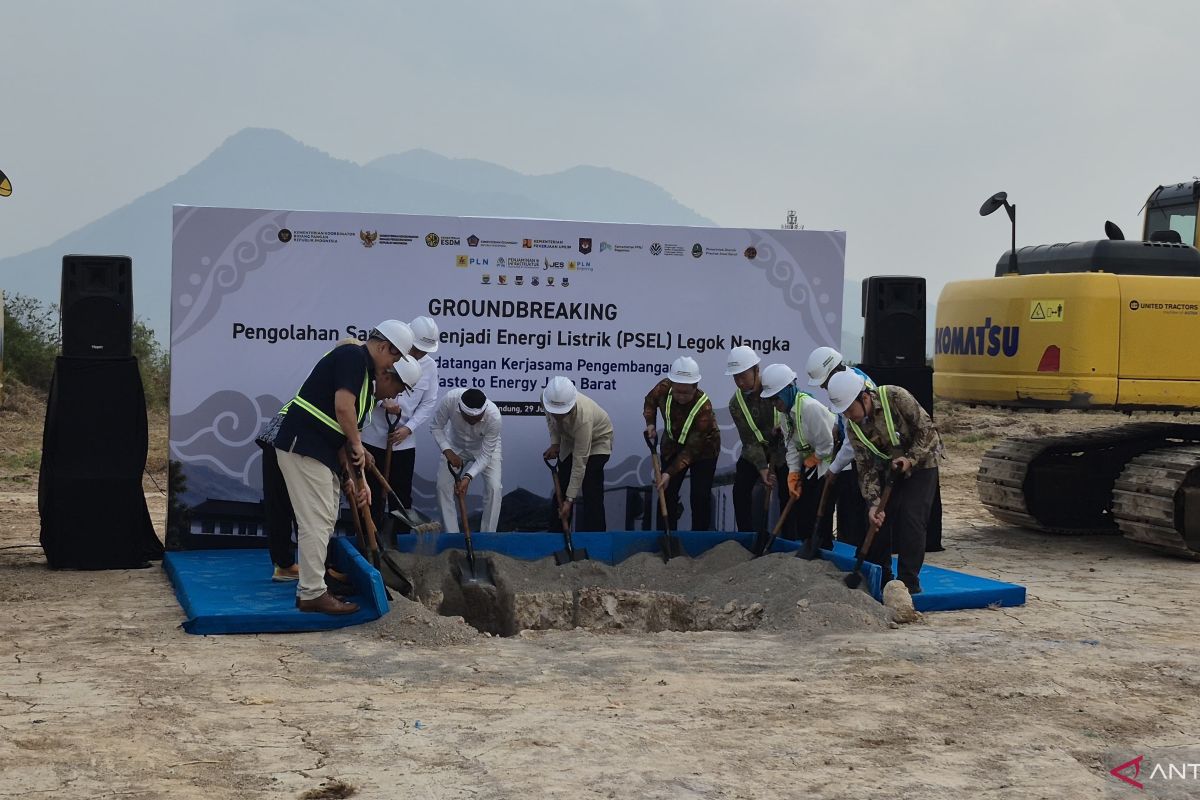
The West Java Provincial Government is making energy infrastructure development a part of its regional investment strategy to boost competitiveness and attract more investors, coinciding with the start of construction of the Legok Nangka Waste-to-Energy Plant (PSEL).
Governor Dedi Mulyadi stated in Bandung Regency on Wednesday that the cost of electricity connections has become the main challenge facing investors, surpassing issues related to land and permits. “I handle investment matters every day. The biggest problem is no longer land or permits, but the cost of electricity connections. Many investors have to spend a huge amount of money to build substations and power networks,” he said during the groundbreaking ceremony for the PSEL Legok Nangka.
He said the West Java Provincial Government wants to cooperate with state electricity company PT PLN to build electrical infrastructure so that investors are no longer burdened with high connection costs. “I hope that in the future, the West Java Provincial Government can work with PLN to build electrical infrastructure so that investors are no longer burdened with high costs,” he stated.
The governor assessed that government investment in energy infrastructure would provide broader economic benefits for the region, ranging from job creation to increased tax revenue. “If we invest in building electricity networks, the economic benefits are much greater because it will create jobs, increase taxes, and accelerate economic growth. That is why I want to include energy infrastructure development as part of regional investment,” he said.
He believes that providing adequate energy infrastructure will enhance West Java’s attractiveness as an investment destination. “If West Java succeeds in providing good energy infrastructure, more investors will come to West Java,” he remarked.
On the occasion, he also mentioned that the PSEL Legok Nangka is being built as a waste processing facility designed to handle approximately 2,000 tonnes of waste per day with a generating capacity of up to 40.79 megawatts (MW). The project, valued at around Rp7.2 trillion, is targeted to begin operations in 2029 and is expected to support energy supply as well as waste management in the Greater Bandung area.