
West Java to be Renamed Tatar Sunda: What Are the Stages of the Process?
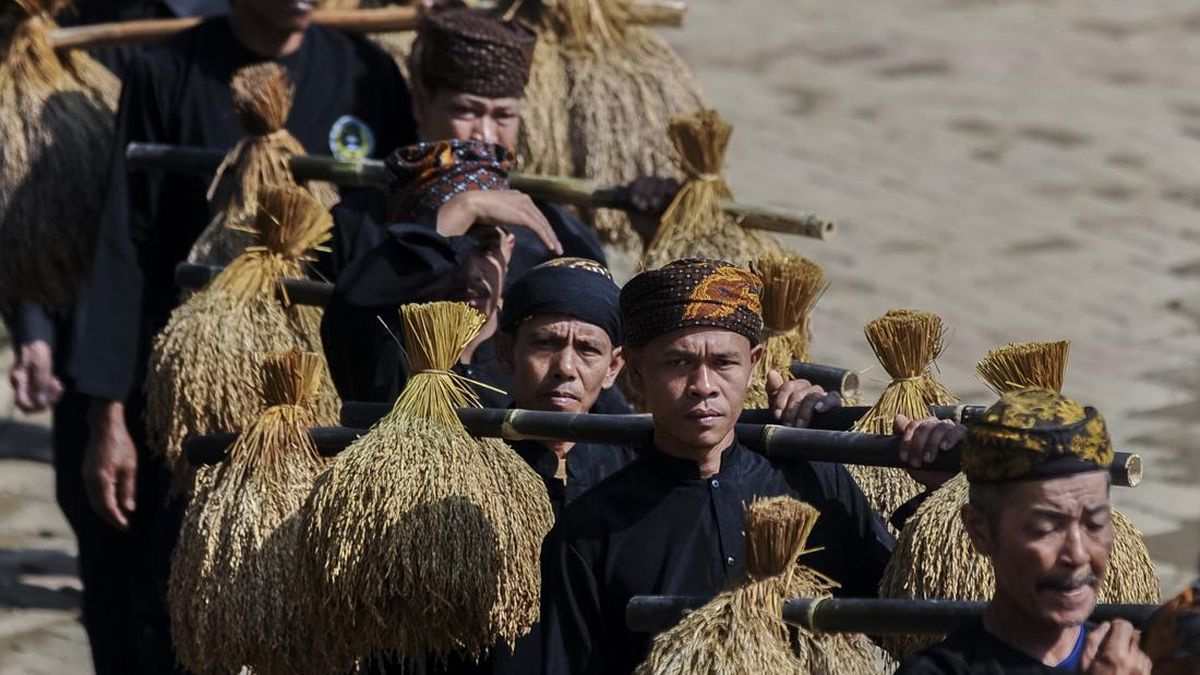
The proposal to change the name of West Java to Tatar Sunda is still ongoing. Commission I of the West Java Regional People’s Representative Council (DPRD) has just submitted the results of its recommendations for the name change study to the West Java Provincial Government. The recommendations are the result of a joint study with the community of assessors for the name change. A working meeting of Commission I of the West Java DPRD produced several recommendations, one of which is a follow-up to the proposal submitted by the community of assessors.
A constitutional law expert from Padjadjaran University (Unpad), Indra Prawira, explained the series of processes that must be undertaken if West Java is to change its name to Tatar Sunda. Indra acknowledged that the proposal to change the name of West Java is not a new discourse. He said the proposal was also raised during the revision of Law Number 10 of 2023 concerning West Java. At that time, Indra admitted he was one of the parties who conveyed the proposal during a meeting with the House of Representatives (DPR). However, he said the proposal at that time was still informal because there was no official proposal from the provincial government under the Governor of West Java.
“The problem back then was that the proposal was informal, it didn’t come from the grassroots or the governor, it wasn’t official. So it was just individual figures, including myself,” Indra said when contacted on Thursday (9/7). According to Indra, from an administrative law perspective, changing the name of a region is common. In Indonesia, changing the name of a province is not the first occurrence. Previously, Irian Barat changed to Papua, and Ujung Pandang changed to Makassar. However, Indra said the change must be supported by various aspects, not just the legal process. This support includes historical, socio-cultural, economic, and cultural aspects.
Historically, Indra assessed that West Java was different from Central Java and East Java before independence. Before independence, West Java was a state called Pasundan. Meanwhile, geographically, West Java is also not exactly in the west of Java. Because the region that is in the west of Java is Banten. Indra explained that in the process, the name change proposal must still be carried out through a revision of the law in the DPR. This is because every region, from regency, city, to province, is regulated by law. Meanwhile, the status of the West Java region is currently regulated in Law Number 10 of 2023, which is the second amendment to Law Number 11 of 1950.
“So, the proposal ultimately depends on whether the central government in the DPR responds or not, right. So, it’s valid for them to propose, but ultimately it’s up to them,” he said. In every drafting or revision of a law, there are six processes that must be passed. First, it must be included in the national legislation programme (Prolegnas). In this case, to date there is no West Java Bill in the DPR’s Prolegnas, either in the medium-term or short-term list, or the 2026 Priority list. Thus, if West Java is to change its name, the process potentially cannot be carried out this year. After the Prolegnas or planning stage, the next stages are the drafting of the academic paper and the bill, submission to the DPR leadership, deliberation with the government, approval at the Plenary Session, and finally enactment.
“And to change the law, there is the Prolegnas, there are stages,” Indra said. In this process, the proposal for change can be submitted by either the provincial government or civil society. Previously, Indra said, the proposal for change was only submitted by a number of community organisations and practitioners. Now, the discourse on the name change has also received a response from the DPRD. The impact is that the proposal now has more political strength, even though the process will still be in the hands of the DPR and the central government in the process of revising the law.
“Previously there was no such process, so it was easily dismissed, they said why bother because it seemed not urgent. With the DPRD proposing it, the urgency is visible,” he said. Meanwhile, outside the political process in the DPR, as one of the proposers, Indra considers a law revision solely for a name change to be futile. He therefore also proposed several other changes, such as regional expansion and the number of regencies and cities. “Why not, for example, precede it with the issue of regional expansion,” he said. Administratively, Indra said the name change would not have a significant impact. Moreover, many population administration documents are now being digitised. Thus, the name change will not affect the administrative and bureaucratic processes of the government.
“But there is no need to worry because now the administration system is more towards e-digital, e-government, and so on,” he said.