
West Java Selected as Pilot Project for Food Loss and Waste Reduction Programme
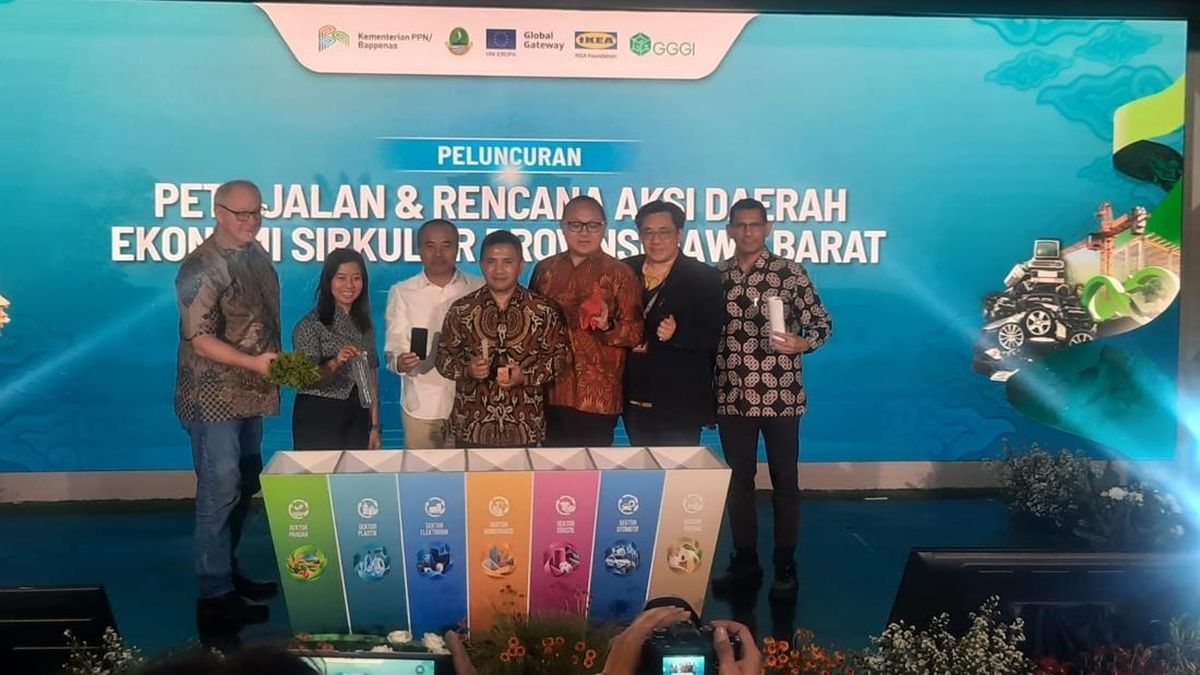
West Java has been selected as a pilot project for a programme aimed at reducing food loss and waste (FLW). The initiative is designed to curb food waste while encouraging the implementation of a circular economy within the region.
The programme was marked by the launch of the Regional Action Plan (RAD) for the Circular Economy and the Food Loss and Waste Reduction (FLOWER) Programme 2025-2045, organised by the West Java Provincial Government in partnership with the Ministry of National Development Planning/Bappenas and the Global Green Growth Institute (GGGI).
Tegu Sambodo, Deputy for Food, Natural Resources, and Environment at the Ministry of National Development Planning/Bappenas, stated that the programme encourages the public to increase awareness and responsibility in managing food waste. He noted that management must be achieved through innovation covering the entire food chain, from production to consumption.
This initiative is part of a regional programme funded by the IKEA Foundation, alongside similar areas in India, Mexico, and Uganda, adopting a ‘foodshed’ approach. The goal is to address the entire value chain within a specific geographic focus, from food production and distribution through to processing and final consumption.
West Java was chosen as the pilot project for the FLOWER programme due to its significant challenges and potential regarding food loss and waste. According to a 2024 Bappenas study, food loss in West Java accounts for 47.79 per cent of the total FLW at the provincial level.
The Greater Bandung area contributes 1.5 million tonnes of food waste annually, as it is the third-largest metropolitan area in Indonesia, with an estimated population of 9.3 million by 2025 and a 2023 visitor count of 7.7 million tourists.
In Indonesia, it is estimated that between 2000 and 2019, FLW ranged from 1.44% to 31.8% of total food produced across various commodity groups, including horticulture, fisheries, and livestock.
Tegu added that the Ministry of National Development Planning/Bappenas has launched the National Circular Economy Action Plan and Roadmap (RAN-ES) 2025-2045, which serves as an approach to reduce waste generation and utilise resources more sustainably. The RAN-ES focuses on five priority sectors: food, construction, electronics, textiles, and retail (plastic packaging). These five sectors represent nearly one-third of Indonesia’s GDP and provided employment for over 43 million people in 2019.
West Java has added two additional flagship sectors: paper and automotive, both of which are considered major contributors to the regional economy.
“We appreciate West Java for being willing to serve as a pilot and a lighthouse for other provinces in developing and implementing a circular economy,” said Tegu following the launch at the West Java Bappeda Office in Bandung on Tuesday.
Food loss and waste (FLW) is a major contributor to climate change, accounting for 8-10% of global greenhouse gas emissions. Beyond emissions, FLW depletes resources and threatens food security, wasting nearly 30% of global agricultural land and freshwater.
Losses during production and transport (food loss) and waste during distribution and consumption (food waste) contribute significantly to both economic losses and environmental impacts.
Sumasna, Assistant for Economy and Development of the West Java Regional Secretariat, stated that food waste is a serious challenge for the province. “In the downstream sector, 45 to 50 per cent of the waste entering landfills is food waste,” said Sumasna.
Given the current waste management system in the region—particularly with the Sarimukti landfill nearing maximum capacity—upstream interventions to reduce FLW are essential to preserve the environment.
The FLOWER programme will be organised by the Ministry of National Development Planning/Bappenas and implemented by the GGGI. The West Java Regional Development Planning Agency (Bappeda) has been proposed as a primary stakeholder and beneficiary of the programme, given its role as a multi-sectoral authority in the province.
The programme will coordinate with various stakeholders from the government, private sector, and academia to ensure synergy and avoid overlap with other initiatives. The Ministry of National Development Planning/Bappenas, in collaboration with Bappeda West Java, will provide general direction for the programme’s implementation. A Project Steering Committee (PSC) is planned to guide the process and produce contextual solutions, operating through coordination with the cross-ministerial Circular Economy Steering Group (CESG) led by Bappenas.
Source: jawawa.id (https://jawawa.id/newsitem/west-java-selected-as-pilot-project-for-food-loss-and-waste-reduction-programme-1790837824)
Originally published by CNN Indonesia (https://www.cnnindonesia.com/nasional/20261001130041-25-1410449/jawa-barat-jadi-percontohan-program-pengurangan-sampah-pangan), translated from Indonesian